Port to port?

Quandary

Well-Known Member
Joined
20 Mar 2008
Messages
8,214
Location
Argyll
Visit site
Working on the canal here this year I have noticed a reluctance by quite a number of yachts to pass on starboard when meeting between locks, I thought it was just an inland waterways thing but turning the corner into Loch Crinan from the Sound of Jura on Friday we met a boat motoring out, we were quite close to the headland but I made a distinct turn to starboard, he turned to pass inside me, I turned again now as close to the point as I felt comfortable with, but again he altered, so I gave up and made about 30 degrees to port to let him pass, tapping my head with my forefinger in acknowledgement. Benign conditions, good visibility both motoring so no danger but I would not want to meet him at night. Boat came back in to the basin later, one of the permanent residents of the dummy lock and I was tempted to have a word but in the end did not bother.
Is it because they do not know, scary! or just that they do not care ?
 
What does "tapping the head" imply? I haven't heard of it before.
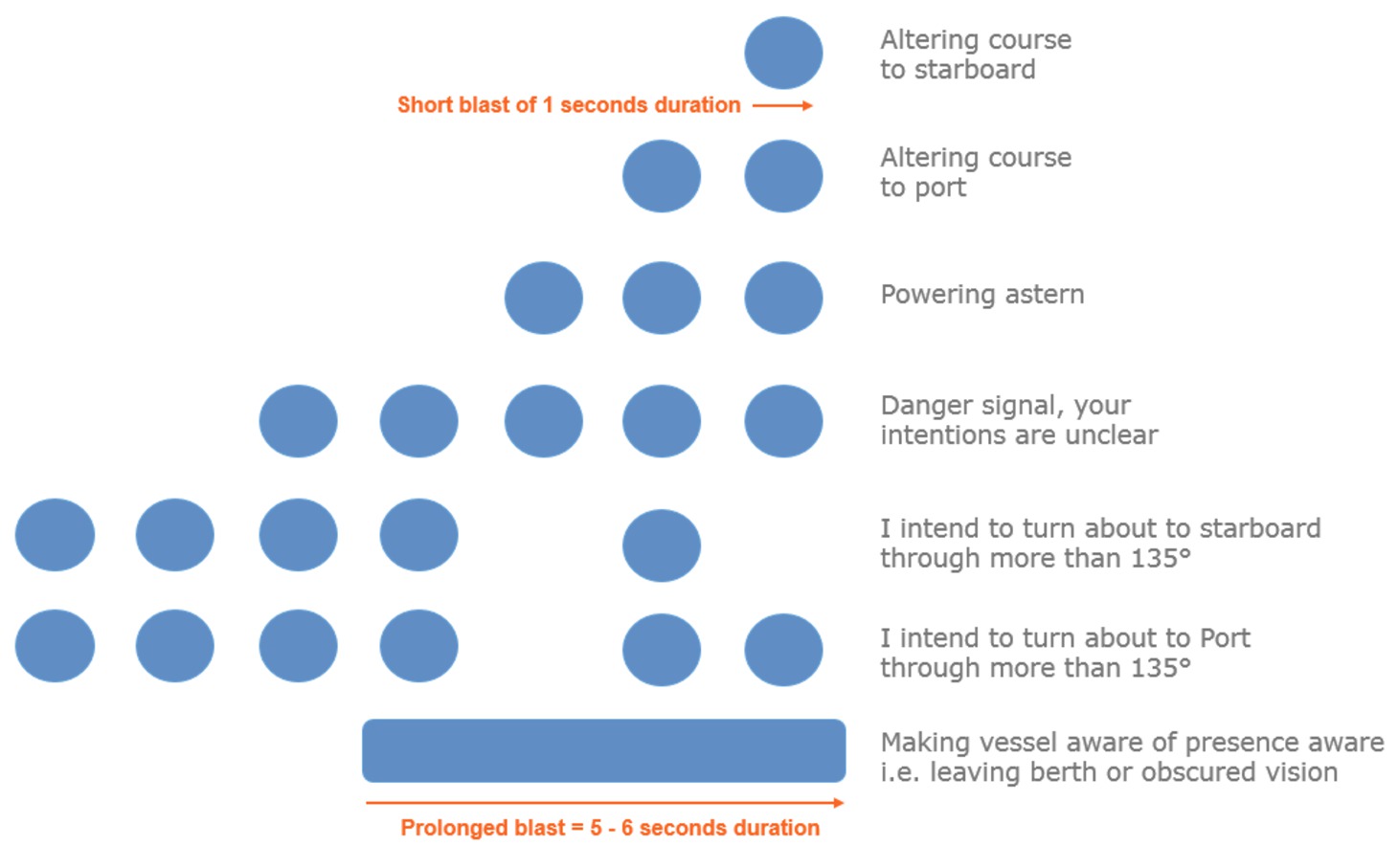
A significant/obvious course alteration makes sense - but might you have used your foghorn?
eoceanic__sound_signals_used_by_commercial_shipping_.jpg
 
What does "tapping the head" imply? I haven't heard of it before.
A significant/obvious course alteration makes sense - but might you have used your foghorn?
eoceanic__sound_signals_used_by_commercial_shipping_.jpg

It made sure it was fekking obvious what I was doing, don't think sound signals could have made it more clear, perhaps Awol is right and he is a brexiteer, though I suspect he was just determined not to go outside me. Surely in close quarter situations like within the canal or rounding headlands keeping to the correct side is a lot more important than on open water. As for tapping my skull I am amazed that you have not been experiencing that gesture.
 
I used to go down the first section of the Manchester Ship Canal in order to access the Weaver Navigation for over wintering in Northwich. The pilotsthere were very succinct in their agreements for passing i.e. red to red or green to green and seemed very flexible on the passing arrangements.
 
From CEVNI (download pdf 1, download pdf 2)

Note: for NORMAL VESSELS read COMMERCIAL.

NORMAL VESSELS GOING DOWNSTREAM HAVE PRIORITY OVER
THOSE COMING UPSTREAM, BUT UPSTREAM VESSELS CHOOSE
WHICH SIDE THEY WILL GIVE WAY ON
If the meeting is to be port to port the upstream vessel makes no signal.
If the meeting is to be stbd to stbd, the upstream vessel shows a blue board, with or without white isophase light to stbd.
The downstream vessel acknowledges that the passing will to stbd by displaying its blue board.

SMALL CRAFT ALWAYS GIVE WAY TO NORMAL VESSELS & KEEP A LOOK OUT IN ALL DIRECTIONS- INCLUDING BEHIND!
WHEN BLUE BOARDS ARE IN USE, ESPECIALLY ON BUSY FAST FLOWING RIVERS, THE GREATEST CARE, VIGILANCE & COMMONSENSE IS NEEDED. DOWNSTREAM
VESSELS MAY BE AT THE MERCY OF THE CURRENT.
LADEN UPSTREAM VESSELS MAY NEED TO FIND SLACK WATER EITHER COULD BE HAMPERED BY THEIR DRAFT.
 
Quandary, your mistake was to post your incident on here. Stand by to be accused of unnecessary pedantry for trying to stick to the rules .... or maybe accusations of trying to start a mobo/raggie them and us thread. If he was the only faighean you met between Ardrishaig and Crinan consider yourself blessed.
 
Surely the purpose of the regs is to explain actions to be taken to avoid an imminent collision. Where there isn't a collision impending, there is no need to follow them. I had a fairly narrow miss leaving Tarbert harbour a few years ago. I saw a fishing boat heading in, so I steered to starboard and aimed to pass red to red but he didn't budge. I was sandwiched between him and the marker pole at the entrance which I cleared with less than 2m either side. I'm sure he was amusing himself but now I ignore the ruie of the road unless there is actually a risk of contact.
 
Quandary, your mistake was to post your incident on here. Stand by to be accused of unnecessary pedantry for trying to stick to the rules .... or maybe accusations of trying to start a mobo/raggie them and us thread. If he was the only faighean you met between Ardrishaig and Crinan consider yourself blessed.
He could change his username to CollReg.:p
 
I used to go down the first section of the Manchester Ship Canal in order to access the Weaver Navigation for over wintering in Northwich. The pilotsthere were very succinct in their agreements for passing i.e. red to red or green to green and seemed very flexible on the passing arrangements.

So did I and I found the chopping and changing over VHF very off putting. I got the distinct impression that the management of "The Ditch" wished they could ban small craft altogether but, having annexed the entrance to the Weaver, were precluded by statute from doing so. They tried their best though via the transit fees.
 
Last edited:
Surely the purpose of the regs is to explain actions to be taken to avoid an imminent collision. Where there isn't a collision impending, there is no need to follow them. I had a fairly narrow miss leaving Tarbert harbour a few years ago. I saw a fishing boat heading in, so I steered to starboard and aimed to pass red to red but he didn't budge. I was sandwiched between him and the marker pole at the entrance which I cleared with less than 2m either side. I'm sure he was amusing himself but now I ignore the ruie of the road unless there is actually a risk of contact.

In open water I hold my course but when meeting another vessel head to head I will try to avoid your imminent collision situation developing by making an obvious turn to starboard, I though most folk do that? In the canal I will always meet other craft port to port, if they do not get over to their own side I stop and wait until they do.
I have always been a pedant and it gets easier as you get older.
 
In open water I hold my course but when meeting another vessel head to head I will try to avoid your imminent collision situation developing by making an obvious turn to starboard, I though most folk do that? In the canal I will always meet other craft port to port, if they do not get over to their own side I stop and wait until they do.
I have always been a pedant and it gets easier as you get older.

You are doing it all wrong! I have learned from careful study of these fora that upon seeing another vessel, particularly a larger one, the correct action is to act like a headless chicken and make several changes of course in quick succession.
 
From my previous post, it looks like the vessel going downstream has priority but the vessel going upstream makes the decision as to which side they give way on.
Going downstream has priority seems logical but the give way vessel making the choice as to which side they give way on doesn't.
 
So did I and I found the chopping and changing over VHF very off putting. I got the distinct impression that the management of "The Ditch" wished they could ban small craft altogether but, having annexed the entrance to the Weaver, were precluded by statute from doing so. They tried their best though via the transit fees.

That was not my experience of the management and running of the canal from Eastham Locks throgh Ellesmere Port to Marsh Lock over 4 winters. I found the canal management very courteous, correct and friendly. Leisure craft even had priority over commercial craft in entering the lock if they had called up first, which I found quite refreshing.
I would agree with you about the certification being difficult and high transit fees though.
The guys who swing the bridges, haring away in their white van to keep in front of you were also very friendly and helpful. I always enjoyed that trip particularly in October with the trees over the Weaver in their full autumn colours. I quite fancied going up the Anderton Lift but we were a bit too wide!
 
Surely the purpose of the regs is to explain actions to be taken to avoid an imminent collision.

You are mistaken.
1) The regs are much wider in scope than that.
2) The rules (amongst other things) assign obligations to either stand on or give way as soon as a risk of collision exists.
3) The action to avoid a collision (e.g by the give way boat) must be taken 'in ample time' .

If an imminent risk of collision exists, the likelihood is that someone hasn't followed the rules (but there are also rules to govern what should happen then).
 
You are mistaken.
1) The regs are much wider in scope than that.
2) The rules (amongst other things) assign obligations to either stand on or give way as soon as a risk of collision exists.
3) The action to avoid a collision (e.g by the give way boat) must be taken 'in ample time' .

If an imminent risk of collision exists, the likelihood is that someone hasn't followed the rules (but there are also rules to govern what should happen then).

Indeed.
Sometimes, if two vessels are clearly going to pass green to green, no risk of collision exists. Until one decides to cross the bow of the other.
 
Indeed.
Sometimes, if two vessels are clearly going to pass green to green, no risk of collision exists. Until one decides to cross the bow of the other.

Exactly common sense needs to rule as well , I was coming into harbour through the breakwater and on leaning more to port to keep to deep water and a large boat came out of my Marina which is a narrow channel , and was heading towards the pier break water , if I was to follow the rules I would have had to steer starboard towards the wall to allow the other boat to steer hard to port so we could pass port yo port or do what I did and stayed on my line giving the other boat ample room to pass away form the pier and pass me Starboard to starboard no problems no hand gestures no panic just simple :D
The problem lies were people start turning all over the place trying to anticipate each others moves , like meeting in a crowded street and shuffling side to side saying oh sorry oh sorry about that oh just get out the fu.....g way :p
 
You are mistaken.
1) The regs are much wider in scope than that.
2) The rules (amongst other things) assign obligations to either stand on or give way as soon as a risk of collision exists.
3) The action to avoid a collision (e.g by the give way boat) must be taken 'in ample time' .

In the Aegean, where ships are travelling busy routes without traffic separation schemes we often hear them on VHF discussing passing intentions. Reference to AIS shows them to be 10 or more miles apart.
 
Top