Polishing metal (quicker)

I live in a Suffolk town once renowned for its antique shops. Confronted by a seriously tarnished copper anchor lamp I stepped into the local ironmongers for advice and was handled a bottle of formic acid kettle descaling liquid, which the owner said he supplied to all the antique dealers.

Ferocious stuff!
 
You do NOT use hydrochloric acid to pickle stainless. A good way to pit and start cracks.
Correct , my mistake , i checked on the stuff which i have experienced in various industries ( eg .food processing , petrochemical , pharma, oil n gas etc ) it is mixture of hydrogen fluoride and hydrogen nitrogen . Hope j have not spoiled anyones shiney shiney 🤪
 
I use a gel with hydroflouric acid + a few others, to remove welding deposits. Works a treat, but is seriously nasty.. so gloves and glasses. It does leave a mat finish, polishes up with a cotton buffing wheel and some input from a block of fine abrasive.
 
Correct , my mistake , i checked on the stuff which i have experienced in various industries ( eg .food processing , petrochemical , pharma, oil n gas etc ) it is mixture of hydrogen fluoride and hydrogen nitrogen . Hope j have not spoiled anyones shiney shiney 🤪
Please post a spec sheet or MSDs. I'm interested, but the chemicals you listed don't make sense.

(Hydroflouric acid is generally very aggressive and dangerous because of extreme toxicity, and I'm guessing the other might be nitric acid, which is used for passivizing stainless, although citric acid is taking over because it is safer and just as effective.)
 
Please post a spec sheet or MSDs. I'm interested, but the chemicals you listed don't make sense.

(Hydroflouric acid is generally very aggressive and dangerous because of extreme toxicity, and I'm guessing the other might be nitric acid, which is used for passivizing stainless, although citric acid is taking over because it is safer and just as effective.)
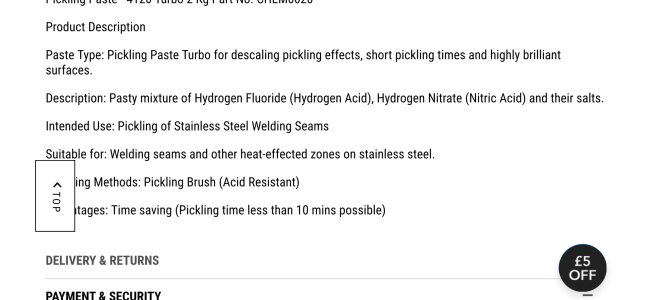
I an no chemist so this is from manufacturers descriptiion ( tap to enlarge 👍)
 

Attachments

  • IMG_1293.png
    IMG_1293.png
    405.6 KB · Views: 11
I'm starting to polish various metal bits of the boat (stansions, cleats etc). Autosol polish is working really well- the cloth turns black with the dirt it's removing almost instantly.

But is there a quicker way? I've tried some fine wet and dry but this still seems to scratch, as does a sanding flap-wheel in a drill. I see you can get some polishing attachments for drills (for cars mainly it seems) - but there seem to be a lot to chose from.

Any advice please?

I have just done this on welded stainless steel plates that were mill finish and welds ground back. I used two types of polishing wheels on a dress press and 2 x types of polishing soap. It worked well.

Google polishing soaps. Black colour (or dark grey) tends be course, white tends to be fine, but it is easy to find out.
The polishing mops screw onto a tapered arbor in my case but you get different types of mop clamp.

Something like this https://www.amazon.co.uk/Polishing-...polishing+mop+for+drill&qid=1727438951&sr=8-8

Obviously you have too take the piece to the drill, but the finish is exceptional.
 
I an no chemist so this is from manufacturers descriptiion ( tap to enlarge 👍)
Wow. The writer's use of chemical names is ... interesting. Hydrogen acid, for example, is an ambiguous reference that can mean several things and would not be used by a chemist.

Wear two sets of gloves. That is some dangerous stuff to get on you. Not worth having in the shop IMO, and I like chemicals (chemical engineer).
 
Wow. The writer's use of chemical names is ... interesting. Hydrogen acid, for example, is an ambiguous reference that can mean several things and would not be used by a chemist.

Wear two sets of gloves. That is some dangerous stuff to get on you. Not worth having in the shop IMO, and I like chemicals (chemical engineer).
It amazes me that hydrofluoric acid is available to the public. I feel certain you know that nothing is considered more hazardous in the refinery. Once on the skin it eats in and just continues, with very little that can be done to arrest it.
 
It amazes me that hydrofluoric acid is available to the public. I feel certain you know that nothing is considered more hazardous in the refinery. Once on the skin it eats in and just continues, with very little that can be done to arrest it.
Really ? I have had stuff on my hands more times than i can remember ,, will check later see if any holes 😆
 
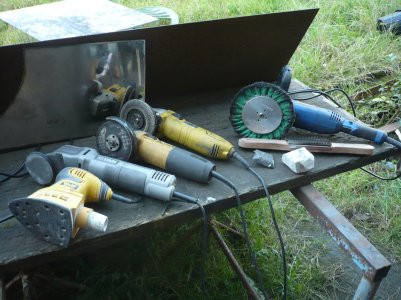
Anyway, back outside the chemist's shop. This is my polishing set.
The first pic' is all the tools. The stainless sheet at the back is something I am working on at the moment as it is often easier to do the initial polish before cutting and Welding.
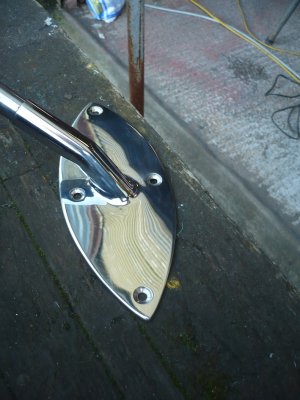
The second pic' is a typically awkward piece to get all round when polishing and this is where the multi-tool really excels.


P1050907.JPG P1050904.JPG
 
Anyway, back outside the chemist's shop. This is my polishing set.
The first pic' is all the tools. The stainless sheet at the back is something I am working on at the moment as it is often easier to do the initial polish before cutting and Welding.
The second pic' is a typically awkward piece to get all round when polishing and this is where the multi-tool really excels.


View attachment 183528 View attachment 183527
Mmm , shiney shiney 👍👍😎
 
Really ? I have had stuff on my hands more times than i can remember ,, will check later see if any holes 😆
Cox was not wrong. Most likely the concentration in this product is very low, but this is different in it's effects from other acids. Effects are both on the skin, and more importantly, internal organs. Heart attach and stroke.

From CDC: "Even small splashes of high-concentration hydrogen fluoride products on the skin can be fatal. Skin contact with hydrogen fluoride may not cause immediate pain or visible skin damage(signs of exposure)."

CDC | Facts About Hydrogen Fluoride (Hydrofluoric Acid)
 
Cox was not wrong. Most likely the concentration in this product is very low, but this is different in it's effects from other acids. Effects are both on the skin, and more importantly, internal organs. Heart attach and stroke.

From CDC: "Even small splashes of high-concentration hydrogen fluoride products on the skin can be fatal. Skin contact with hydrogen fluoride may not cause immediate pain or visible skin damage(signs of exposure)."

CDC | Facts About Hydrogen Fluoride (Hydrofluoric Acid)
Ok , so let us keep in the context of polishing SS , thats what this product is for 👍
 
Ok , so let us keep in the context of polishing SS , thats what this product is for 👍
But it is in the context. Hydroflouric acid does a very good job on intial cleaning up of welded SS. I bought it back in Portugal and more recently in France. The contents of the mix are on the (plastic) containers, but no mention of the risks apart from the usual toxic label symbols.

Long time ago on UK TV, some regular show had the theme that there was a drum of Hydroflouric acid dropped off a truck and the young Police guy dealing with the accident got burned around his legs. Later, in the hospital, he felt a bit better. But the medic had to tell him that any burn over a few square centimeters would cycle from good to bad, but would be fatal, as it screwed the blood chemistry.
So, when I bought the stuff, I was, and have always been, hyper careful.
 
I live in a Suffolk town once renowned for its antique shops. Confronted by a seriously tarnished copper anchor lamp I stepped into the local ironmongers for advice and was handled a bottle of formic acid kettle descaling liquid, which the owner said he supplied to all the antique dealers.

Ferocious stuff!
Some friends live in a Suffolk town with a classic ironmongers, might it be the same? Lots of stuff in boxes on shelves, contents only known to the established employees.
 
Some friends live in a Suffolk town with a classic ironmongers, might it be the same? Lots of stuff in boxes on shelves, contents only known to the established employees.
It’s certainly possible…

Anyway the kettle descaler works very well…
 
Last edited:
But it is in the context. Hydroflouric acid does a very good job on intial cleaning up of welded SS. I bought it back in Portugal and more recently in France. The contents of the mix are on the (plastic) containers, but no mention of the risks apart from the usual toxic label symbols.

Long time ago on UK TV, some regular show had the theme that there was a drum of Hydroflouric acid dropped off a truck and the young Police guy dealing with the accident got burned around his legs. Later, in the hospital, he felt a bit better. But the medic had to tell him that any burn over a few square centimeters would cycle from good to bad, but would be fatal, as it screwed the blood chemistry.
So, when I bought the stuff, I was, and have always been, hyper careful.
The people that i have worked with previously have always had the good common sense to treat it with due respect but maybe the time has come to add the “ do not drink “ label .😆👍
 
Top