One MAN engine fails on last day end last trip of our summer holliday’s

Reminder,
last year we broke one engine in the boat, (broken vibration damper caused big damage)
And during the last week of this season, we broke the other, (engine overheated)

The repair work on our second engine has started a few weeks ago,
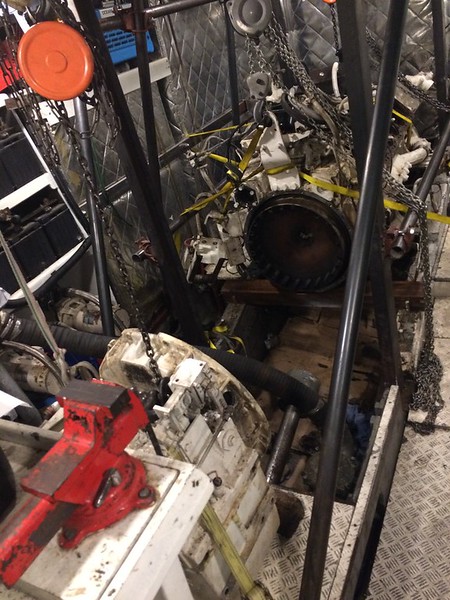
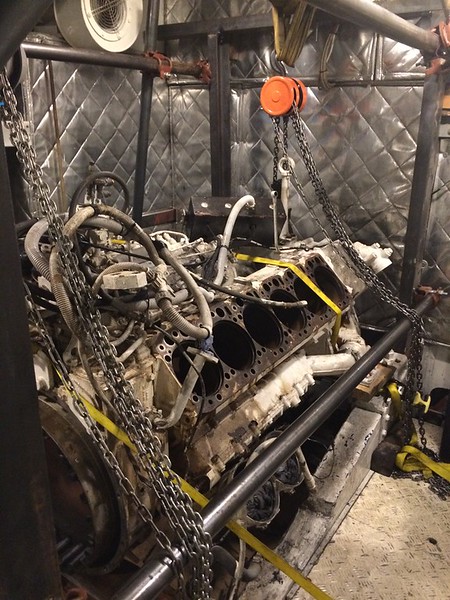
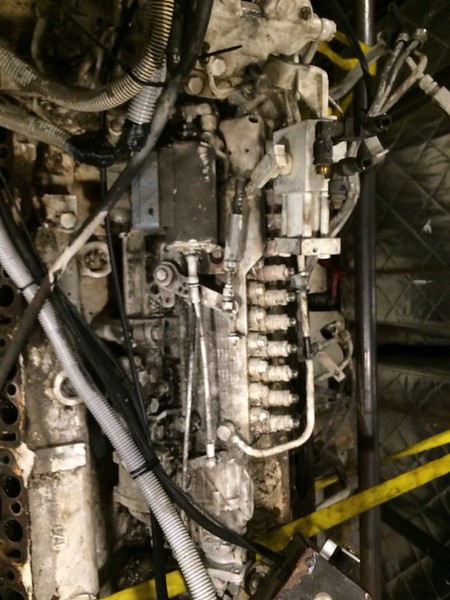
Engine is for 80% disassembled in the boat

i-hjGHF6X-L.jpg


i-hfkvhCr-L.jpg


Diagnose so far;
Turbo’s and heat exchangers are OK, pressure tested
One Exhaust manifold has a crack, needs replacement
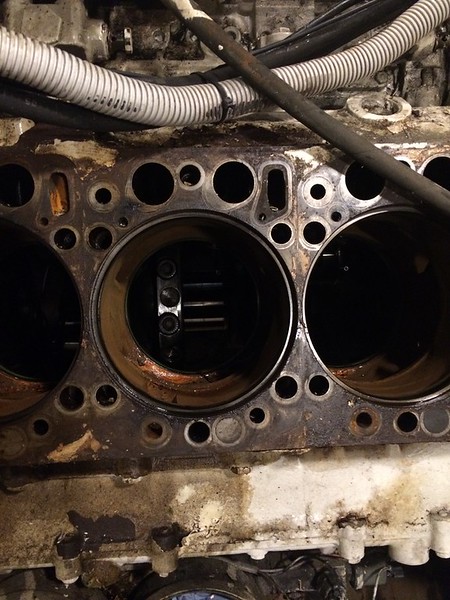
Cylinderheads appear to be OK,

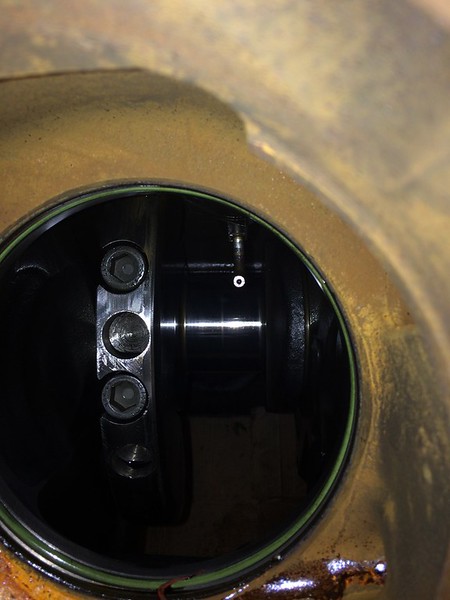
Crancshaft is still in the engine, looks good, also bearing shells seem OK,
they are going to measure the shaft diameters, and decide if they need take out for machining and new schell bearings
also the pistons will be checked for tolerance,
liners will be replaced anyhow, same for waterpump and oilpump. (3500Hrs, 24yo)

i-9sGMFJ2-L.jpg


i-x32c44B-L.jpg


Injection pump has to be send to Bosch for complete rebuild, but Ilko is considering another service center than the one in Serbia,
He had good experience with another in Koper Slovenia in summer.
He wants to send both pumps together,
Because:
Refurbished pump on new engine, at idle (600Rpm) runs at 6 cylinders
Bosh service in Serbia claims that this is supposed to be like that on that pump / model
The old pump on the second engine always runs at 12 cyl, also at idle,
So we want them at least to run the same, and or check the different calibration.

i-c3qSgKW-L.jpg


Within a week or two, we should have the quote for the repair and the parts
As it looks now, the engine doesn’t need to go out of the boat,
They will clean, reassemble, test and paint the second engine inside the engineroom
 
Last edited:
and the reason for overheating Bart?

good luck with the rebuilt, nice if you cannot avoid cutting holes, bringing cranes and all that stuff again!

cheers

V.
 
and the reason for overheating Bart?
.


Info is somewhere above, but here it is again summarized:

This engine did loose cooling water everytime when going on the plane 2000 Rpm,
Until just below alarm level, never more.
Problem exists already 3 seasons, and engine was supposed to get a partial rebuild just for that, coming winter.

Last season, after three hours continiuosly at 2000 Rpm,
Coolling water level was lower than usual, could top up more water than ever before,
but engine temp was alway’s OK, checked that many times.
Following mornings departure without a problem, and after 30minutes of sailing at slow speed, 1000rpm:
Engine totally overheated; +110°C, and cooling water almost completely gone.
(the temp alarm didn’t work, it was the temp gauge that got my attention)
After cooling down, and refilling water, and ignition, engine was totally blocked (water in the pistons)

I’m not sure if we will find the root cause,
perhaps a small crack in that exhaust manifold,
All parts from the cooling cirquit, will be pressure tested, so hopefully engine will be OK after reassembling

another issue with this engine was oil consumption, was more than double then the other engine.
but never ran her too low on oil AFAIK

it was about time to rebuild that engine anyway
 
Last edited:
All good info Bart, but I can't see the root cause in the symptoms. So, there was normally a loss of coolant after you topped up, but this did not continue to drain out, when the level got to a certain point. As far as you were aware, the coolant temperature was ok until you had a catastrophic loss of coolant, which caused the overheat, and the engine then hydraulic'd. So what caused the catastrophic loss?
 
Last edited:
All good info Bart, but I can't see the root cause in the symptoms. So, there was normally a loss of coolant after you topped up, but this did not continue to drain out, when the level got to a certain point. As far as you were aware, the coolant temperature was ok until you had a catastrophic loss of coolant, which caused the overheat, and the engine then hydraulic'd. So what caused the catastrophic loss?

already during 3 seasons, this engine had loss of coolant each time while going on the plane (higher water pressure) but never below a dangerous level.
I was so used to it, that the water level alarm light was frequently on,
but I never had a temp issue. (checked so frequently, because of that water level alarm light)
During my long Rome to Montenegro trip, I even forgot about that for a while, so sailed the boat for a long time with the low water alarm light "on" (visible on the lower helm only) and mostly at high (planing) speed

I believe the catastrophic overheating was initiated at the end of my 3hours sailing at planing speed now in august, as THAN i could pour in more cooling water than ever before, but didn't notice any other problem.....
 
All good info Bart, but I can't see the root cause in the symptoms. So, there was normally a loss of coolant after you topped up, but this did not continue to drain out, when the level got to a certain point. As far as you were aware, the coolant temperature was ok until you had a catastrophic loss of coolant, which caused the overheat, and the engine then hydraulic'd. So what caused the catastrophic loss?

crack in exhaust manifold got bigger and flooded pistons (errr, cylinders...) P?
shall we guess that coolant goes through the exhaust manifold in order to cool the turbo or something?

V.
 
Last edited:
crack in exhaust manifold got bigger and flooded pistons (errr, cylinders...) P?
shall we guess that coolant goes through the exhaust manifold in order to cool the turbo or something?

V.
Not sure Vas. Water in the cylinders would cause immediate hydraulic issue, but I don't think there would necessarily be coincident overheating. So on the intake stroke, the cylinder was sucking in water? So it would immediately stop. I would be concerned that the rebuild did not fix the original problem, until I understood the original problem. I know very little about these engines, so apologies if I am showing my ignorance here.
 
crack in exhaust manifold got bigger and flooded pistons (errr, cylinders...) P?
shall we guess that coolant goes through the exhaust manifold in order to cool the turbo or something?

V.

cooling water goes through exhaust manifold and turbos,
so yes a initial crack becoming bigger could be the cause.

pistons were most probably flooded only after the catastrophic damage, when I tried to refill the engine with cooling water
iirc there was a worry-ing amount of water going in that engine.
 
I would be concerned that the rebuild did not fix the original problem, until I understood the original problem. .

exactly !
the rebuilder has good intentions, and good hope for the repair,
I try to give him as much info as possible, and asc him to take all potential causes in to considerations,
I stalk him with all possible questions / comments , but alway's on a friedly and cooperive tone ;)
its in his and my own benefit that after the rebuild the engine is OK
 
Not sure Vas. Water in the cylinders would cause immediate hydraulic issue, but I don't think there would necessarily be coincident overheating. So on the intake stroke, the cylinder was sucking in water? So it would immediately stop. I would be concerned that the rebuild did not fix the original problem, until I understood the original problem. I know very little about these engines, so apologies if I am showing my ignorance here.

Paul,

maybe crack increased while engine was running at displacement speeds, water "dripping" in the manifold, just boiling and disappearing to exhaust, no chance of getting in liquid form down to the pistons. Actually probably not even "getting" in the manifold, just gasses from the manifold getting in the coolant and boiling it in no time.
Loss of coolant large enough to run out of cooling power, hence overheating.
Bart, stopping engine, letting it cool (gap/crack remains) water poured in goes straight down to cylinders.
Bart, trying to start to no avail.

That's an ideal scenario where coolant in cylinders doesn't result in bent con-rods or damaged block/crank.

How close would this scenario be?

cheers

V.
 
exactly !
the rebuilder has good intentions, and good hope for the repair,
I try to give him as much info as possible, and asc him to take all potential causes in to considerations,
I stalk him with all possible questions / comments , but alway's on a friedly and cooperive tone ;)
its in his and my own benefit that after the rebuild the engine is OK
Quite right Bart. You need a pair of reliable motors after all the hassle you have suffered.
 
Paul,

maybe crack increased while engine was running at displacement speeds, water "dripping" in the manifold, just boiling and disappearing to exhaust, no chance of getting in liquid form down to the pistons. Actually probably not even "getting" in the manifold, just gasses from the manifold getting in the coolant and boiling it in no time.
Loss of coolant large enough to run out of cooling power, hence overheating.
Bart, stopping engine, letting it cooling (gap/crack remains) water poured in goes straight down to cylinders.
Bart, trying to start to no avail.

That's an ideal scenario where coolant in cylinders doesn't result in bent con-rods or damaged block/crank.

How close would this scenario be?

cheers

V.
i am still struggling with some of the logic here. So the manifold is cracked, and there is water in the manifold. How is this going to get into the cylinder? It can only enter through the exhaust valve, which is releasing the exhaust gas under pressure. How does the steam swim against this tide?
 
i am still struggling with some of the logic here. So the manifold is cracked, and there is water in the manifold. How is this going to get into the cylinder? It can only enter through the exhaust valve, which is releasing the exhaust gas under pressure. How does the steam swim against this tide?

Paul, that's the point, doesn't while the engine is running. Engine loosing coolant (rather boils coolant!) and eventually overheats.
THEN it stops, cools, Bart fills it up with water which promptly goes down through the crack to the exhaust valves and cylinders (well the ones that happen to have open exhaust valves anyway)
Overheating score marks on liners/pistons Bart?

V.
 
I'm with Vas on this one.
Not saying that's surely the reason (who could?), but I think it's plausible.

PS: Vas, I'm just not sure re. ADDED water going straight down through the manifold, because I think it's a long way from the point of refilling.
But it's likely that some water was still around the manifolds at the time the engine was stopped anyway, and THAT water could have reversed in the cylinders, hydrolocking the engine.
 
Last edited:
Top