Oiling winches

I had a weekend job at an early DIY shed when I was a student.
We used to wind up the customers, telling them they'd need a metric hammer for those metric nails.
(sometimes it was more subtle, a 'customer' you knew could join in, to wind up the store manager, e.g. that's a fine piece of our premium softwood you've chosen Sir, making a propellor are we?)

If you do up the nut until it goes slack, that will be slightly too much, so just back it off a little from there....

When I worked in the stores at York Trailers as my student summer job for four years we had steel and pressings to book in from subcontractors. Pressings and small fabricated brackets had to be checked off against the blue print drawings for conformity with spec. The inspectors fooled more than one delivery driver by rejecting left angle brackets when the order specified right angle brackets. The odd driver got quite het up until we put them out of their misery.
 
When working in the cockpit servicing winches, or any device with multiple 'key' parts, the first thing I do is to temporarily seal the cockpit drain outlets. I use the universal type flanged rubber bath plugs. Also I find that a disposable absorbent changing mat (forbabies) placed under the washing tray catches drips and splashes.

To catch those errant bits that all seek pastures new ... take cardboard and cut across to centre halfway - then cut a hole at that centre point ... now you can carefully lift one part ... place over winch, then guide under to create a tray ... bit of tape to hold the slot closed.
 
Last edited:
Bo***** ...... weather quiet ... so down to boat and service my coaming Lewmars ... I thought I had 8's but they are 6's ...

Took first one apart .... the one that has lost its 'click' ....... Basically the grease had dried and the pawls were not clicking ....

I don't like removing the bottom pawls - because the springs engage in slots in the mount and its a right pain to get them back in again ... so liberal dose of cleaner (diesel) .... then 3in1 ..... all working a treat ... Scrape out the grease ...
Paint brush and smear of all in grease to finish ...
The top pawls had decided to 'pop' out .... so had to get those back in ... of course one spring decided it wanted freedom ... WHEEEEEEEEE ! Never to be seen again ...
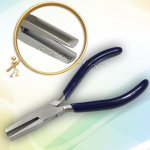
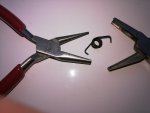
Rummage in my model boxes for thinnest piano wire I could find .... created a V spring and fitted pawl ... works a treat. But its too thick to create the full circle - so will have to get some ultra thin piano wire ... or cough up for the ready-mades.

The other winch was still giving healthy click - so opened her up ... took care not to pop pawls this time ... apart from dried grease - was good ... so light clean .. smear of grease ... 3in1 and back together ...

What with making the temporary spring - less than an hour.
 
A couple of years ago I was servicing my boat on the hard (concrete surface) just after lift out in October, and one of the pawl springs jumped to freedom, I alwYs carry spares so after a quick search gave up on it and put in a replacement, come March laying down alongside the keel slapping on the antifoul, guess what found the pawl spring just sitting there, somehow this little spring had stayed where it landed, spent a winter of storms without getting blown or washed away ready for me to find it 5 months after losing it.
 
Small vice ... drill shank of 1mm less diameter than required.... pliers ..... wire rod.

Trap wire with shank in vice ...., pliers take free end and wind round shank ...

Remove all from vice ... close up circle and snip ends to length.
 
Many years ago, at a Winter Lecture in the Royal Western, Harken UK's Jim Edwards expounded usefully on 'Maintenance of Deckgear'. Even way back then, pawl springs' inevitable flight for freedom was an issue, so he showed us a plastic bucket with an 'ole cut out the bottom, just the right size for placing close over the winch.

He showed how one could dismantle and remove all one's winch bits. with about zero risk of loss.

Someone hard of understanding asked him about different sizes of winch. There's an obvious answer........
 
Many years ago, at a Winter Lecture in the Royal Western, Harken UK's Jim Edwards expounded usefully on 'Maintenance of Deckgear'. Even way back then, pawl springs' inevitable flight for freedom was an issue, so he showed us a plastic bucket with an 'ole cut out the bottom, just the right size for placing close over the winch.

He showed how one could dismantle and remove all one's winch bits. with about zero risk of loss.

Someone hard of understanding asked him about different sizes of winch. There's an obvious answer........

Yep ... and see post #64 ......

I still lost a spring today though !!
 
I follow the lewmar advice on their video of how to service winches - wash off verything with paraffin in a disposable foils baking tray, light oil on pawls/springs , a paint brush to put a film of grease on everything else.

Washing in petrol is crazy dangerous IMHO - I just pour old outboard fuel into SWMBO's car when she is distracted elsewhere.
Done it all my life, still here!
 
I use Muc Off to clean winches. Sold by bike shops to clean offroad bikes. Water based so no fire risk, dries off quickly, then light oil with 3i n 1. Suggested by a Lewmar rep.
Muc off is overkill for sheet winches IMHO. Mainly you need to remove the hardened grease for which paraffin is fine and cheap. I put all the bits except the plastic in an old washing up bowl overnight. Any solvent would do but paraffin is cheap and freely available and smells better than diesel.
 
Top