NMEA 0183

TR18 &19 are the 80mA current limiter and the "plus voltage" is stable at Vsupp minus 1.2v or so. This information is available in the documentation.
The diagram has no missing lines.

Yes, what is not shown in the cct of post #54 is that R67 goes to Chassis. Chassis is battery -ve at the power in skt (SeaTalk). Other 'grounds' are electrically connected to the same point but are shown after (and are probably physically closer to) the internal DC regulator.
Someone asks why there aren't more complaints about this strange o/p cct. Part of the answer would surely be that there are many other devices which do have isolated inputs and there is probably only a small percentage of the ST60-Multis are actually used in this way, most would be connected in a system with ST.
Whatever, it is certainly clear to me that by taking NMEA-B to ground with a single sided input connected would mean effectively grounding the NMEA output.
 
Yes, what is not shown in the cct of post #54 is that R67 goes to Chassis. Chassis is battery -ve at the power in skt (SeaTalk). Other 'grounds' are electrically connected to the same point but are shown after (and are probably physically closer to) the internal DC regulator.
Someone asks why there aren't more complaints about this strange o/p cct. Part of the answer would surely be that there are many other devices which do have isolated inputs and there is probably only a small percentage of the ST60-Multis are actually used in this way, most would be connected in a system with ST.
Whatever, it is certainly clear to me that by taking NMEA-B to ground with a single sided input connected would mean effectively grounding the NMEA output.

You've both missed the point.

I was suggesting there is a design flaw in the design and that the end of R67 should be connected to TP127 and NOT ground, which would have eliminated the problem. Maybe PCB issues A to D or F onwards are different. This would also explain why so few ST60 owners have this problem.
 
Last edited:
You've both missed the point.

I was suggesting there is a design flaw in the design and that the end of R67 should be connected to TP127 and NOT ground, which would have eliminated the problem. Maybe PCB issues A to D or F onwards are different. This would also explain why so few ST60 owners have this problem.

I may have missed your point as I thought the cct didn’t show the gnd but I see an earlier posting showed the grd connection.

It is curious that we have come to xx posts on this subject about a design at least 12yrs old, even though there is plenty of RM kit of that age in good use – I have a boat full of it myself, although not the ST60-multi. Sadly we haven’t had a comment from a current or ex RM tech/engineer for clarification. But as I seem to have more time on my hands than brains, I did some more sleuthing:

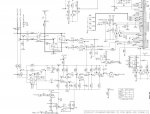
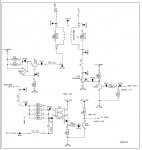
1) The same PCB 30155-132 was used for both the ST60 Multi and the ST60 Depth. They populated it according to the instrument they were building on that run. See diagram below of the ST60Multi and then the ST60Depth:

ST60_Multi i-o.jpgST60_Depth.jpg


2) Note the ccts from the processor pins 44,45,46 etc through to IC4d and IC4e are identical except for the connection in the Depth version from TP132 to the Depth Rx cct. After IC4d/e the cct changes from an NMEA o/p in the Multi to a Transducer driver/Rx in the Depth.


3) In Depth IC4d/TR5 and IC4e/TR6 each drive one side of a centre tapped transformer which then drives the depth transducer through the Depth/NMEA connector pins.

4) In the Multi IC4d/TR5 is jumpered to the NMEA_B pin through R18 (0R0 which could be a jumper or even a fuse). TR6 is not installed and IC4e stops at TP127. Strictly speaking IC4e is not needed but is there because it is part of a multiple buffer device. That is why it may have the appearance of an error/oversight on the Multi version of the cct.

5) This returns us to the point Plevier and Nigel have made about the Multi NMEA output not being suitable for singe ended devices. It is really designed to drive a balanced input, specifically an opto-isolator such as RM uses in its plotters and is part of the NMEA spec (although other i/o systems are allowed).

6) It is really an inflexible design and was probably only a short-cut when somebody in product planning insisted they needed an NMEA conversion capability in this series of instruments.

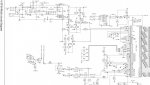
7) ianj99 thinks it might have been an error corrected later. Sadly no, it was perpetuated in the ST60+ updated series of instruments in the ST60+ Graphic which I believe replaced the Multi. See the cct here:

ST60+Graph.jpg


The 2 transistor current limiting pair from +12V are exactly the same for NMEA_A (+) and the NMEA data drives TR17/TR16 to ground on the NMEA_B (-) side as it expects to see an opto-isolator load. There are a few inductors in there for filtering but this new version would/does have the same problem interfacing with a single sided Rx cct as the old Multi does.

8) So why did RM do it this way for these instruments, yet are more flexible with their plotters? I don’t know. Perhaps it was done when they thought all NMEA equipment should be balanced in/out. Maybe there is an old RM designer/service guy who can shed some light.

9) In the mean-time, the Plevier/Mercier interface is a handy thing to have if you want to use the ST60 Multi/Graphic with other equipment which does not follow the balanced input spec.


I hope this is useful to all. Anyway, it is more fun for me than doing the crossword puzzle in the morning paper.
 
I may have missed your point as I thought the cct didn’t show the gnd but I see an earlier posting showed the grd connection.

It is curious that we have come to xx posts on this subject about a design at least 12yrs old, even though there is plenty of RM kit of that age in good use – I have a boat full of it myself, although not the ST60-multi. Sadly we haven’t had a comment from a current or ex RM tech/engineer for clarification. But as I seem to have more time on my hands than brains, I did some more sleuthing:
.

We have now as I received replies from their UK support. I asked if an ST60 multi could be connected to my Navman 5600 plotter which only has a single ended input.


"As I stated, NMEA is a twin wire system, Data +ve and Data –ve, it is a differential pair network and so simply will not operate with a single wire. The signal requires a differential to operate.
Some manufacturers decide to simplify their products and only have a single Data wire, so have a data+ve out and a data+ve in. In these cases tyou need to use the products –ve power supply wire as the reference for the data wire.
I am not aware of any mistake in the NMEA interface in the ST60 multi – it was manufactured for years and used extensively without issues. It is not designed to be used with a single wired NMEA input since that is not how NMEA is intended to operate."


You can take your own view of the reply, I'm keeping mine to myself...!

I did challenge him by pointing out it is certainly not the rs422 type of differential signalling where there is a signal on both + & - outputs otherwise had it been, it would have worked with single ended nmea as well.

I''m still amazed at this design getting into production but if they received few complaints (who knows how many they actually had) then the conclusion is that few customers ever attempted to use it with a single ended nmea input. Or that they just bought a Seatalk to nmea interface and did it that way in the absence of help from forumites on here.

Ian
 
We have now as I received replies from their UK support. I asked if an ST60 multi could be connected to my Navman 5600 plotter which only has a single ended input.


"As I stated, NMEA is a twin wire system, Data +ve and Data –ve, it is a differential pair network and so simply will not operate with a single wire. The signal requires a differential to operate.
Some manufacturers decide to simplify their products and only have a single Data wire, so have a data+ve out and a data+ve in. In these cases tyou need to use the products –ve power supply wire as the reference for the data wire.
I am not aware of any mistake in the NMEA interface in the ST60 multi – it was manufactured for years and used extensively without issues. It is not designed to be used with a single wired NMEA input since that is not how NMEA is intended to operate."


You can take your own view of the reply, I'm keeping mine to myself...!

I did challenge him by pointing out it is certainly not the rs422 type of differential signalling where there is a signal on both + & - outputs otherwise had it been, it would have worked with single ended nmea as well.

I''m still amazed at this design getting into production but if they received few complaints (who knows how many they actually had) then the conclusion is that few customers ever attempted to use it with a single ended nmea input. Or that they just bought a Seatalk to nmea interface and did it that way in the absence of help from forumites on here.

Ian

I can't quell it - a smug, vindicated feeling!
 
Top