Nanni 200hp

Farmer Piles

Well-Known Member
Joined
6 Oct 2020
Messages
888
Location
Deepest Kernow
Visit site
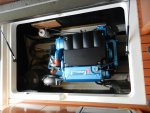
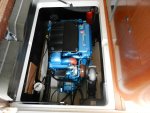
Another engine thread from me. What is the general opinion of the Nanni/Toyota engines. I have no experience of them and I see they are fitted to a boat that is of interest to me - the 4.39TDI from around 2005

 
Have been discussed here recently.

They're built on the Toyoya 1kz engine known from Landcruisers etc. 3 litres, 4 cyl.
Personally have two 175 hp (T4.380) and love them. Never missed a beat, never needed any spares apart from normal service.

Straightforward requirements for oil, coolant, filters, impellers, belts etc. and plenty available.
 
Mine are from 2004, with me since 2010.

Serviced etc. with timing belts in due time (nice access in my boat, did both in a couple of hours). Harness connectors and instruments (VDO) tend to attract dirt so a regular spray with proper cleaner and protection sprays will help in keeping tachometers etc. showing correct values. Do not forget the 3-wire connector on the alternator in this regard (rpm signal taken here).

I have flow alarms on the seawater supply and therefore dare to keep impellers longer. Took them out this fall for inspection and they look ok - after 7 seasons. Not bad for an aftermarket non OEM product! I'll fit new OEM Johnson Impeller Service kits on both (impeller+gasket+o-rings and lube) at some £ 40 a piece. (part no 09-812b-1 if interested). When fitting, the 4 screws holding the lid will be replace by replaced by hex m5x8 AIS316 bolts as access with a socket is easier.
 
Got a MF805 with a 4.390 recently. Runs like a clock and enjoying cheap Toyota service parts being an ex VP maintainer. From what I read, make sure it has a 71 degree thermostat to avoid risk of cylinder 4 overheating and head cracking.
 
As a note, the are differences between the 4.380 and the 4.390. One is that the 390 has a heat exchanger for engine oil.

Never had any temp issues myself.

Edit:

The 390 (200 hp against 155 or 175 in the other models) also has a fuel cooler and higher turbo boost

4.155: 80 ~ 90 kPa
4.380: 85 ~ 95 kPa
4.390: 93 ~ 103 kPa

and different allowed max exhaust temperature

4.155: 450 ~ 500°C
4.380: 570 ~ 600°C
4.390: 550 ~ 580°C
 
Last edited:
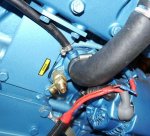
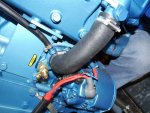
I am looking at a merry fisher with one fitted at the moment, it is 2009 with 450 hours on it. the pic shows a brown part of the engine beside the exhaust elbow, to my limited knowledge of marine engines it looks like part of the exhaust manifold as it think it is the turbo to the side of it. Am I correct? it does not look right that it would heat up this much, someone might shed some light on it as I am probably(hopefully) incorrect. thanks
 

Attachments

  • mf1.jpg
    mf1.jpg
    503.1 KB · Views: 41
  • f6.jpg
    f6.jpg
    549.2 KB · Views: 34
I am looking at a merry fisher with one fitted at the moment, it is 2009 with 450 hours on it. the pic shows a brown part of the engine beside the exhaust elbow, to my limited knowledge of marine engines it looks like part of the exhaust manifold as it think it is the turbo to the side of it. Am I correct? it does not look right that it would heat up this much, someone might shed some light on it as I am probably(hopefully) incorrect. thanks
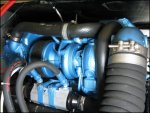
It’s a new part .
just not got any nanni blue paint on it .
Its the exhaust side the side that goes on turbos .
Nothing to worry about Infact kinda a good sign .
 
Agreed. You might ask about the engine service history as to why the turbo has been replaced.

The Nanni blue paint would have covered the original turbo:
View attachment 124774
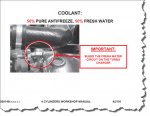
I read that some turbos have failed because of not bleeding the air from the turbo coolant bleed bolt.
Obviously the one in the photo has been done as there is some paint missing.
It was blamed for a fire on a MF805 recently.
 
Huh, not good.

turbobleed.jpg

Tbh. I never found air when bled: After putting on the hard for winter I drain the coolant from the engines (fitted a valve w/ barb to the drain plugs so very easy), then fill with fresh longlife antifreeze. Use the drained antifreeze to winterize the sea water circuit by pouring it into the strainer at idle.

coolantdrain.jpg
 

Attachments

  • coolantdrain.jpg
    coolantdrain.jpg
    169.4 KB · Views: 11
Last edited:
Chrome
Never noticed air either but I will continue trying.
Nice adea for the coolant drain. Thanks.
Will be adding that for sure.
 
I take it one has to bleed the turbo only after changing out the coolant? Thanks
Yes, that would be the only time air could sit there. Guess it's a safety measure and if only coolant comes out you'd at least know that everything is ok.

The drain valve was designed for engine oil but works equally good for coolant. Suggest you check the bolt thread/size but for my 4.380's the part numbers on the invoice were

F-106N nipple drain valve
ADL-106 adapter

from Quick Valve UK - supplying Fumoto oil drain valves

Total cost (each engine) in 2015 was £ 22.45 + P&P

PS! The domestic water calorifier is fitted to one of the valves. For the drain I temporarily fit a short hose, then refit the calorifier hose before filling new coolant.
 
Last edited:
Top