tony_lavelle
Well-Known Member
Shock, horror! On Sunday night, coming up the Medway in the dark, navigating with my iPad and watching out for the big iron mooring buoys, I noticed some weird features on the Navionics charts, for which I have downloaded the latest updates.
You can check the Navionics cartography for yourself on their free web app here: http://webapp.navionics.com/#@13&key=ip{xHigdC
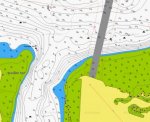
a. Supposedly there are three mooring buoys (one is a “group of 3”). The one labelled "B.7" just NW of Stangate Spit shows at moderate zoom, to see the other two you have to zoom in a bit. I'm pretty sure none of these exist and never have.
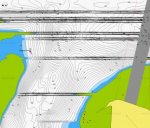
b. The drying patch at bottom left (by Sharp Ness) does not exist and the depths along the shore of Burntwick Island are shown much too shallow.
Pan to the south and east a bit, around Stangate/Queenborough area, and you will see many “rocks” close to the HW mark. They are suspiciously evenly spaced. I don’t believe any of these exist, even allowing for a wide interpretation of what a “rock” might mean in the local context.
It’s only because of my detailed local knowledge that I noticed these anomalies. In an unfamiliar place it could be very misleading, which kind of defeats the object of having charts, does it not?
I have some experience of geographic data and map making but can’t understand how such errors could occur since the cartography must surely come from UKHO and the sources (harbour authority, Trinity House etc) would be the same as for other charts. Navionics does have a “community edit” feature but such additions are shown with a small “+” sign.
However Navionics have recently introduced an add-on called “Sonar Charts” which I understand is bathymetry based on user-reported depths, Though I have not knowingly opted for this feature it might explain the potentially dangerous incorrect depths shown. A friend who has an older Navionics app on his Android phone seems to get more believable cartography than I see on my Android phone, iPad and PC.
There does not seem to be any way to find out the source of Navionics cartography or to report errors, other than “community edit” features. Does anyone else know?
I have not seen anyone report this kind of error yet on YBW.COM but the French have (see St Vaast/Tatihou example):
http://blog.francis-fustier.fr/en/la-cartographie-navionics-devient-elle-dangereuse/
You can check the Navionics cartography for yourself on their free web app here: http://webapp.navionics.com/#@13&key=ip{xHigdC
a. Supposedly there are three mooring buoys (one is a “group of 3”). The one labelled "B.7" just NW of Stangate Spit shows at moderate zoom, to see the other two you have to zoom in a bit. I'm pretty sure none of these exist and never have.
b. The drying patch at bottom left (by Sharp Ness) does not exist and the depths along the shore of Burntwick Island are shown much too shallow.
Pan to the south and east a bit, around Stangate/Queenborough area, and you will see many “rocks” close to the HW mark. They are suspiciously evenly spaced. I don’t believe any of these exist, even allowing for a wide interpretation of what a “rock” might mean in the local context.
It’s only because of my detailed local knowledge that I noticed these anomalies. In an unfamiliar place it could be very misleading, which kind of defeats the object of having charts, does it not?
I have some experience of geographic data and map making but can’t understand how such errors could occur since the cartography must surely come from UKHO and the sources (harbour authority, Trinity House etc) would be the same as for other charts. Navionics does have a “community edit” feature but such additions are shown with a small “+” sign.
However Navionics have recently introduced an add-on called “Sonar Charts” which I understand is bathymetry based on user-reported depths, Though I have not knowingly opted for this feature it might explain the potentially dangerous incorrect depths shown. A friend who has an older Navionics app on his Android phone seems to get more believable cartography than I see on my Android phone, iPad and PC.
There does not seem to be any way to find out the source of Navionics cartography or to report errors, other than “community edit” features. Does anyone else know?
I have not seen anyone report this kind of error yet on YBW.COM but the French have (see St Vaast/Tatihou example):
http://blog.francis-fustier.fr/en/la-cartographie-navionics-devient-elle-dangereuse/