lazyjacks and singlehand sailing

I sail a 41 single handed. Ease the main sheet so boom can move abit but not across the deck. Head in to wind on ap and as the main zig zags from side to side raise the main. I also have heavy clothed sail ?

 
Am about to fit some.

John at AAC:

Attainable Adventure Cruising

whose design I am copying, is very firm about NOT hanging the upper blocks off the spreaders.
There are lots of people who have very firm opinions on many things - but doesn’t mean they are always right.

Our jackstays are attached about 6 inches out from the mast on the upper spreaders. I would expect the spreader roots (not necessarily the tips) to be able to withstand somebody standing on them - which is much more than the weight on the lazy jacks. And we have discontinuous rigging, so the spreader ends can’t slip down. So I would say that is engineered fine.

Wouldn’t necessarily recommend attaching lazy jacks well out on a flimsy set of spreaders with wires just passing through a loose clip on the end (the sort of boat you often see with droopy spreaders!). But the issue there is the spreaders not fit for purpose, not the lazy jacks.
 
I have full battens and learned quickly that to avoid the snagging I just need to completely slacken the lazy jacks before hoisting. The sail bag hangs below boom level and this brings all the hazy jack lines well forward of the snagging zone. Then tighten them for dropping.
 
If all else fails:
Hoist / open the headsail and sail close hauled.
Let the mainsheet go.
Slacken lee side lazyjacks, and pull forward if need be.
Hoist main in slipstream from headsail.

I do all my sail hoisting and reefing at the mast when single handed or crewed as it's easier to spot problems before things get jammed or damaged by brute force and ignorance.

As to not hanging lazyjacks from spreaders, we are all free to make our own choices. I do not seek publicity and no longer run a sailing business but have sailed a fair bit including north of the Arctic Circle, and also sail single handed. My choice is to attach lazyjacks to the spreaders to open the throat. This has worked without any problems on my four boats since first rigging lazyjacks in the early 80's. However, I always ensure the outboard end of the spreader is secured to the cap shroud and can not be pulled below the optimum angle. Allowing a spreader to droop puts the rig at risk so high profile sources are probably being dogmatic to cover themselves.
 
If all else fails:
Hoist / open the headsail and sail close hauled.
Let the mainsheet go.
Slacken lee side lazyjacks, and pull forward if need be.
Hoist main in slipstream from headsail.

I do all my sail hoisting and reefing at the mast when single handed or crewed as it's easier to spot problems before things get jammed or damaged by brute force and ignorance.

As to not hanging lazyjacks from spreaders, we are all free to make our own choices. I do not seek publicity and no longer run a sailing business but have sailed a fair bit including north of the Arctic Circle, and also sail single handed. My choice is to attach lazyjacks to the spreaders to open the throat. This has worked without any problems on my four boats since first rigging lazyjacks in the early 80's. However, I always ensure the outboard end of the spreader is secured to the cap shroud and can not be pulled below the optimum angle. Allowing a spreader to droop puts the rig at risk so AAC is probably being dogmatic to cover themselves.
Interested to see that you believe the outboard ends of spreaders are secured to the cap shrouds. It has always seemed a good idea to me.

I do this by having a bulldog clamp permanently fastened to the shroud supprting the spreader. This was condemned by some on here many years ago when I first described it. (Not that I took any notice!).

How do you secure your spreaders to the cap shrouds?
 
Do tell more.
If you insist. I'm quite keen on the KISS principle. Adding strings that catch the main when hoisting, that apparently need adjusting to allow the sail to set, that rattle on the mast, and generally get in the way seems to be a pointless expense and effort. I hoist and lower from the mast and have no difficulty in flaking as it drops and then onto the boom with sail-ties but then, as Dunedin commented, I do not have one as big as his. On OPBs with the infernal contraptions, usually allied with an ugly stack pack, I find the faff of hoisting while waiting for the sail to be perfectly centred takes concentration away from where the boat is actually pointing. But each to their own.
I admit that just letting the halyard run is an attraction but I get to see the stitching, batten pockets, tell-tales etc. before problems arise.
 
I made my own that fold easily out of the way when not needed, video here. My preference though is to use autohelm to keep head to wind and go to the mast as opposed to trying to do it all from the cockpit...
Likewise - we have an electric halyard winch and the millisecond between pushing the button and it raising the batten past a snag point can be frustrating. With the autohelm steering to wind, manual hauling at the mast when the stars are aligned gets it up past the danger zone at the first attempt nearly every time.
 
Interested to see that you believe the outboard ends of spreaders are secured to the cap shrouds. It has always seemed a good idea to me.

I do this by having a bulldog clamp permanently fastened to the shroud supprting the spreader. This was condemned by some on here many years ago when I first described it. (Not that I took any notice!).

How do you secure your spreaders to the cap shrouds?
On my current boat with Kemp mast there are built in clamps on the end of the spreaders, and root fittings that defies any downward movement. I can (and do) stand on a spreader without any concern that it will droop.
My Prout catamaran came with a bodge fitted by a so called rigger; a copper ferrule crimped to the cap shroud. Of course this had steadily corroded the alloy end plug and the the spreader was starting to droop. Rather than re-rig I continued the bodge by rebuilding the plug with epoxy resin and likewise encapsulating the ferrule. No problems in the five years I owned the boat.
On the other boats I used s.s. bulldog clamps, (like you) of the type used to make temporary eyes in flexible wire, to support the spreader ends. You have to be careful not to over tighten though as the U bolt side of the clamp could cripple the lay in the shroud. Obviously, keep the bolt ends under the spreader and if necessary cover to prevent any chafe.
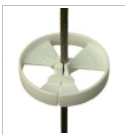
I find it interesting how many people will vociferously and authoritatively condemn something they have no experience of. I was criticised in my YM Instructor exam (many, many years ago) for anchoring under sail in light winds by laying the chain on the run and bedding the anchor in by turning the boat just before checking the chain so that the chain was clear of the hull. No No, you can't do that they all said. It was a technique I had often used on my own boat and learnt from the book "Practical Yacht Handling" by no less an authority than Eric Tabarly.
 
On my current boat with Kemp mast there are built in clamps on the end of the spreaders, and root fittings that defies any downward movement. I can (and do) stand on a spreader without any concern that it will droop.
My Prout catamaran came with a bodge fitted by a so called rigger; a copper ferrule crimped to the cap shroud. Of course this had steadily corroded the alloy end plug and the the spreader was starting to droop. Rather than re-rig I continued the bodge by rebuilding the plug with epoxy resin and likewise encapsulating the ferrule. No problems in the five years I owned the boat.
On the other boats I used s.s. bulldog clamps, (like you) of the type used to make temporary eyes in flexible wire, to support the spreader ends. You have to be careful not to over tighten though as the U bolt side of the clamp could cripple the lay in the shroud. Obviously, keep the bolt ends under the spreader and if necessary cover to prevent any chafe.

I have these above the spreader ends to keep the sail clear of the bulldog-clamps:

1636743382651.png

I find it interesting how many people will vociferously and authoritatively condemn something they have no experience of. I was criticised in my YM Instructor exam (many, many years ago) for anchoring under sail in light winds by laying the chain on the run and bedding the anchor in by turning the boat just before checking the chain so that the chain was clear of the hull. No No, you can't do that they all said. It was a technique I had often used on my own boat and learnt from the book "Practical Yacht Handling" by no less an authority than Eric Tabarly.
Closed minds!

You would think people would be keen to learn and try different ways of doing things but many are not. What is annoying is that some even condemn others for doing so!

The anchoring technique you describe was also recommended by Eric Hiscock.
 
  • Like
Reactions: srm
Being a single hander, I find that the combination of stack pack and lazy jacks of particular benefit when reefing. Having all the bunt taken care of quickly and easily , along with a quick reef, makes all the difference when things start to get lively.

I know that many sailors have enough slack built into the system so they can do without adjusting the lazy jacks. It may be my technique at fault but the following set up works for me.

I join the two lazy jack adjustment lines coming down the mast and insert a single plastic block with a becket . A line from the block is then led back to the cockpit in a jammer. I just let the single line go when hoisting the main then jam it when the main is up.
 
Maybe I’m missing the issue here but surely you just plan your life /direction to sail into wind for a hoist or sail drop. I don’t see what not to like by heading to your port, preparing the main halyard on the winch ,heading up and dropping into stack pack as you motor head to wind. It’s far quicker than in mast and less to go wrong. Hoisting can be slightly more tricky for snagging but you just need clear water before the hoist and with cross winching can hoist the main from the helm using a sheet winch as you motor on autopilot if say crew asleep below etc.
 
It seems lazyjacks are both a necessity for safe and easy dropping of main sail - and a curse when lifting the main since battens get stuck in the lazyjacks lines.

I slacken off the lazyjacks when hoisting the main (so the battens are far less likely to get caught by the lazyjacks) and take the slack in when I have to drop the main.
 
When we converted to full battens on the main and mizzen I installed lazy jacks on both masts. It was an absolute game changer for us being able to drop the sail into the jacks without any faff and sort things out when in port or at anchor.

The top of the jacks attach to the centre of my spreader, which provides a fairly wide spread to keep the battens out of trouble. The ends of the spreaders are firmly clamped in place and drooping has never been a problem (droopy spreaders are a pet peeve of mine). I also avoided using metal connectors (rings or blocks) at the intersections to reduce the risk of chafing.

Whatever the the complaints about lazy jacks may be, I thoroughly recommend them.
 
Whatever the the complaints about lazy jacks may be, I thoroughly recommend them.
Me too. The ability to drop the main safely and reasonably tidily from the cockpit far outweighs the buggery factor of battens catching the lazyjacks. I also have a light downhaul on the main, so I can get it down all the way and make sure it stays down in any conditions.
 
On the other hand - drop mooring; back to cockpit and unroll genoa, sheeting to point head in right direction before fully unrolling and sheeting in; release kicker and mainsheet; clear moorings and when in open water stroll forward removing sail ties on the way; hoist main; back to cockpit, sheet in/kicker on; take tiller. No need for autohelm, motor, extra crew. Parking is under main only - stop at buoy, pick up strop, back to mast and drop sail flaking the luff as it goes. Only if tide is stronger than wind - nearly all this year in the sunny north - does this need modification but I was probably motoring anyway.
 
Yes and having electric winches helps as the main gets larger . As for dropping just needs some track spray and the batten cars spraying when replacing battens after sail cleaning -the batten cars are a right nightmare to build but tend to clean mainsail on a 3 year cycle so not that bad . Having fitted a new dyneema halyard this year it also seems to keep the sail up better but is rather stiff so drop rate is perhaps slower maybe.
 
On the other hand - drop mooring; back to cockpit and unroll genoa, sheeting to point head in right direction before fully unrolling and sheeting in; release kicker and mainsheet; clear moorings and when in open water stroll forward removing sail ties on the way; hoist main; back to cockpit, sheet in/kicker on; take tiller. No need for autohelm, motor, extra crew. Parking is under main only - stop at buoy, pick up strop, back to mast and drop sail flaking the luff as it goes. Only if tide is stronger than wind - nearly all this year in the sunny north - does this need modification but I was probably motoring anyway.

That’s what I have done for half a century, with either a Wykeham Martin gear on the jib or just hoisting it, on boats up to 37ft on deck and 9 tons displacement. In fact I very rarely used the engine.

However I am now the keeper of a boat that displaces 24 tons and whilst she has very nice manners I need to consider that if I make a mistake I may do real damage, so I am now thinking of lazy jacks, just to retain visibility ahead.

A couple of gadgets that the boat came with - which I would not have bought because I had never tried them, but which I certainly recommend - are a StrongTrack low friction track on the mast and having the mainsail tyers on a “spider” that clips into place. I have added a Winchrite and that works really well.
 
Last edited:
Top