
franksingleton
Well-Known Member
Better forecasts ahead as Met Office transitions to a supercomputer in Azure cloud describes the recent introduction of their latest computing facility and the reasons for its introduction.


Never forget that the amount of time given to matine forecasts is determined by the NCA in consultation with users. For longer than I remember - a very long time - marine forecasts texts have always been akin to squeezing a quart into a pint pot~. The classical example is the BBC Shipping `forecast. A maximum of 330 words in total. NAVTEX slots are small. The official marine forecasts can never be more than headlines and warnings.Thanks for posting.
Hope it suits some folks.
I have given up on the met office sailing forecasts for some time now due to the wide banding of wind forces. This is frustrating as we all contribute money to this organisation whether we like it or not.
They have over 1400 people working at Exeter and over 2200 globally . You wonder what is going on.
I doubt if the super computer is going reduce staff members.
Sorry Frank . I know you mean well.

Perhaps my #5 was not detailed enough. The Met Office will provide services as agreed with the MCA. I suggest that you contact the RYA. They have (or had in my time) a seat on a committee that represented all marine users. It is not for the Met Office to decide what forecasts are produced. They will advise or comment on requests and then provide an agreed service.With all this super computer and AI, will they increase the inshore forecast to cover 3 days ?

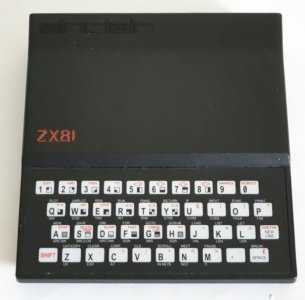
Wasn't that a total failure?An upgrade from:
View attachment 193721


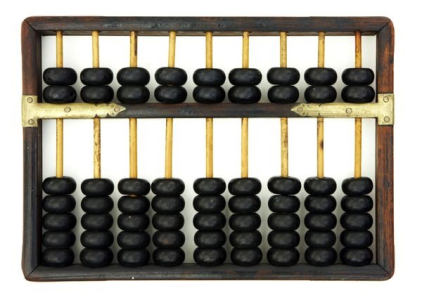
I think that you misunderstand the nature of the Met Office/MS relationship. The Met Office has long been in the forefront of using computing technology right from the time that they were using LEO, the Lyon’s Tea House computer, through the Aldermaston, GFDL (USA)/NASA) computers, the in house computers from the English Electric Mercury, various Ferranti, IBM, Crays etc. You might even go back to the Pilot balloon slide rule which had 2 cursors, invented in 1915. A skilled observer, single handedly, could follow a balloon with a manual theodolite while inputting azimuth and elevation into his slide rule and calculate winds during the ascent.The biggest problem I see is that they have decided to partner with M$.
Late to school, copies everyone else's homework, and cuts corners on security and reliability.
MS have consistently been at the front with AI and ML workloads.The biggest problem I see is that they have decided to partner with M$.
Late to school, copies everyone else's homework, and cuts corners on security and reliability.
