Lassoing a cleat

Interesting. I am usually single-handed. I prepare a forward and stern line. Both are lead so easily accessible from the cockpit. When approaching the pontoon I chuck them onto the pontoon and step ashore to secure them. Seems to work!.

Unfortunately our boat weighs 11 tonnes and if there's a bit of wind or tide taking the boat away from the pontoon one can get into a LOT of trouble doing it that way.

A shortish line from a midships cleat with a loop in the end dropped over a cleat on the pontoon, then motor ahead gently with the helm hard over steering away from the pontoon brings the boat alongside and stationary under perfect control. You never get off the boat until the boat is stationary so it's a very low risk strategy.
 
Lol, I think he is just chucking rope at the bits and hoping it hooks it. Missing once is acceptable but twice would bring a shout from the Skipper and more than twice would bring his wrath and abuse from the other crew.

Indeed, but the coiling of the eye and having 2 separate hanks of line is what it shows. I know exactly what you mean but couldn't explain it any better than you.

W.
 
Much easier to have a permanent line on the pontoon cleat of your home berth. Make it up to the right length with a loop on the end. Lay it on the pontoon when you leave and pick it up with a boathook when you arrive and drop it on the midships cleat. Refinement that I use is a pole at the end of the finger with a hook on it holding 3 lines. Useful if the boat has high topsides. Saves all that throwing lines and jumping off business.

That's exactly what we have on our home berth, with the upright pole. And also on the upright is a short spliced breast rope that can be lifted off by he boathook and looped over the genoa winch to hold the stern in loosely (also acts as spare rope in winter in case primary ropes part in a major gale)

Generally great system, and prevents hitting the front of berth. One thing I have never quite managed is to use it smoothly to hold us in in a strong cross wind blowing off.
Because the fixed rope is - well - fixed, it is tricky to get exactly the right moment to go smoothly from engine astern (to avoid crashing to a stop on the rope) to powering ahead on it to keep the bows in, and without damaging the gearbox by crash changes. Typically will approach downwind in neutral at about 1.5 knots (any slower and she won't do the turn up to the pontoon), then a gentle burst of astern to stop (with stern kick pulling stern in). But then need to change back to gently ahead which gives a jolt as the rope comes tight. (only an issue above 20 knots from the side)
 
Went out sailing today. Went to Carrickfergus, so had 2 opportunities to practice. Used Gorilla Tape to wrap around the loop in the spring which made a very good job of holding it open. Also sawed 2 feet of my boathook which made it far easier to handle (it was always too long and unwieldy) Puting the open loop on the cleat was so very easy and made single handed mooring so much easier. Back in Bangor wind had made situation trickier. Looping spring on cleat was really easy despite being blown several feet off pontoon. Plenty of forward throttle brought boat in nicely. Bow was blown of a couple of times but again an extra few revs got things under control. Thanks for all advice.
 
We (or more accurately SWMBO) also has trouble dropping a loop over a cleat. We'll try keeping the loop open with hose as suggested. Another idea has just occurred to me though. A loop of rope only gives you one chance to get it over the cleat. Why not use a few square feet of netting tied to a length of rope. I'm thinking big mesh stuff like scrambling net. Wouldn't that create several loops to snare the cleat?
 

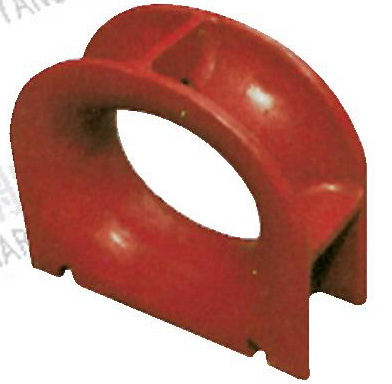
I've got Panamas, and very good they are. And they're NOT midships cleat as someone suggested.

They are closed fairleads usually built into bulwarks. They're closed so the rope can't jump out. I assume they were invented to cope with the large rise and fall when going through the Panama locks. Sometimes called a 'hawse hole' I believe, as opposed to....
 
We (or more accurately SWMBO) also has trouble dropping a loop over a cleat. We'll try keeping the loop open with hose as suggested. Another idea has just occurred to me though. A loop of rope only gives you one chance to get it over the cleat. Why not use a few square feet of netting tied to a length of rope. I'm thinking big mesh stuff like scrambling net. Wouldn't that create several loops to snare the cleat?

Or replace SWMBO with Spider-Man who will always get a 'line' on the pontoon.:o
 
I've an 8 tonner with high topsides - bit of a nightmare coming alongside in anything of a breeze. But the midship cleats are a blessing. After lots of near misses trying to lasso pontoon cleats with a loop of rope from midships, I simply put the lasso line through a piece of 32mm water pipe which enables me or the crew to place the loop onto the cleat rather than try to throw it over. I cut the pipe to the height of my toerail above a typical pontoon - nearly 4ft in my case.
Centre cleats are great for coming alongside short handed under total control - stop alongside a cleat, loop it, cleat it, nip back and give her gentle forward revs to pin her to the pontoon while I step ashore and secure the breast lines then springs.
It took me a bit of trial and error on empty pontoons to get the length of the centre line right and combinations of rudder position and forward or reverse gear that worked best. Mooring alongside has now lost most of its terror, thankfully.
 
The mistake everyone is making is to think in terms of a cowboy lassoing a calf with a loop tied into the end of a rope! Hasn't anyone been on a Coastal Skipper Course where they would have been trained to lasso a MOB by taking a sheet, for instance, making the other end fast, making a coil of the bight, dividing it into two halves, one in each hand, and throwing them out and away from each other, over the object which needs to be secured to the boat?
What I normally do when coming alongside is to cleat a warp amidships, take the bight out underneath the lower lifeline and drape it back over the top with the other end turned around a winch. When the end cleat of the pontoon comes abeam, the bight of warp is thrown over it and the end surged on the winch, bringing the boat to a gentle halt with the bow turned in towards the pontoon. The end can then be cleated. With the rudder deflected towards the pontoon and the engine in slow forward the boat will sit quite securely while you step ashore and tie up your warps at leisure.
 
Lassoing cleat, 100% success rate when practising! nearly always abject failure in real life! lack big match temperament.

Loop stiffened with hose is the way to go.
 
Mooring

I use the mid ship cleat system + a loop in the end of a line. The line is attached to the boat just forward of the mid ship cleat. I also have a near vertical length of stainless attached to a pontoon cleat. When close enough I simply drop the loop over the length of stainless. The loop naturally falls down the stainless and goes round the pontoon cleat. Gently motor forward and turn the bow away from pontoon. The warp stops the boats forward motion and pulls the bow into pontoon. The forward thrust of the prop keeps the stern into the pontoon. Step ashore and secure properly. Have the kettle on for a cuppa before helpful souls arrive to take lines. Thank helpful souls and offer them tea and biscuits whilst they admire your mooring technique.

The loop is quite large and stiffened with hose.
 
Last edited:
You don't need any great accuracy if you do it as Spirit of Glenans suggests. None of the Roy Rogers stuff. All you need to do it make sure that the loop (or bight as we sailers call it) goes behind the object being lassoed (it doesn't matter how far behind - within reason) you then pull on the free end and the bight will gather the cleat and - hey presto - you're secure. You can use a mid cleat or any other attachment point on your boat and the same technique works home or away on any cleat or bollard. By all means have bespoke lines rigged on your home berth but use the RYA method to secure the boat temporarily while you rig permanent lines.
 

Panama-Chocks-JIS-F-2017-1982-.jpg


Panama Fairlead can be anywhere on the boat...


OK idea instead of lassoing (sorry I do not like throwing things on boats)...

Boathook_zpsc33d2081.jpg
 
OK idea instead of lassoing (sorry I do not like throwing things on boats)...

Nice picture.

Exactly how I do it single handed; I thought that was why the end of the boat hook was shaped that way!

Why thank you, I made that picture :o

I must admit the first use I had for it was if you stop beside your dropped fender and are luck you can "cleat" the rope on the end, to pick it up. Although of course use forumites never drop fenders :rolleyes:
 
Top