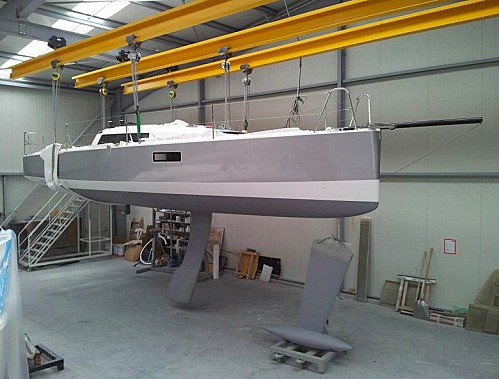
Good script. Perhaps, the keel of the future is likely to be a keel that can be change its shape, position and weight, hydraulically at the press of a button from the cockpit to suit various conditions. I would like one of those now.
A key and often ignored factor in the evolution of keel design was the available technology.
The much revered (by some) long keels, integrated with the hull and with rudder hung on the back, originated I suspect largely as that was what the wooden technology of the day could do easily and reliably. It was an evolution of the "keel" plank of the old sailing ships / boats, which just got deeper and ultimately internal ballast moved to be bolted on as external ballast. I guess it was never seen as the best design, just the best compromise with the available knowledge and technology.
New technologies give new options - though not all of the options are right for each purpose (as the author stated, a deep keel optimised for an offshore racer is not ideal for hitting bottom in shallow channels)
There is nothing new under the sun. A few years ago our marina office had a model yacht on a shelf with a tandem keel. It was very old, possible 1900s, or '20s.