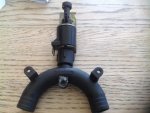
Jabsco 37010 electric Toilet

frenzy

Well-Known Member
Joined
24 Apr 2008
Messages
79
Location
Kinsale, Cork,Ireland
Visit site
Hi

I have a Jabsco 37010 electric flush toilet. The problem I'm having is that it's not taking in any water. It seems to flush fine when I pour water into it.

Also the solenoid seems to get very hot . Is this normal ?


Any ideas please.
 
Hi,

Have you had it recently serviced, as the model you have has an impeller in and depending on the age could do with replacing?

Or the inlet pipe could be blocked.

Regards

Peter
 
Thanks for your replies.

This is a new boat to me so I cannot say it has been serviced recently.

I took the solenoid off yesterday. It seems to be a bit corroded and stuck in an open position. I diverted the intake pipe from the solenoid to a bucket and the impeller pump is drawing water and filling the toilet.

With regards to the solenoid , does it act like a pump or is it just an on off switch .?
 
Where is the solenoid located? I've had two boats now with this model of toilet and neither of them had a solenoid fitted.

Both have had the water intake from seacock feeding directly to the pump intake & a simple on/off switch to power the motor/pump unit on the back of the toilet with no solenoids fitted.

On this basis I'd question why there's a solenoid fitted & whether it's easier just to remove it
 
Where is the solenoid located? I've had two boats now with this model of toilet and neither of them had a solenoid fitted.

Both have had the water intake from seacock feeding directly to the pump intake & a simple on/off switch to power the motor/pump unit on the back of the toilet with no solenoids fitted.

On this basis I'd question why there's a solenoid fitted & whether it's easier just to remove it

I also have the 37010 and my switching arrangement is the same as yours. At a guess, perhaps the OP doesn't actually have a 37010.

 
The Solenede is connected to an anti syphon valve that's also connected to the on off switch. It's bolted on higher up than everything else. I'm not sure either why it's there .
 
They have two impellers. One solid for the 'waste' in the macerator and another for the flush/outlet. I've just given one of mine a full overhal and have just ordered the bits to do the other one (stops you biting your finger nails for a few days lol....). I DON'T have a solenoid valve either, I belive the quiet flow (which looks very similar) had one though?
 
They have two impellers. One solid for the 'waste' in the macerator and another for the flush/outlet. I've just given one of mine a full overhal and have just ordered the bits to do the other one (stops you biting your finger nails for a few days lol....). I DON'T have a solenoid valve either, I belive the quiet flow (which looks very similar) had one though?


Just been in contact with Jabsco shop and they advised me that the solenoid is also used for Priming the system !!
 
Just been in contact with Jabsco shop and they advised me that the solenoid is also used for Priming the system !!

I did wonder that, when I get on the plane all the water gets sucked from the inlet pipe, hence next time I flush the toilet it takes ages for the water to get drawn through!

It's never caused any harm to the pump impellor, in fact jabsco recommend shutting off the inlet water supply to flush away excess water in the bowl should that situation arise.

On that basis if you can wait for the toilet to re-prime I'd delete the solenoid it's one less thing to go wrong!
 
Just been in contact with Jabsco shop and they advised me that the solenoid is also used for Priming the system !!
That's very strange, I've traced the pipes on mine and the inlet is connected straight to the toilet and there is plenty of water flow, self priming from raw water. Maybe it's an optional installation? Do you fill from raw water through the sea cock or from the boats fresh water? I'm curious now in case it's something we should all be aware of and I don't understand how a simple solenoid valve is used for 'priming' as it would need to hold a head of pressure. It's not shown on the schematics on the jabsco site either. Good luck getting it resolved.
 
It's connected via sea cock. I'm still not convinced myself, but as I said it's a new boat for me. I'm going to try with the original set up of solenoid and see how I go.

As suggested I would prefer the direct route with less things to go wrong. I attach the set up I have .
 

Attachments

  • image.jpg
    image.jpg
    94.1 KB · Views: 18
It's connected via sea cock. I'm still not convinced myself, but as I said it's a new boat for me. I'm going to try with the original set up of solenoid and see how I go.

As suggested I would prefer the direct route with less things to go wrong. I attach the set up I have .

attachment.php


Presumably that is located at the top of a loop in the inlet pipe between the inlet sea cock and the pump.

I guess the solenoid energises to close vent valve while the pump is running, so that it does not merely suck air in, but allows the valve to open again when the pump is not running to break the syphon that otherwise might flood the toilet.

You have proved that the pump is Ok by sucking water up from a bucket.
If I am understanding things correctly two possibilities are that the solenoid is not closing the vent, so the pump is just sucking air instead of flush water, or that there is a blockage in the inlet ...... are you sure the inlet seacock is actually open.
 
Last edited:
Just a thought - if this is an anti-syphon valve on the inlet... this may be to prevent contamination flowing back from the bowl to the inlet sea cock - does the vessel have a holding tank of any sort or a BSS? The antisyphon may be there to stop the flow and the solenoid valve is to close the vent to allow suction to take place. When it opens the air will be drawn in and the water flowing to the bowl will cease. Which are the symptoms you are having. If you think the solenoid is faulty, remove it and block up the vent and all should work OK. Maybe :-).
Edited....
I had this open for a while and have just noticed (when I posted) that VicS is saying something very similar but I've had another thought......... an antisyphon valve usually closes when pressure is applied and opends when suction i.e. fluid tries to flow back. The solenoid valve is there to make it work in reverse i.e. when the pump is engaged it closes the vent and when the pump stops and the solenoid opens it allows air back in so the water draining back will not empty the pipe to the toilet hence it is still partially primed. However, if you remove the solenoid and block the vent it does mean that there is a risk of the inlet pipe emptying but based on various comments in the thread and based on the configuration on my own boat you may be absolutely fine with the usual caveats that we don't know the exact reason for the anti-syphon in the first place which may have been included to prevent a particuar issue pertinent to your installation which others, including myself, may not have.
 
Last edited:
Just a thought - if this is an anti-syphon valve on the inlet... this may be to prevent contamination flowing back from the bowl to the inlet sea cock - does the vessel have a holding tank of any sort or a BSS? The antisyphon may be there to stop the flow and the solenoid valve is to close the vent to allow suction to take place. When it opens the air will be drawn in and the water flowing to the bowl will cease. Which are the symptoms you are having. If you think the solenoid is faulty, remove it and block up the vent and all should work OK. Maybe :-).
Edited....
I had this open for a while and have just noticed (when I posted) that VicS is saying something very similar but I've had another thought......... an antisyphon valve usually closes when pressure is applied and opends when suction i.e. fluid tries to flow back. The solenoid valve is there to make it work in reverse i.e. when the pump is engaged it closes the vent and when the pump stops and the solenoid opens it allows air back in so the water draining back will not empty the pipe to the toilet hence it is still partially primed. However, if you remove the solenoid and block the vent it does mean that there is a risk of the inlet pipe emptying but based on various comments in the thread and based on the configuration on my own boat you may be absolutely fine with the usual caveats that we don't know the exact reason for the anti-syphon in the first place which may have been included to prevent a particuar issue pertinent to your installation which others, including myself, may not have.

The anti siphon valve is necessary to prevent water continuing to syphon in and flood the toilet after flushing if the toilet is below the water line.

With the manual toilets the anti siphon loop and valve should replace the short hose between the pump and the bowl. The pressure from the pump holds it shut while flushing but once the action is complete the valve opens to admit air and break the syphon...... Often people who don't read instructions fit it between the seacock and the pump and wonder why their toilet wont flush properly"


If I am right once the toilet is electrified the anti siphon valve can be fitted, in what is to some the more obvious location, between the seacock and the pump and the vent controlled by a solenoid valve . Closing to stop air entering while flushing and opening again to admit air once flushing ceases.
Not exactly operating in reverse but forcing it to work in a situation in which it won't with a manual toilet.

it would be mistake to block off the vent if the toilet is below the waterline as water will continue to syphon . If the toilet is well above the waterline the whole loop and vent are unnecessary
 
Last edited:
The anti siphon valve is necessary to prevent water continuing to syphon in and flood the toilet after flushing if the toilet is below the water line.

With the manual toilets the anti siphon loop and valve should replace the short hose between the pump and the bowl. The pressure from the pump holds it shut while flushing but once the action is complete the valve opens to admit air and break the syphon...... Often people who don't read instructions fit it between the seacock and the pump and wonder why their toilet wont flush properly"


If I am right once the toilet is electrified the anti siphon valve can be fitted, in what is to some the more obvious location, between the seacock and the pump and the vent controlled by a solenoid valve . Closing to stop air entering while flushing and opening again to admit air once flushing ceases.
Not exactly operating in reverse but forcing it to work in a situation in which it won't with a manual toilet.

it would be mistake to block off the vent if the toilet is below the waterline as water will continue to syphon . If the toilet is well above the waterline the whole loop and vent are unnecessary

Good point. Mine are ABOVE the waterline. ;-)
 
Ok


I replaced the solenoid and anti siphon valve as they were both perished. Still no joy. Also I serviced the motor with a new impeller and service kit. Still not working .I have contacted a local agent about it and he has suggested it could be the motor failing and not able to pump water. Now at wits end. So my delima now is to either replace the motor ,motor assembly, or change the toilet completely .!!!!
 
Ok


I replaced the solenoid and anti siphon valve as they were both perished. Still no joy. Also I serviced the motor with a new impeller and service kit. Still not working .I have contacted a local agent about it and he has suggested it could be the motor failing and not able to pump water. Now at wits end. So my delima now is to either replace the motor ,motor assembly, or change the toilet completely .!!!!
The motor assembly is the most expensive to replace. I believe about £170? You are in the realms of throwing good money after bad. Have you done the obvious and seen if it can suck water out of a bucket next to the loo? Personally I think it would be very obvious if the motor was failing as the speed would be noticably slow. On mine, I didn't use the service kit. I changed both the impellors and chopper (although none looked as if they need to be changed so I've kept them for spares (after bleaching them!!!). The biggest difference was the wear plate (which I don't believe is in the service kit - item 23 on the exploded view?) and the shaft seal (items 29/30) behind the rubber impellor and the motor as this is a prime candidate to leak if you disturb the shaft. Its like a new unit now and is quite different to its post repair state. Mine is the 1090 variant for what its worth.
 
Top