Is the DC output from a cheap solar panel electrically noisy?

wonkywinch

Well-Known Member
Joined
30 Jul 2018
Messages
3,878
Location
Hamble, UK
Visit site
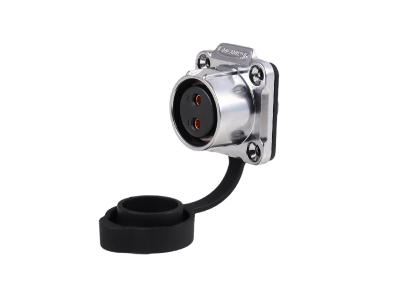
I'm looking at putting a waterproof connector such as this one in a space at the base of the mast where the other cables enter through a panel in the ceiling. I could then use the male to MC4 solar connectors to easily connect and demount my "briefcase" solar panel that I use on deck when at anchor as I am not convinced by the durability or ease of use of the MC4s to regular plug and disconnect the panel.

This would then mean a c 8 metre cable run of the unregulated DC down to the Victron MPPT controller adjacent to the electrical switches and batteries in the port aft cabin. The feed would be running adjacent to the radar, wind instrument and other NMEA cables on it's journey although current intention is to only connect the panel when moored, I want to keep options open and not introduce electrical noise if possible.

I don't have a scope so wondered if the output of a cheap solar panel was noisy or is it pure DC?
 
It's not clean as it fluctuates with the sun, but it shouldn't be very noisy unless there's a crappy controller at the end of the cable. When I say crappy, I don't mean cheap - the Victron Orion B2B aren't cheap, but they create enough noise to interfere with VHF and feed back into the tachometer due to the way they change voltage etc. so I'd say try it and see.

Having said that, the controller should be "next to" the batteries - does this routing make the cable run to panels much longer? Any losses will affect solar yield.
 
It's not clean as it fluctuates with the sun, but it shouldn't be very noisy unless there's a crappy controller at the end of the cable. When I say crappy, I don't mean cheap - the Victron Orion B2B aren't cheap, but they create enough noise to interfere with VHF and feed back into the tachometer due to the way they change voltage etc. so I'd say try it and see.

Having said that, the controller should be "next to" the batteries - does this routing make the cable run to panels much longer? Any losses will affect solar yield.
I have a Victron MPPT so as decent as they come. The panel is a Renogy 200 watter. Sat in Bow Creek at the moment enjoying the free energy charging my ePropulsion battery and keeping the house battery topped up too.
 
I'm looking at putting a waterproof connector such as this one in a space at the base of the mast where the other cables enter through a panel in the ceiling. I could then use the male to MC4 solar connectors to easily connect and demount my "briefcase" solar panel that I use on deck when at anchor as I am not convinced by the durability or ease of use of the MC4s to regular plug and disconnect the panel.

This would then mean a c 8 metre cable run of the unregulated DC down to the Victron MPPT controller adjacent to the electrical switches and batteries in the port aft cabin. The feed would be running adjacent to the radar, wind instrument and other NMEA cables on it's journey although current intention is to only connect the panel when moored, I want to keep options open and not introduce electrical noise if possible.

I don't have a scope so wondered if the output of a cheap solar panel was noisy or is it pure DC?
Never had a problem with cable routing from the panels. I always fit Victron MPPT controllers, close to the batteries, but i doubt that makes a difference.

I don't like MC4 connectors, especially for plugging in and out.
 
I don't have a scope so wondered if the output of a cheap solar panel was noisy or is it pure DC?
**Very*** EM noisy for some applications, though if your other equipment uses correctly shielded wire you might not notice any interference.
Take a domestic AM radio, tune to AM 700-800 or thereabouts, bring it near your panels and enjoy the hiss :(
During the day my panels would basically blank SSB reception at a very near antenna, I have to use another one (long wire, more distance from the panels) or I use a timer switch which closes the panels (and the fridge) during the scheduled reception times. All other data equipment (basic old NMEA) works well.
 
I agree about the controller. The panel shouldn't be a problem unless you run one of the wires past a compass. :D

One of my spare controllers shows the voltage jumping around like mad. Not called Pulse Width Modulation for nothing.
It is possible that your digital multimeter "jumping around madly is result of both the pulse width modulation of the controller turning full charge from panel on then off again at a rapid rate and variable mark space ratio. The problem is that a DVM samples the voltage being tested at a period possibly several measurements per second for a very short time . The measuring time and pulse time coincidence varying continuously. So you can't always trust what your DVM reads out with rapidly varying voltage. An analogue mechanical meter will give you an average reading perhaps more useful to you. Or of course an oscilloscope will show exactly what is happening.
Regarding interference from a PV panel feed wire. I would think this unlikely. The output from the panel is of course smooth dc. However a PWM controller will take current then not take current resulting in pulsed current in the wires which could give interference. A MPPT controller will also take current in bites but a capacitor in the controller should ensure a smooth supply to the switching transistors. ie making available a bigger bite of current when needed than PV can supply. So interference unlikely. But then strange things can happen. ol'will
 
It is possible that your digital multimeter "jumping around madly is result of both the pulse width modulation of the controller turning full charge from panel on then off again at a rapid rate and variable mark space ratio. The problem is that a DVM samples the voltage being tested at a period possibly several measurements per second for a very short time . The measuring time and pulse time coincidence varying continuously. So you can't always trust what your DVM reads out with rapidly varying voltage. An analogue mechanical meter will give you an average reading perhaps more useful to you. Or of course an oscilloscope will show exactly what is happening.
Regarding interference from a PV panel feed wire. I would think this unlikely. The output from the panel is of course smooth dc. However a PWM controller will take current then not take current resulting in pulsed current in the wires which could give interference. A MPPT controller will also take current in bites but a capacitor in the controller should ensure a smooth supply to the switching transistors. ie making available a bigger bite of current when needed than PV can supply. So interference unlikely. But then strange things can happen. ol'will
I believe you've just agreed with me with more detail. Compass would obviously be affected by field from steady DC in a nearby single wire.

I wasn't referring to reading from a multimeter. The slightly humorous "jumping around" mentioned was from a graphical display of the waveform showing voltage against time and is as you'd expect from a cheap PWM device. The clue is in the name. :D. I haven't noticed any significant interference issues as everything seems well shielded.
 
Last edited:
I've decided to fit two sockets one each side of the cockpit low down on the binnacles. Then run leads from there alongside the gunwhale facing the sun and where the panel will be laying. Much shorter run from panel > MPPT > batteries.
 
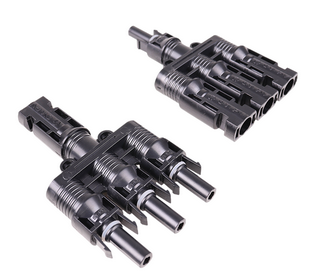
Panels often come fitted with MC4 connectors so if you are going to use them, keep the O rings lubricated with silicone grease and get the tool to make disconnection easier. They are designed for long term use on rooftops and seem to be quite reliable if a little bulky. If you add more panels it is also easy to make up parallel or series chains by re-arranging the connectors or using branch connectors.
1752591406801.png1752591718849.png
 
Panels often come fitted with MC4 connectors so if you are going to use them, keep the O rings lubricated with silicone grease and get the tool to make disconnection easier. They are designed for long term use on rooftops and seem to be quite reliable if a little bulky. If you add more panels it is also easy to make up parallel or series chains by re-arranging the connectors or using branch connectors.
View attachment 196214View attachment 196215
Got the connectors and the tool (nice quality one supplied with the ePropulsion solar charger I bought).

I'm sure they would work fine plugged in on a roof/permanent install but they don't feel rugged enough for regular use, hence my choice of item above.
 
Top