How to define good engine access?

Boater On Thames

Well-Known Member
Joined
5 Oct 2018
Messages
534
Visit site
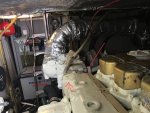
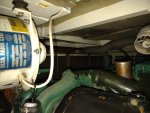
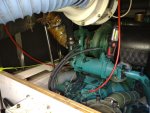
Just viewed a 57ft boat today. She has twin Volvo TAMD122 engines. I get into the engine room can only reach the engine on one side which is the side facing the centre. But I can't reach the other side which is facing outside to the hull. The port engine photos are attached here. Is this bad engine access or not? How do other engineers repair the engine if work needs to touch on the outside bit? Do they need to remove the sofa and the floor to gain access?

By the way, even my current 41ft boat can let me access and seat on both sides of each engine to work on it. So, I am a bit concerned of a boat can't let me reach both sides of the engine in the engine room.

What do you think? Thanks.
 

Attachments

  • IMG_20211117_135335697.jpg
    IMG_20211117_135335697.jpg
    467.3 KB · Views: 104
  • IMG_20211117_135341844.jpg
    IMG_20211117_135341844.jpg
    347.7 KB · Views: 102
Yes, my boat fuel tanks are not in the engine room.

It's a Fairline Squadron 59. So yes, the fuel tanks are located outside the engine as shown in the picture (the black one behind the engine). So fuel tank also can not be reached. Furniture and floor panels look quite fixed, not moveable design.
 
Last edited:
I think you have defined it ,in a large ish boat and a 57 fits into that definition imho .
You should be able to “;sit either side “ This sums it up .

Ideally two more nuances if you can find them ….

1-Access through two not one one hatches
2- No need to remove furniture / carpets etc .

Couple more standing ( albeit stooping if tall ) headroom .
Handed engines dip sticks in the middle etc .

^^^^ Thats good engine access .
 
Just viewed a 57ft boat today. She has twin Volvo TAMD122 engines. I get into the engine room can only reach the engine on one side which is the side facing the centre. But I can't reach the other side which is facing outside to the hull. The port engine photos are attached here. Is this bad engine access or not? How do other engineers repair the engine if work needs to touch on the outside bit? Do they need to remove the sofa and the floor to gain access?

By the way, even my current 41ft boat can let me access and seat on both sides of each engine to work on it. So, I am a bit concerned of a boat can't let me reach both sides of the engine in the engine room.

What do you think? Thanks.
did you not ask the seller
 
I asked. He said all the boats are like this, it is normal. He also said you don't need to go to that side of the engine as all the service parts such as filters and dipsticks can be reached from the middle already. He said only some like 20 some meters or bigger boat can possibly have that access to both sides of the engine. He is an old boy, a very nice gentleman. And he told me he has been boating throughout his whole life and always owned a boat continuously. He buys and sells boats around 10 or 15 some boats (can't remember the exact number). So, I didn't argue with him as I am a schoolboy level in boating. But then my 12 meters boat has a seating area on each side of the engines. So that makes me ask here.
 
Last edited:
The settee bases are held down with screws then roll the carpet up and the floor is close fit plywood panels easily removed.
As the earlier mentioned from your enquiries the service items are handed to centre line.
Interestingly The original owner specified the Volvo engines rather than the Mann engines to improve engine bay access.As you can see from Porto's video it's a tight squeeze between the Mann engines.
 
Last edited:
Pffff. Tight engine spaces. You lot dont have a clue. I could show you tight spaces and you'd leave to fit 2 beds in your engine room. 19 hours to change a turbo held on with 4 bolts and 5 more holding ancillaries on. I have to remove the steering helmets this weekend. Makes MMA training look like a Victorian tea party. If I'm not back Monday, I've got my gut stuck again. Send in Search and Rescue!

jajiWue.jpg
 
Pffff. Tight engine spaces. You lot dont have a clue. I could show you tight spaces and you'd leave to fit 2 beds in your engine room. 19 hours to change a turbo held on with 4 bolts and 5 more holding ancillaries on. I have to remove the steering helmets this weekend. Makes MMA training look like a Victorian tea party. If I'm not back Monday, I've got my gut stuck again. Send in Search and Rescue!

jajiWue.jpg
US boat designed for petrol engines could be the problem
 
It's a problem alright. To get anywhere near the back involves a complete engine strip down to the block. Then you have lying space and have to be careful not to smash your specs when turning the spanners. Take it to a dealer and all they want to do is take the engines out to work on them. But you're right. Even the biggest V8 looks tiny in the bay.
 
How do I define good engine access on a 57 foot vessel?

I use one of the RNLI Severn class lifeboats as a good example of 'good' engine access.
A walk in engine room, with plenty of space all around the engines to work on them. Huge ventilation fans, so much so that even when underway it is not uncomfortably hot in the engine room.
However I appreciate that the Severn is not trying to squeeze in 3 double cabins and three heads below decks as well as the engine room!

Another typical example of good engine access would be a single screw vessel of this size such as a Nordhavn.

Re diabolical engine access - where I have seen 1,000 hp engines shoe horned into spaces that look like BruceK's engine room above, only proportionately larger, with the rocker covers only a few inches under the deckhead above.
 
I think you have to ask four questions...

1) How easy is it to perform daily checks
2) How easy is it to access / remove ancillaries
3) What would require the removal of the engines?
3) How easy is it to remove the engine?

On our T34 I'd say....

1) There's a shelf and about to clear feet in front of the engines. All filters / belts are readily accessible.
2) Access is tight but the engineers have been able to replace turbos, replace exhaust elbows, remove and refit coolers and check valve clearances with engines in situ.
3) Difficult to say. Sump replacement perhaps?
4) Around four hours to remove both engines.
 
Not difficult to imagine that the designers and builders of new boats have no real reason to concern themselves about access to the noisy, smelly and frankly rather grubby world lurking below the furniture
Things might change when you can find in the sales brochure, in depth details of how easy your new craft is to service along with the fuel consumption.
Very much doubt if anybody much after the first owner is even considered.
 
I think you have to ask four questions...

1) How easy is it to perform daily checks
2) How easy is it to access / remove ancillaries
3) What would require the removal of the engines?
3) How easy is it to remove the engine?

On our T34 I'd say....

1) There's a shelf and about to clear feet in front of the engines. All filters / belts are readily accessible.
2) Access is tight but the engineers have been able to replace turbos, replace exhaust elbows, remove and refit coolers and check valve clearances with engines in situ.
3) Difficult to say. Sump replacement perhaps?
4) Around four hours to remove both engines.


I'd add how often do you have to do it? The answer is rarely. My boat has just unfortunately come to the age where things need replacing that has seen me at the back of the engines the last three seasons. If I had the money and the time I'd have done it in a single hit.
 
Ops asking about a 57 ftr quite rightly challenging the sellers brush off .
Its even got in line 6 s never mind Vs .
For me it was a motivator to move on from where PeteM / Bruce are that is better access .
It would have been a deal breaker if not .
I can climb over and sit comfortably either side , and the middle gap is wider than that vid .Ladder , two hatches no walk in on the 42/48 , although the 46 has an identical rear cabin door access .


@bruce and any others with two Fireblitz mounted horizontally.
1- Other than ONE is a no no .This is because if only one fires it’s vol might not be enough and the fire may reignite and then get hotter to fire the second which has not got enough vol to deal with it .
2. See mounting inclination diagram…..pretty self explanatory.

3 - How’s the air vents flaps ? How you got some ? You ideally need them with the “clean gas “ ( green band ) systems .

4- plastic tie wraps .Really what if the 2 nd melts ?


Was it retro fitted for the OEM powder I wonder which is less flap closed depending ??


698244F0-0E51-4F41-A44D-6A8C06AE8212.jpeg
Just want to bring DIY fire safety to folks attention after seeing Bruce’s pic .If it saves a life I am not bothered about resultant , temper tantrum’s flack / insults .
 
Ops asking about a 57 ftr quite rightly challenging the sellers brush off .
Its even got in line 6 s never mind Vs .
For me it was a motivator to move on from where PeteM / Bruce are that is better access .
It would have been a deal breaker if not .
I can climb over and sit comfortably either side , and the middle gap is wider than that vid .Ladder , two hatches no walk in on the 42/48 , although the 46 has an identical rear cabin door access .


@bruce and any others with two Fireblitz mounted horizontally.
1- Other than ONE is a no no .This is because if only one fires it’s vol might not be enough and the fire may reignite and then get hotter to fire the second which has not got enough vol to deal with it .
2. See mounting inclination diagram…..pretty self explanatory.

3 - How’s the air vents flaps ? How you got some ? You ideally need them with the “clean gas “ ( green band ) systems .

4- plastic tie wraps .Really what if the 2 nd melts ?


Was it retro fitted for the OEM powder I wonder which is less flap closed depending ??


View attachment 125962
Just want to bring DIY fire safety to folks attention after seeing Bruce’s pic .If it saves a life I am not bothered about resultant , temper tantrum’s flack / insults .
Well spotted cable ties and agree with your post. Difficult to see but is there any manual activation cable back to the helm? Apart from being essential it’s an insurance requirement for me.
As an aside do flybridges have activation cables back to both helms?
 
But I don't need better access. If you read my post, the access I have is perfectly good :) !

What would be involved in removing your engines?
My S /Skr similar to your T34 was too tight for DIY , perhaps not as bad as Bruce’s .Eg trim pumps .
For a gen annual service we used to remove the cockpit seating and lift the floor panels Two blokes about 20 mins .
Think you would struggle say to swop a hot and blocked stb fuel filter without the floor up .

As for this boat as I said ER access and it’s ease of DIY service ability going Fwds as I retired at 54 , was up there amongst the top cards .Top 3 cards in fact . As time to start phaffing was coming to me .

Answering your Q they do do teak and we preferred a sans teak boat , primarily for the mutt .
D214BD57-9359-45CF-82C6-65D44F2372EB.jpeg
As mentioned on previous threads older Itamas are 3 section boats with the machinery space in the middle 3 rd the cockpit.
Its got dedicated plates you simply lift .One over each motor .
Above pic show the stb with the mut laying on the gap .That gap doubles up as a drain btw .The rear access hatch partially covered by the seating athwartship .


F9C79DA7-36E3-4D64-9CBC-E21C69755BA3.jpeg
That’s my knee the dog is on his mat under my legs , see the port sole with another hatch in .
The seating needs unbolting from below much like any other and the two soles lift off .

With teak I have seen two versions .
Correct fitted and cornered to each sole leaving the drainage gaps and also the whole lot teaked over .Anyhow not my problem.
As it is with the mut a bucket of seawater makes good any spillages
The table btw is solidly bolted down from underneath and does not move when you lean on it .Another pet hate cured = floppy tables on boats .That’s was right up there in the “ next boat “ fix .A table that your tea does not get split when someone gets up .Urgh !

7D40F674-C85B-4968-A7B9-D3305D739876.jpeg
Rear ladder .Engineers pic from the exhaust work .Hes got various leads all over the shop .
 
Well spotted cable ties and agree with your post. Difficult to see but is there any manual activation cable back to the helm? Apart from being essential it’s an insurance requirement for me.
That's odd.

My insurance requires only an automatic activation OR a manual activation cable. Indeed, I imagine there are many boats out there that don't have a manual activation facility.
 
Top