How small can a solid fuel stove be?

I have one of those. They are alright, but are not htat effective because they are so high up. A friend of mine gave me one a while ago. I was thankful when I didn't have any heating while under way, but it barely made a difference.

The heater has no pipe or anything. It's just two cylinders, one inside the other, on feet and you put them over the stove and turn on the gas.'

I think any proper gas heater would have made a better heat output for less gas used tbh.
Not the same if its got no flue. Inevitably going to be wet and a CO risk with hatches closed down, and not effective with hatch open.

Assuming complete combustion the heat output depends directly and invariantly on the amount of gas used, and can not be influenced at all by the stove design, Ye-cannae-change-the-Laws-O-Physics-Captain-stylee. Without complete combustion it'll smoke and poison

The need to make additional holes in the boat for the flue is a big disincentive. It MIGHT be avoidable with temporary hatch inserts.

Hot Stuff – DIY Sailboat Cabin Heater | Good Old Boat

Not my original source but same idea, and perhaps the same author.

Of course this is not a "solid fuel"heater. I suppose it could be modified to optionally use charcoal, but there would be ash.
 
Last edited:
Not the same if its got no flue. Inevitably going to be wet and a CO risk with hatches closed down, and not effective with hatch open.

Assuming complete combustion the heat output depends directly and invariantly on the amount of gas used, and can not be influenced at all by the stove design, Ye-cannae-change-the-Laws-O-Physics-Captain-stylee. Without complete combustion it'll smoke and poison

The need to make additional holes in the boat for the flue is a big disincentive. It MIGHT be avoidable with temporary hatch inserts.

Hot Stuff – DIY Sailboat Cabin Heater | Good Old Boat

Not my original source but same idea, and perhaps the same author.
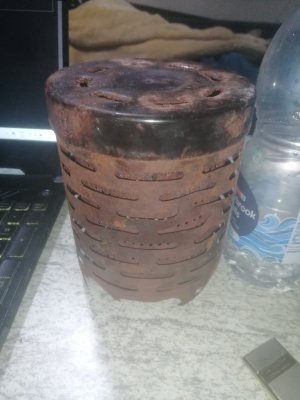
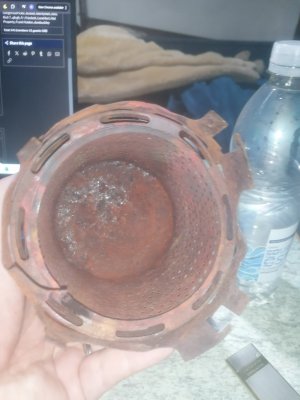
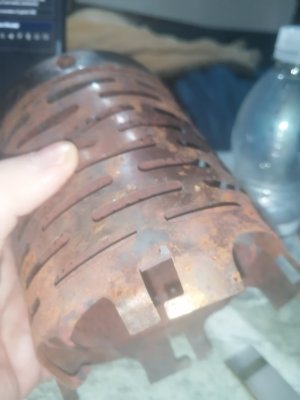
WhatsApp Image 2025-02-22 at 05.29.59.jpegWhatsApp Image 2025-02-22 at 05.29.59 (1).jpegWhatsApp Image 2025-02-22 at 05.29.59 (2).jpeg

Looks like this. It used to be black once upon a time lol But haven't used it for obvious reasons.
 
I am a bit late to the party, but this topic speaks to me.

Heating on the boat is such an important topic when you're on the boat in the winter. You need to get warm when you're below, or you'll just be miserable. But the issue with diesel heaters is, as nice as they are, they need power, and generating enough power without running the engine or a generator, is tricky.

You maybe get away a day or two on battery power, but beyond that, you need a system that can keep up with the weather.

With a solid fuel stove, you have none of those problems though. I have been playing with the thought, especially since I have a taylor bulkhead diesel heater in the new boat, and I am playing with the thought of replacing it with something else. Either I get a diesel air heater (those chinese ones) or a solid fuel one. Not sure which route I will end up going with, but it'd be nice to not having to spend the winters in marinas because I need to rely on the shore power.

Still weighing the pros and cons.

OP, did you end up getting a solid fuel stove by now?
What sort of fuel pump did you use? I installed a Taylor’s in the autumn and find it lovely. It uses a new SU fuel pump as I didn’t wish to lose cupboard space in the fore peak. Running it last night and a couple of cabin lights on my current drain was measured in milliamperes! I think around 0.6a.
 
Last edited:
What sort of fuel pump did you use? I installed a Taylor’s in the autumn and find it lovely and uses a new SU fuel pump as I didn’t wish to lose cupboard space in the fore peak. Running it last night and a couple of cabin lights on my current drain was measured in milliamperes! I think around 0.6a.
That is the same pump type I fitted to my Taylors diesel heater. Excellent. Bought the second hand pump on Ebay. No worries about current consumption, it just clicks once per minute.
 
I have lived aboard and heated with wood, diesel and gas and throughout Canadian winters.
All three require a flue.

Wood heaters that fit on a boat have too small a firebox to be banked over night, require considerable space for installation, safety and fuel storage, especially on a small boat and cannot be installed just anywhere or where convenient. They produce soot, ash and smoke. Never ever burn drift wood!
N.B. we heat our house with wood; do not underestimate the size of firebox you need or how much fuel you will burn.

I lived ten years with a Dickinson diesel range. They are popular on fishing boats in the Pacific North West. Like a wood stove they do not require electricity and are designed to run continuously. They produce the most vile, oily soot that will cover your decks, sail covers, everything, stains the fibreglass and is almost impossible to remove. Both diesel and wood stoves have the nasty habit of back-drafting in high winds or while under sail and you end up with black soot bunnies and smoke floating about the cabin. They need to be periodically cleaned and which is a job from hell.

Gas works fine, Dickinson makes a small, vented stove with a flue. It is expensive to operate and requires some electricity to run the fan. Of course you need to cut a hole through the deck for the flue. The stove is expensive; I installed and used one in a large aft cabin. 20lbs of Gas lasts about 4 - 5 days on the outside.

Switching to a Webasto was a revelation: instant (just push the button) dry heat, easily regulated, can be directed to any part of the boat, can be installed almost anywhere in the boat and it is relatively small and compact. Electricity might have been an issue in the 1930's, today the smallest solar system can take care of that. It uses the same liquid fuel as the engine or a fuel tank can be installed anywhere. Chinese ones, which we have now, since the ridiculously expensive Webasto died, are cheap as chips and work just fine.

Wood stoves aboard a small yacht are less than practical, dirty and almost everyone underestimates the amount of fuel needed. Unless the vessel were over 60' o.d. and had an appropriately rustic flair, abundant room for a domestic size unit, considerable space for a fuel bunker and you lived in an area or situation where you had easy (continuous) access to suitable fuel, the entire concept is exclusively for the romantically impaired. Kinda like putting a steam engine in your EV.
 
Switching to a Webasto was a revelation: instant (just push the button) dry heat, easily regulated, can be directed to any part of the boat, can be installed almost anywhere in the boat and it is relatively small and compact. Electricity might have been an issue in the 1930's, today the smallest solar system can take care of that. It uses the same liquid fuel as the engine or a fuel tank can be installed anywhere. Chinese ones, which we have now, since the ridiculously expensive Webasto died, are cheap as chips and work just fine.
Hm, not exactly. They do require quite a bit of electricity over the day, and considering it'll be cold winter when you use them, you need a lot of solar power to generate enough electricity to sustain yourself without having to run generators. That is the main issue with the webasto diesel heaters. Otherwise I totally agree, they are cleaner, less maintenance, the heat is instant and you can control it very accurately.

But with everything, it has downsides, too: Installation is more tricky, electricity might be tricky to keep on top of (generating enough in winter conditions with cloudy skies and low sun angles) and they are also louder (not deafening loud or anywhere near, but noticably) than the other fueling methods.
 
View attachment 189905View attachment 189904View attachment 189903

Looks like this. It used to be black once upon a time lol But haven't used it for obvious reasons.
As far as I can see its only potential utility could be a slight possible shift from convective to radiant heat, depending on how hot its surface got, though unless it glows red, which I'd guess is unlikely, the effect will probably be slight.

Clearly it cannot influence the amount of heat generated by the flame, which will be exactly the same without it.
 
As far as I can see its only potential utility could be a slight possible shift from convective to radiant heat, depending on how hot its surface got, though unless it glows red, which I'd guess is unlikely, the effect will probably be slight.

Clearly it cannot influence the amount of heat generated by the flame, which will be exactly the same without it.
It did make a slight difference to just turning up the gas heater on its own. Not a lot, but there was a little effect as it retained the heat and gave off a bit of a glow to the room. But they are definitely not making a difference. Especially below hip level.
 
[QUOTE="DangerousPirate, post: 8576424, member: 177837"
Hm, not exactly. They do require quite a bit of electricity over the day, and considering it'll be cold winter when you use them, you need a lot of solar power to generate enough electricity to sustain yourself without having to run generators. That is the main issue with the webasto diesel heaters. Otherwise I totally agree, they are cleaner, less maintenance, the heat is instant and you can control it very accurately.

But with everything, it has downsides, too: Installation is more tricky, electricity might be tricky to keep on top of (generating enough in winter conditions with cloudy skies and low sun angles) and they are also louder (not deafening loud or anywhere near, but noticably) than the other fueling methods.
[/QUOTE]

We tend to sail up North where the weather tends to be the pits, sunshine is rare and the heater runs 24/7. We do this for 4 months every year. So far, so good. As we've only been doing this for some 15 years, I think I'll run the experiment just a little bit longer, just to be on the safe side.
 
Hm, not exactly. They do require quite a bit of electricity over the day, and considering it'll be cold winter when you use them, you need a lot of solar power to generate enough electricity to sustain yourself without having to run generators. That is the main issue with the webasto diesel heaters. Otherwise I totally agree, they are cleaner, less maintenance, the heat is instant and you can control it very accurately.

But with everything, it has downsides, too: Installation is more tricky, electricity might be tricky to keep on top of (generating enough in winter conditions with cloudy skies and low sun angles) and they are also louder (not deafening loud or anywhere near, but noticably) than the other fueling methods.
Autoterm ran a trial on electricity consumption some years ago. My son Owen bought a new 85Ah battery, connected it to their 2 kW heater and ran it at full power outdoors. From memory it ran for 59 hours, the battery went flat almost simultaneous with emptying its 5 litre fuel tank.
Once the glow plug turns off after a minute or so the electricity consumption is small, well under 1 amp.
 
[QUOTE="DangerousPirate, post: 8576424, member: 177837"
Hm, not exactly. They do require quite a bit of electricity over the day, and considering it'll be cold winter when you use them, you need a lot of solar power to generate enough electricity to sustain yourself without having to run generators. That is the main issue with the webasto diesel heaters. Otherwise I totally agree, they are cleaner, less maintenance, the heat is instant and you can control it very accurately.

But with everything, it has downsides, too: Installation is more tricky, electricity might be tricky to keep on top of (generating enough in winter conditions with cloudy skies and low sun angles) and they are also louder (not deafening loud or anywhere near, but noticably) than the other fueling methods.

We tend to sail up North where the weather tends to be the pits, sunshine is rare and the heater runs 24/7. We do this for 4 months every year. So far, so good. As we've only been doing this for some 15 years, I think I'll run the experiment just a little bit longer, just to be on the safe side.
[/QUOTE]
What kind of power set up do you have? Curious now how you make it work.
 
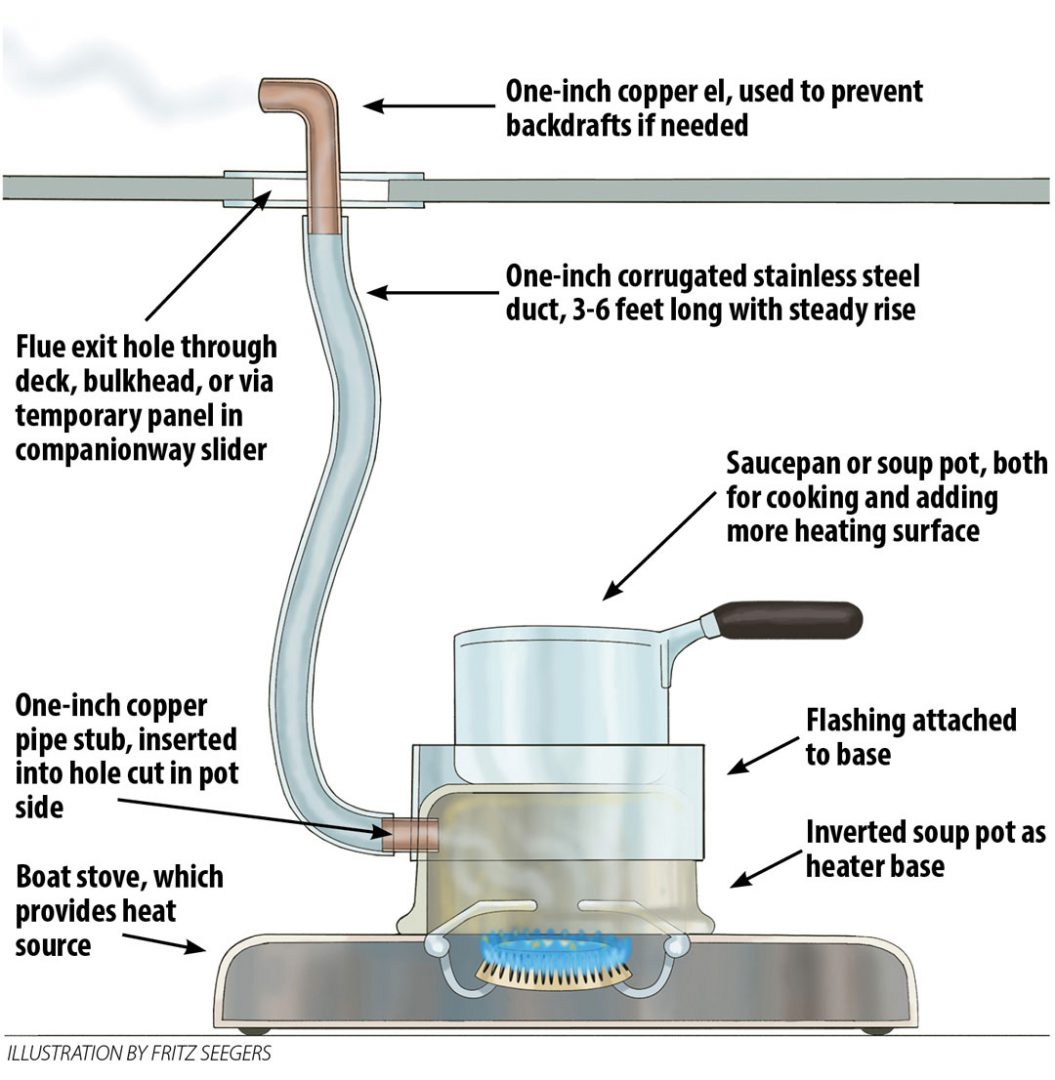
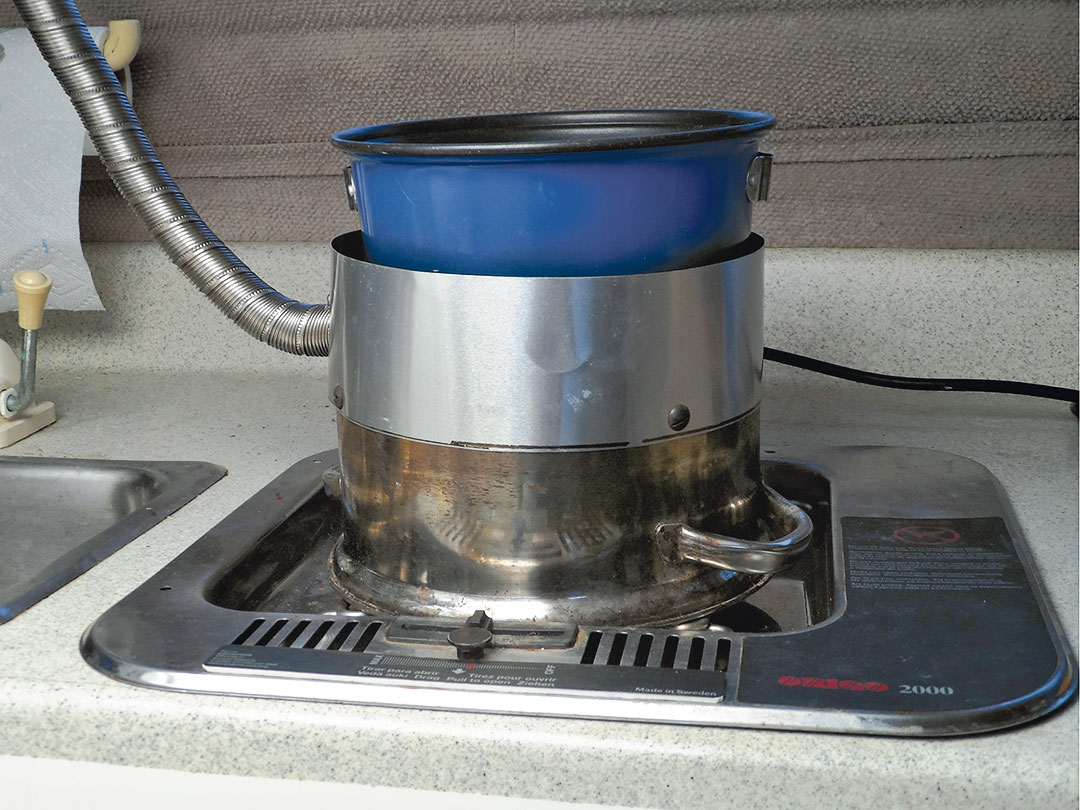
Not solid fuel. but inexpensive and solves the CO-CO2-moiture problem by having a flue. In my case it was free, since it was all scrap I had. Yes, I did calculations to confirm the flue sizing for the Origo stove, and also tested it with CO and CO2 meters. Combined with a small USB fan, it is very effective at heating my F-24 down to freezing temperatures. No, I would not leave it on when sleeping, but really, the F-24 is a day boat.

I had a sealed gas heater on my PDQ. Well worth it.

stovetop-heater-diagram.jpg


stovetop-heater-sailboat.jpg
 
Not solid fuel. but inexpensive and solves the CO-CO2-moiture problem by having a flue. In my case it was free, since it was all scrap I had. Yes, I did calculations to confirm the flue sizing for the Origo stove, and also tested it with CO and CO2 meters. Combined with a small USB fan, it is very effective at heating my F-24 down to freezing temperatures. No, I would not leave it on when sleeping, but really, the F-24 is a day boat.

I had a sealed gas heater on my PDQ. Well worth it.

stovetop-heater-diagram.jpg


stovetop-heater-sailboat.jpg
RE "leaving it on while sleeping" also implied by the 24/7 comments above, having spent a winter in Aberdeen sleeping in my car, I can't imagine any (solo) situation (at least where the water is still liquid enough to sail in) that is going to require this.

(I suppose night passage making with an off-watch asleep, but someone is awake in that situation)

A stainless steel thermos flask leaks enough heat to be an effective hot water bottle in a sleeping bag, and when you get up, will give you a head start with the required coffee.
 
RE "leaving it on while sleeping" also implied by the 24/7 comments above, having spent a winter in Aberdeen sleeping in my car, I can't imagine any (solo) situation (at least where the water is still liquid enough to sail in) that is going to require this.

(I suppose night passage making with an off-watch asleep, but someone is awake in that situation)

A stainless steel thermos flask leaks enough heat to be an effective hot water bottle in a sleeping bag, and when you get up, will give you a head start with the required coffee.

Even when I had a heater that I could keep on at night I didn't. I like a cold cabin for sleeping and turn my home thermostat down to 55F starting at about 5pm (it takes time to cool). Even when there was snow, I would turn it off for the night, turn the heat up when I last peed, catch 10 winks, and the cabin would be plenty warm enough for breakfast.
 
I've got to ask, what on earth did you do to deserve that fate?
An MSc at Aberdeen University.
Even when I had a heater that I could keep on at night I didn't. I like a cold cabin for sleeping and turn my home thermostat down to 55F starting at about 5pm (it takes time to cool). Even when there was snow, I would turn it off for the night, turn the heat up when I last peed, catch 10 winks, and the cabin would be plenty warm enough for breakfast.
I bought a small charcoal camping stove in one of the "Pound Shop" equivalents in Kyoto. Flat stainless steel perforated plates that assemble into a cube. Cost pennies. (Yennies?)

I;d think such a thing could probably be used inside your stove-top heat exchanger to give a limited alternative solid-fuel capabiility, if one could cope with the ash, or something could be improvised, bake-bean-tin-and-nail stylee.

They did even cheaper cylindrical plated steel ones but the heat takes the plating off and they rust rather quickly.
 
Personally I like a cold environment to sleep, but certain weather is just too cold, and condensation is an issue. So I would just turn the heater down overnight and not turn it off fully.
 
Wow
This deserves the DIY idea of the year although please be very careful about the CO risk of any heating solution as Thinwater emphasises.
Depending on the output of the burner, a larger flue or a flue with a more vertical (and shorter) path may be needed. Also a bigger pot. I sized this for the Orego stove I had on the boat.

The source of the idea was the old Cozy Cabin heater. It really did not consist of anything more than a simple burner with no controls and an inverted pot for heat exchange surface. I reasoned the stove was a better burner than the Cozy Cabin, and it had a fuel supply and safe installation already engineered in. All I needed to supply was an inverted pot and a flue, and I had the corrugated SS flex pipe in the scrap pile, though any metal pipe of the same size would work.

By the exit point, if the dimensions are followed, the pipe is not hot enough to burn your hand and it actually drips some condensation (mine goes through the aft cabin bulkhead, high and outside). Very fuel efficient.

Also, the idea of a flower pot had been suggested, and the serious inadequacies of that, even for a micro-cruiser day boat, appalled me.
  • All of the exhaust goes into the cabin. CO2. CO. And lots of water.
  • A flower pot (or plates) don't increase the heat output of a stove, they just convert some to IR. They do generally increase the CO output by cooling the flame. And the pot can shatter (happened during testing) throwing hot bits around the room. Honestly, you are better off just running the stove. It's safer.
  • To avoid the CO2, CO, and water problem, plus lack of oxygen, you need to leave the hatch fairly far open. If it's actually cold enough to need heat and not just a jacket, that is SO inefficient. All you get is a slight warming and a stuffy cabin. You might as well just bundle up instead. It won't work if it is seriously cold, when you actually need heat.
---

For the record, ABYC only allows sealed heating systems, where the combustion air comes from outside, not from inside the cabin. I installed such a system in my PDQ. Worth it, if you will spend any winter nights on the boat.
 
Depending on the output of the burner, a larger flue or a flue with a more vertical (and shorter) path may be needed. Also a bigger pot. I sized this for the Orego stove I had on the boat.

The source of the idea was the old Cozy Cabin heater. It really did not consist of anything more than a simple burner with no controls and an inverted pot for heat exchange surface. I reasoned the stove was a better burner than the Cozy Cabin, and it had a fuel supply and safe installation already engineered in. All I needed to supply was an inverted pot and a flue, and I had the corrugated SS flex pipe in the scrap pile, though any metal pipe of the same size would work.

By the exit point, if the dimensions are followed, the pipe is not hot enough to burn your hand and it actually drips some condensation (mine goes through the aft cabin bulkhead, high and outside). Very fuel efficient.

Also, the idea of a flower pot had been suggested, and the serious inadequacies of that, even for a micro-cruiser day boat, appalled me.
  • All of the exhaust goes into the cabin. CO2. CO. And lots of water.
  • A flower pot (or plates) don't increase the heat output of a stove, they just convert some to IR. They do generally increase the CO output by cooling the flame. And the pot can shatter (happened during testing) throwing hot bits around the room. Honestly, you are better off just running the stove. It's safer.
  • To avoid the CO2, CO, and water problem, plus lack of oxygen, you need to leave the hatch fairly far open. If it's actually cold enough to need heat and not just a jacket, that is SO inefficient. All you get is a slight warming and a stuffy cabin. You might as well just bundle up instead. It won't work if it is seriously cold, when you actually need heat.
---

For the record, ABYC only allows sealed heating systems, where the combustion air comes from outside, not from inside the cabin. I installed such a system in my PDQ. Worth it, if you will spend any winter nights on the boat.
How inconvenient was your original partial hatch cover flue holder arrangement for the flue exit?

I ask because I'm (perhaps unreasonably) reluctant to make holes in the boat, which this avoids.

If the flue isn't hot it shouldn't represent a burn hazard to using the hatch, but the flue holder seems to be a fairly awkward obstruction, and I note you dropped it quite quickly.
 
Top