HMS Pembroke

Again you totally miss any point being made. I simply don't believe your anecdote. Your attempt to spin out of that is.....lets settle for poor.


And the Brent Swain Award for trying to get the last word in an argument no one gives a shit about goes to...
 
Golly. Got a bit heated around here!

A point everyone seems to be missing is that a ship has a cost to operate it. And it has to be manned to the appropriate complement. An additional cost over a pared down complement appropriate for a refit.

Unlike a commercial ship these costs are not offset by revenue. So there's not the same imperative to keep a vessel at sea
 
Golly. Got a bit heated around here!

A point everyone seems to be missing is that a ship has a cost to operate it. And it has to be manned to the appropriate complement. An additional cost over a pared down complement appropriate for a refit.

Unlike a commercial ship these costs are not offset by revenue. So there's not the same imperative to keep a vessel at sea

Good point.

Presumably the ship’s complement remain on the MOD payroll, so no real saving apart from fuel stores and spares, but RN ships don’t spend much time at sea anyway. A ship doesn’t get through a lot of fuel and lubricants when alongside in port.

 
Last edited:
I don't know anything about manning particular ships, but in principle the Naval appointers and drafters will post people to ships and shore establishments to match their programs. So the Navy thereby manages with less manpower overall than it would if every unit was manned up to its full complement.

Further augmentees would be posted in at times of crisis and war, drawn from lower priority billets.

It follows that the Navy will aim to have a taut operating program, enough to train its personnel, validate systems, work up from refits etc.

It's all cash limited on an annual basis. What makes sense under that regime can sometimes look odd from a commercial viewpoint and easy to lampoon.
 
I understand that cash limits mean that some modern ships such as HMS Daring are laid up and cannibalised for spares. That is understandable, though it seems a pity to spend a billion pounds on a warship and then lay her up.

My point is that the Navy don’t seem to manage their ships in a cost effective manner, and if they were to look at other ways of going about things, they might have more money to spend on keeping their fleet in business.

HMS Pembroke is described by the Navy as having a normal complement of 34, which can be increased to 40 if needed. Now, how many people is that? If she were a merchant ship I could multiply the portage bill by the leave ratio plus overlaps for familiarisation, travel time and study leave (typically this will come out at around 1.7) and tell you the true size of her crew. So a typical big cargo ship will have a safe manning certificate for sixteen, but will often be carrying 22 and the real number of people in her crew will be 22 x 1.7 = 38. Similarly a civil aircraft with a cockpit crew of two and a cabin crew of 15 will have a real crew between 8 + 60 and 14 + 105. Which is why the flight engineer isn’t there any more...


But I have no idea how the Navy goes about this. Perhaps someone can tell us.

Now, HMS Pembroke has an actual job; her job when not engaged in hostilities, as several MCMVs are if we count their deployment to the AG as engagement in hostilities, is the clearance and disposal of ordnance left over from WW1 and WW2. So presumably she is wanted for that purpose as well as for training and showing the flag, unlike, say, a frigate or a destroyer.

Since she has a day job, so to speak, there must be some value in having her available to do it. In the past five years, according to the Navy, she has been available to do it for three years and nine months, though unless the Navy are using magic antifouling paint I expect she has had an intermediate dry dock in that time.

Again relying on information published by the Navy and by Babcocks, a team of fifty people, plus specialists, have been busy on her refit so, assuming her crew were re-allocated to other tasks, she has been employing fifty people plus anyone standing by her during her refit. So, subject to the leave ratio and overlaps, she seems to employ more people when in refit than she does when in commission.

Now, we are told, by the ship’s own Twitter feed and by Babcocks, that she has been overhauled in Babcocks’ specialised mine countermeasures vessel refit facility, which we may see has a roof, so she can be worked on out of the weather. So no delays due to rain and snow.

I still find it astonishing that such a little ship needs 42 weeks in a covered refit facility.

However, a possible explanation presents itself. Babcocks no doubt want to keep their expensive covered repair yard in constant use. The RN has 13 mine countermeasures vessels according to this interesting article:

https://www.savetheroyalnavy.org/the-future-of-royal-navy-minehunting/

If each of 13 MCMVs spends 4.6 months in refit every five years, as compared to the couple of weeks needed by a merchant ship, some of which (cruise ships and gas carriers, for instance - Class One passenger ships dry dock annually but never for long) are also quite complex, the facility is in constant use. But that doesn’t add up to the time taken by HMS Pembroke.
 
Last edited:
Please stop trying to apply commercial logic to military operations, it simply does not work. The military have a whole host of different priorities and "Cost-effectiveness" falls way down that list as has been pointed out by others. Unlike the private sector it is not their responsibility to deliver a profit, it is their responsibility to keep us safe according to the direction the government of the day sets for them. No 'commercial' operation has ever been able to achieve a military use for a sustained time frame with either the costs being extortionate or the effectiveness greatly reduced (see Mercenaries, very good at specific solutions, very bad for long term solution (see South America)). Further, commercial operations do not have to (and do not) adhere to the same standards of readiness, this reduces time spent needing to refit.

A military refit is a whole different ball game to a 'commercial refit', again, very wise not to apply commercial logic to military operations.

Here's a few examples of what we're looking at, bearing in mind Commercial Ships do not have military-grade tech: https://www.savetheroyalnavy.org/progress-on-extending-the-life-of-the-royal-navys-type-23-frigates/
https://en.wikipedia.org/wiki/Type_23_frigate#Mid-life_refit

Now bearing in mind most mid-life refits take from 12 - 18 months. The fact that HMS Pembroke has gotten through hers in 9 is actually impressive. The HMS Penzance (similar ship) took 10.

https://www.naval-technology.com/news/babcock-completes-hms-penzance-minehunter-vessel-upgrade/

https://www.nao.org.uk/pubsarchive/.../11/Ministry-of-Defence-Fleet-Maintenance.pdf (Page 1, Paragraph 4 (and P2, Paragraph 4, Sub Paragraph d).

One of the key things they're looking at doing is assessing the equipment first instead of just putting in a arbitrary time and just pulling and replacing it to save time. Now they're beginning to check the condition (as done in the commercial sector) of said items to try and reduce cost (which, will inevitably increase time as rigorous assessments will need to be made and repairs tend to take longer).
 
Operate 24 hours a day for weeks or even months. With no nipping back for a beer. How many people do you need then?

I'm late to this thread but we ran 24/7 Ops for up to 10 days with skipper, mate, engineer, stew and the charterers usually providing 2 or 3 occasionally 4 surveyors. Side scan, multi beam, sonar, boomers and occasionally ROV. Not trying to put down the RN - just saying it can be done with less people, all having proper rest periods and meals.

W.
 
I'm late to this thread but we ran 24/7 Ops for up to 10 days with skipper, mate, engineer, stew and the charterers usually providing 2 or 3 occasionally 4 surveyors. Side scan, multi beam, sonar, boomers and occasionally ROV. Not trying to put down the RN - just saying it can be done with less people, all having proper rest periods and meals.

W.

However I assume you didn't need sufficient people to man weaponry, provide boarding parties, damage control and redundancy in case of death or dismemberment, etc, etc.

That's without mentioning the really important jobs such as laying on a jolly good cocktail parity for local dignitaries.
 
Last edited:
From one of the links in Luminescent’s post 87, above:

HMS Iron Duke (Age 27)
After being laid up in Portsmouth in 2017, the Iron Duck was towed from Portsmouth to Devonport in mid-January. She is reportedly in a very poor state and it is hard to understand why there was not a greater effort to preserve her while she was in ‘reduced readiness’. She arrived in Devonport with a slight list to starboard, small rust holes in the deck and grass growing on the flight deck. She is due to replace HMS Lancaster in the FRC and will need extensive work. Each refit is done to a budget and expenditure on structural work may come at the expense of some equipment upgrades.


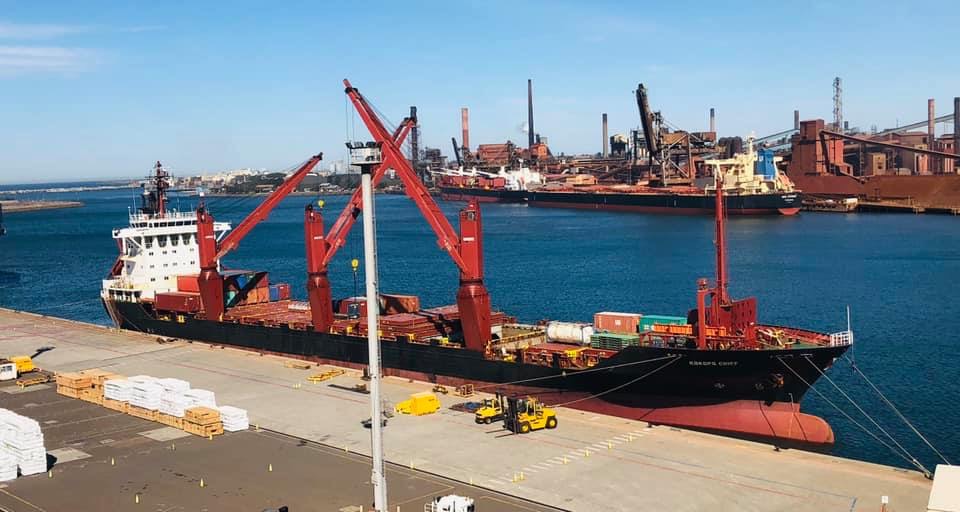
‘‘Here’s one I made earlier’’.. also 27 years old, had a major refit aged 15 when she was cut in two and lengthened, in six weeks, continually in service, crew of 18, can throw a jolly good cocktail party for local customers and dignitaries, original main engine, original generators, her class of five were the first ships with bridge wing control of a cross head main engine and bow and stern thrusters so not popular with tug owners, but quite innovative for the day... still owned by her original British owners, ratings always from Papua New Guinea, officers from wherever but with British certificates.


No grass growing on those decks and no rust holes.
 
Last edited:
This thread might be summed up as:

Merchant shipping (including oil patch) people:

We don’t understand why you do things this way...

RN people:

You don’t understand. We do things this way

MN people:

We don’t understand. Why do you do things this way?

RN people:

You don’t understand. We do things this way...
 
Last edited:
This thread might be summed up as:

Merchant shipping (including oil patch) people:

We don’t understand why you do things this way...

RN people:

You don’t understand. We do things this way

MN people:

We don’t understand. Why do you do things this way?

RN people:

You don’t understand. We do things this way...

For the umpteenth time. The Royal Navy follow pretty much same processes as many other Navy's around the world. The Merchant Navy have different priorities, it is not about 'the bottom line' it is about safety, security, readiness. The Merchant Navy can afford equipment to deteriorate to the point of none-use and then get it repaired. No Navy can afford this to happen, all vessels budgets permitting must be up to scratch and ready to serve. This is why the refits are so regular and so time consuming compared to Merchant Navies. Where as Merchant Navies can afford to have out-dated equipment or even experimental buggy equipment, the Royal Navy cannot, equipment must be updated to be competitive with its potential adversaries, must meet critical standards and must be reliable (IT Not withstanding IT is god-damn awful, but government do insist -_-). Likewise the Merchant Navy can pick and choose its jobs, where it goes and routinely chases profit. The Royal Navy cannot do this it goes where it is ordered and again that is usually expensive in and of itself, rarely (if ever) bringing back any sense of 'profit'.

A Merchant Navy cannot learn from the Royal Navy except in areas of discipline and possibly safety. As far the Merchant Navy is concerned everything the Royal Navy does is outdated because it's only looking at specific things and it has to deliver a profit at the end of the day. It's why it looks so inefficient and why when budgets are cut it tends to have such a catastrophic impact. What the Royal Navy needs is a few £bn pumped into it rapidly with a solid recruitment drive (not run by...Capita -_-). Navies are expensive.

To paraphrase.

RN People: It's not about money, it's about lives.
MN People: But how do you deliver a profit
RN People: We don't, we save lives.
MN People: ??? But profit.
RN People: *facepalms*.
 
Last edited:
However I assume you didn't need sufficient people to man weaponry, provide boarding parties, damage control and redundancy in case of death or dismemberment, etc, etc.

That's without mentioning the really important jobs such as laying on a jolly good cocktail parity for local dignitaries.

No but I point was that a RN man wanted 22 people to do a job that 2/3 had.

W.
 
I thought this thread was about Gilbert and Sullivan :)

Turns out it was more like the usual suspects going on about privatization, cutting red tape and reducing taxes just before they shut it all down and ship everything overseas.

No doubt when the plotting room in western approaches command is moved to a call center in India it will be much more efficient:)
 
I thought this thread was about Gilbert and Sullivan :)

Turns out it was more like the usual suspects going on about privatization, cutting red tape and reducing taxes just before they shut it all down and ship everything overseas.

No doubt when the plotting room in western approaches command is moved to a call center in India it will be much more efficient:)

The RN has privatised its repair and refit operations which are now in the hands of Babcocks, a monopoly provider with no interest in providing a more efficient service, but which is extremely good at employing ex RN people. At no point have I or anyone else suggested that the RN should be trying to make a profit, or should be privatised. Nobody has mentioned reducing taxes.

We are told that the RN is all about maintaining a state of readiness, which is as it should be, but we read that the RN is so bad at maintaining its equipment that a frigate has to be towed from Portsmouth to Plymouth with corrosion holes in the decks and grass growing on the flight deck.

One of the last acts of the government before the parliament was dissolved was to cancel the international tender process for three new RFAs (fleet solid support vessels) to support the new carriers and replace it with a tender for two ships to be built in Britain, at the same price, by ... Babcocks and a fake competitor created by R-R and BAE for the sole purpose of providing fake competition within the UK. Overseeing this change of plan is none other than Sir John Parker, for many years Chairman of ... Babcocks.

The point that I have been trying to make is that the RN is hopelessly inefficient at maintaining and refitting its ships, and is wasting a very great deal of money that could be better spent on keeping more ships active.

That money is flowing from the RN to Babcocks, to BAE, to Rolls-Royce and a handful of other companies.

Just a thought - should this thread be moved to «*Current Affairs*» in the Lounge?
 
Last edited:
To paraphrase.

RN People: It's not about money, it's about lives.
MN People: But how do you deliver a profit
RN People: We don't, we save lives.
MN People: ??? But profit.
RN People: *facepalms*.


‘There’s no price on safety’, is a stock MoD argument, comprehensively rejected in 2010 when the new government sought additional defence cuts. In Joseph Schumpeter's words, “the fiscal history of a people is above all an essential part of its general history”.

If we think about Wellington’s victory at Waterloo and the ensuant 1815 Treaty of Vienna. With Napoleon out of the way, the UK could offer a greater level of military security, economic stability and judicial resources than arguably any other country in the world. Vibrant UK commerce enjoyed access to vast overseas markets under the ever-watchful eye of the Royal Navy, and the period 1815–1870 would see the UK become the industrial “workshop of the world”. A broadening fiscal base would ensure that the military was generally well funded, a virtuous circle which persisted for quite some time.

Fast forward to 2019 where the UK is no longer a major international power, its fiscal base is no longer rapidly expanding, and tax increases to fund the military are political anathema.

Enter the MoD inefficiency arguments. Whitehall well understands that the MoD is prima facie exposed to monopolistic practices within companies like Babcock, BAE Systems, Cobham, etc. The Royal Navy arguably especially so, as naval margins are typically much lower than aerospace. Not that one can simply squeeze these companies as a glance at their wobbly share prices will readily attest.

Concerns are heightened by an MoD which has earned an unenviable reputation for inefficiency, profligacy, poor planning, mind-numbing bureaucracy, and low quality staff selected by social class and not merit; problems repeatedly highlighted by the National Audit Office. Most major UK defence procurement projects end up either late, over-budget, or both, as do most large maintenance projects such as HMS Vanguard which entered “deep maintenance” in 2015. The latest sub Audacious has in MoD-speak been hit by “emergent problems”.

It seems the MoD does indeed have things to learn from the private sector as it staggers from screw-up, to cock-up, to a t**s-up Nimrod AEW3 programme, Thankfully it now recognises as much.
 
Last edited:
Top