High oil pressure Volvo AD31P

So yesterday I used Liqui moly engine flush plus on the port engine. First I let it reach 150F, turned it off, added the flush, then let it idle for 15 mins.

I drained it immediately, replaced the filter once again and refilled with the same oil (Fuchs truck plus 15w40 vds-3).

After that I went for a test run.
After the engine is hot (175F), the oil pressure varies from ~40 psi at idle to ~85 psi at full throttle.
It is all within spec so I’m not overly concerned, however, the other engine doesn’t go over 65/70 psi even at WOT when hot. So something must have happened to cause this change.

There is still a minor oil leak below the engine / back side, and my mechanic should try and find it’s cause next week.
 
Today the pressure went up to 100 psi at one point. Something’s not right.
We will check the pressure with a mechanical meter this week; if it also shows high pressure I really don’t know what else we can do.
Any ideas or help would be appreciated.
 
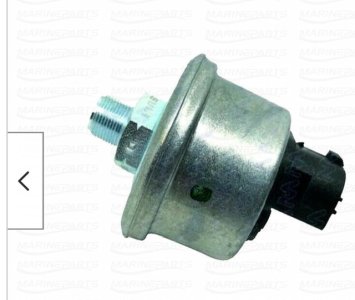
With sensor ( any btw ) you can get hold of voltage/ resistance values and connect a voltmeter to check the range .
With this simply compare values of both sides if they more less identical then it’s not the stuck sensor .


If the injectors are removed and examined or while they are out look inside with a borescope …..you will find the fractured ring cylinder (s) ? They will be blacker , sooted up more look very different from normal ones .

Thirdly left of field but worth a mention on cars I heard a batch of oil filters collapsing ( not OEM s = cheapo copied from you know where ) ?This can cause spurious oil P issues not unlike this .So Q what filters have been used ? Any cost cutting by any chance ?
We will check the pressure with a proper mechanical gauge so as to remove any doubts.
When i put my hand over the open oil filler cap, I did not feel any more blowby than the other engine. Even my mechanic checked this and did not see any thing strange.

I am using MANN oil filters, as far as I know they are Volvo oem.
I’ve changed the oil filter twice since having this issue, and the problem remains the same.
 
We will check the pressure with a proper mechanical gauge so as to remove any doubts.
When i put my hand over the open oil filler cap, I did not feel any more blowby than the other engine. Even my mechanic checked this and did not see any thing strange.

I am using MANN oil filters, as far as I know they are Volvo oem.
I’ve changed the oil filter twice since having this issue, and the problem remains the same.
That’s good news re blow back so we can sink ring issues to the bottom .

Might be worth swopping oil filters around …..to eliminate a duffer .Very simple test .

Then its the sender .But as I said you can dury rig a measurement device to compare values coming out of its wire(s)
Better still cross connect them bearing in mind the offending sender if stuck could cause a great deal of pain if it snapped trying to remove it and a new one doesn’t cure this .You need to be sure it’s a duffer first .

Sometimes copious amounts of penetrating oil on offending part works .I mean ceased brake calliper nipples 3x day for 3 days before even attempting to get force on them .Steel into alloy Brembo bodies .A fitter hasn’t got 3 days lift time so will snap them off and cry it needs new callipers billing you and bumping up the bill along the way .

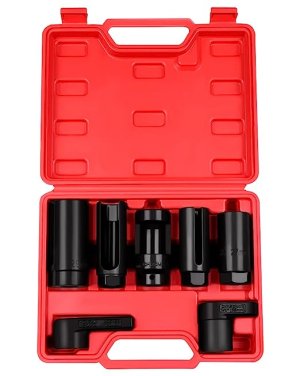
With oil pressure senders there is special socket normally.Although I am not exactly familiar with VP s of this age .
They are sockets to get round the sender bit and wire onto the bolt .You can buy individual ones as well if you know which one .
A3DD9FAA-078A-4870-ADAC-909280E8E6F9.jpeg
Presume your tech has tried using something similar.^ ?? Carries this kit in the van ?
 
That’s good news re blow back so we can sink ring issues to the bottom .

Might be worth swopping oil filters around …..to eliminate a duffer .Very simple test .

Then its the sender .But as I said you can dury rig a measurement device to compare values coming out of its wire(s)
Better still cross connect them bearing in mind the offending sender if stuck could cause a great deal of pain if it snapped trying to remove it and a new one doesn’t cure this .You need to be sure it’s a duffer first .

Sometimes copious amounts of penetrating oil on offending part works .I mean ceased brake calliper nipples 3x day for 3 days before even attempting to get force on them .Steel into alloy Brembo bodies .A fitter hasn’t got 3 days lift time so will snap them off and cry it needs new callipers billing you and bumping up the bill along the way .

With oil pressure senders there is special socket normally.Although I am not exactly familiar with VP s of this age .
They are sockets to get round the sender bit and wire onto the bolt .You can buy individual ones as well if you know which one .
View attachment 160112
Presume your tech has tried using something similar.^ ?? Carries this kit in the van ?
no idea if he has these. i wasn't present when he last came.
but good point on the penetrating oil. i will go tomorrow and spray some penetrating oil on it. maybe it helps a bit.
 
Looks like one of these .They can be nightmares as only a open ended spanner fits .Plus local access to swing on it .
Its not unknown to butcher the body away with a rotating instrument ( grinder ) so you can get a proper socket on it .It all depends on its access


DB2A3D78-8430-4253-AB4E-448BA5EC6ED8.jpeg
 
With regard to the oil leak: if the oil pressure is near double what it should be. it could just be forcing oil past a seal that has hitherto been fine at 60psi. May be fine when you sort the pressure problem. Just a thought.
 
Today we removed the gauge oil pressure sender and installed a mechanic gauge instead. Same problem, high oil pressure. At one point while revving it got to nearly 100 psi.

Both accessible pressure relief valves have been replaced.
Engine oil (Fuchs) has been replaced (including engine flush). And new oil filter (Mann w917).

My mechanic is convinced that the safety valve inside the engine, after the oil pump, must be stuck closed. He does not believe there is any blockage, since when the engine is hot (after a cruise), oil pressure goes down to 40 psi, similar to the other engine. According to him, if there’s a blockage, the pressure would be always high. This argument does make sense to me.
I just find it strange because according to the workshop manual, the safety valve is supposed to open at 108.5 psi, just to protect the pump and the system from abnormally high pressure. However My mechanic argues that the valve does not stay closed and then abruptly opens at 108.. it is gradual.
So if it’s stuck closed, the normal relief valve isn’t managing to relieve enough oil pressure.

If anyone has any other idea I’m all ears.
For now I plan to keep using the boat and be careful not to go over 90 psi.
 
Since we are at a dead end, yesterday I decided to flush the oil again and perform another oil change.
This time I used 1 bottle Liqui moly pro line engine flush for 20 mins, then used an original Volvo oil filter and Liqui moly 15w40 4T marine engine oil.

After this, there was a change.. now, the oil pressure isn’t always high.. it is now very erratic. Sometimes it’s low (as in, normal), other times it’s high, other times it’s very high (like 120 psi). Sometimes while idling it changes between 50 - 100 psi.

I imagined that this means that the engine flush is working, and that it’s cleaning the engine and some bits that might be blocking some ports are moving around now.
So this morning I did the same thing again.. another flush using same engine flush (this time 1.5 bottles for 20 mins) then new Liqui moly oil and Mann filter.

Now it’s even more erratic. You can see a video here.


A part of me is scared of using it now since it goes really high sometimes.. another part of me wants to keep flushing it until hopefully it corrects the problem.

What do you guys think?
Reminder that we already checked the pressure with a direct mechanical Gauge and the readings were the same as the dash gauge.
 
You have started the flushing carry on .
At your own risk and I accept zero responsibility use a 50 / 50 mix of diesel and ATF automatic trans fluid .Don’t run it like the vid .
Its thiner , it’s to circulate by just turning over a few times .You might need to stop the fuel pump somehow or crack open the injector pipes to get it not to fire .
Or just bar it over plenty of times to circulate the solution .
Leave it in overnight after periodic turn overs to dissolve out what’s sticking on that valve . Don’t go mad with the cranking over it’s just to move the solution about .The big ends will fine turning slowly with cranking rpms for 10 sec s or so

Then flush this out with your engine flush like your are now doing .
It hopefully would have dissolved the crud first .

As an aside I assume you can’t access to the oil pump , ie remove a front cover without removing the engine ?
I ask this because I know on some engines ( cars ) you can easily access the oil pump to do what ever maintenance by removing a cover in situ .Which is why you have elected to go down the flushing route ?
 
Hi Portofino, thank you for your feedback.
To be honest I think i would be afraid to put in that kind of mix in the engine. I really don't want to risk damaging it due to lack of lubrication. I understand your point of not actually running it..

I think I will try to flush it 1 or 2 more times and see what happens. Then I have to decide whether to try something like this or just ruin the summer, haul the boat and engine out.

My mechanic said the pump is not accessible without removing the engine. Something about the screws being inside the sump or something like that.

You got me thinking, maybe it would be a good idea to leave the engine flush inside the engine overnight after letting it idle for 20 mins. Then after one night, another 20 or 30 min session of idling, then drain and repeat.
 
I would suggest you stop running the engine, it needs stripping and fault finding in the oil system, if there is debris or something broken there is a strainer on the oil pickup so anything jamming the relief valve is going to be from the valve itself the spring or something coming out of the oil pump. in attempting to further flush this foreign object you may finish up with it in the oilways and that is going to cost big BIG time.. Stop playing and get the experts in.

the only thing you can do is raise the engine and drop the sump pan. take out the oil pump system strip and clean. replace as necessary.
 
thank you for your feedback freebee. believe me i value each and every post on here.
today i went again on the boat to check again, maybe there is some change.
now, when i turn on the ignition (before i turn on the engine), the oil pressure gauge shows 30 psi. what the hell. if i wait, it goes down to 15.. goes up to 20... etc...
so the oil pressure sender must have gotten damaged now. maybe it's with the high pressure, maybe it's with the flush liquid.. maybe it's becuase it's 24 years old, who knows right.
so i went to the volvo dealer, bought a new one, and replaced it.
now oil pressure is zero with ignition on, hallelujah.
with engine on cold idle, pressure is around 65 psi. not bad. wait until engine hot, goes down to around 60 psi. no flickering at all.
when revving up, pressure goes up. but never goes above 90.
it is still higher than the other engine (that goes up to 75 / 80 psi max). but i think it's not alarming. i plan to continue using it for now.
the manual specifies that the running oil pressure should be 60 - 92.5psi. so i am within spec.
i ran it for about 30 mins today and it never flickered at all, and never went over 90 when revving up (up to 3,500 rpm).
so i think, for now, i'm safe.

opinions?
 
I thought you substituted the sender for the mech gauge Yesterday? .
If so It does appear during testing the original senders gone .As I said earlier if you had researched the sender type it’s resistance values when the engines off / running etc and compared to the other it would shine a light on its accuracy.

A new sender today and things look better .
The oils newer .
Just run it and keep and eye on it ,For piece of mind put the mech gauge on the other / good engine to kinda calibrate its sensor .To confirm its accuracy .Then you know if the troublesome ones really different .
 
Good point.
I will buy a mechanical gauge myself as my mechanic is too busy at the moment.
Or at the very least switch over the oil pressure senders and see if there’s any difference
 
I thought you substituted the sender for the mech gauge Yesterday? .
If so It does appear during testing the original senders gone .As I said earlier if you had researched the sender type it’s resistance values when the engines off / running etc and compared to the other it would shine a light on its accuracy.

2 days ago we compared it to a mechanical gauge and it was fine. It wasn’t flickering then either.
Maybe the flush made it go berserk.

It started flickering yesterday and today I noticed that it’s showing pressure even with engine off. So I thought it must be screwed now!
 
Put the mechanical gauge back in case you’ve an electrical issue. Are the connections tight, cable not broken since the electric gauge has been put back in ?
 
  • Like
Reactions: vas
Yes
Put the mechanical gauge back in case you’ve an electrical issue. Are the connections tight, cable not broken since the electric gauge has been put back in ?
Yes I checked the cables first, everything looked well. I replaced the sender and the reading is good now with no flickering.
Just the high oil pressure is still there, but not as bad as before.
 
next step I'd do is swap the new sender to the other side and see if it goes higher as well - meaning both original senders too tired/gone.
Mind I'd also run a temp cable from sender to gauge and would also check that you have a decent/reliable V+ on the gauge back, it may be a simple case of a tired breaker, or corroded contact on the cabling to V+ going to instruments. Check with a multimeter. Hope starter battery is good and fully charged as well.
 
Top