Here's a handy tip

When anchored not to far away from a navigation buoy, make sure the engine is in neutral before starting it and going below to work out why the alternator is not charging the batteries.

Because, by the time you have figured it out, you will have wrapped your anchor chain several times around that anchoring the navigation buoy and you will have to unwrap it before raising the anchor.
 
On the fuel berth, I could not start the engine. It had always started immediately at the turn of the key - but it just did not want to go.

Eventually it fired up with the throttle open halfway. After parking in the berth, I went to turn the engine off and found the stop handle was still pulled halfway out!

Ahh - don't get to the point of bleeding the whole fuel system, including injectors and filters to get rid of the air that must be in the system...... to find that the engine-stop pullcord hasn't returned to the correct position.

And - don't lean headfirst into the anchor locker to do a repair job without having someone to pull you out once gravity takes over....

Finally, don't attempt to use the windlass remote control when the clutch-release lever is still in the windlass gypsy - that just causes the clutch to fully release, dropping all 70 meters of chain and rope into the sea... A variation on this one is to lower the anchor a couple of feet using the remote with the clutch disengaged - especially when approaching a busy anchorage, thus releasing the afore mentioned chain at rope whilst underway.
 
and another

If you go down to boat wearing your expensive (ok it was a gift) watch - especially when the loops have worn out so its only held on by the pin through the leather - dont rest your arms on the guardrail and slide forward. Watch disappears into dock and sediment. Neither magnet not divers can find it even tho location is known. And its water resistant to an excessive depth. And the household insurance on new flat wasnt in place at time.....
 
On petrol ski boats with an inboard ensure you open the engine bay first and have a good smell before turning the key and blowing the engine covers and mattresses into the air :rolleyes:
 
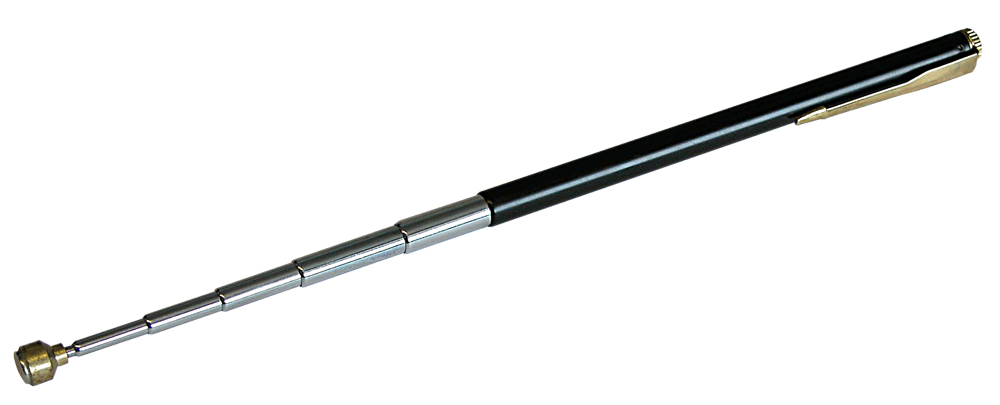
Don't drop washers into the cam followers while rebuilding your engine. It takes AGES to find them again!

Then get one of these:
magnet_pen.gif
 
when leaning over the back to check water comes from exhaust, make sure your specs are on tight!

That's reminded me of another one.

Some boats have their exhausts on the port side.... So do check both sides of a new boat for exhaust water before wasting half an hour checking the filters and changing a perfectly good impeller.
 
Ensure the kedge anchor and chain is well secured in its basket on the pushpit, so that as you are blasting across the Ionian, wondering if you're getting the lee rail under, the kedge doesn't decide to deploy itself, because the boat speed will dramatically reduce....

Actually we decided this was a cunning ploy by the flotilla skipper to ensure we didn't sail their boat too hard!
 
When you are entering a busy sea lock with a large fishing boat ... wife on bow looking aft asking which side we go ... always try to remain calm when she shouts .... 'of course I know, but is that your starboard looking forward or mine looking aft'
 
As you motor towards the harbour wall for a bows-to and the sheet-bend securing the extra warp to the kedge slips it is better if someone other than the skipper/helm/engine controller dives over the back to chase the sinking bitter-end.
 
When you've just done an oil/filter service followed by tedious bleeding (Volvo 2003 with a pump lever which requires >200 strokes to pump clear fuel), don't forget to put the decompression lever back down before attempting to restart engine.

Panic and dark thoughts ensue.
 
When Bleeding a Volvo Penta 2000 series - make sure you depress the bleed pump hard and all the way - or it will take 200+ strokes to pump through!
 
Thank you for all the handy tips on bleeding through a Volvo.

It's an exercise I have carried out many times on Volvos various, and I am aware of all of the things mentioned.

The decompressor was engaged so that engine could be rotated to allow full travel of pump. and topping up the filters takes longer than to sit pumping, with the bonus of no risk of spillage.

Might invest in one of those bulb thingys.

Thanks again.:rolleyes:
 
When moored on the outside of a raft of many boats in a huge lock in holland and seeing the lock gates open and not wanting hold boats up, setting off before going into the north sea. Remember to wait for the lifting bridge to open also. There was more than enough clearance when we entered the lock.
 
Gleaned from a a friend.

If you have a MFV which is in a dock and you get a retired fisherman to go and start the huge petrol/parafin engine every week to keep it in service, make sure he knows not to start it in gear.
 
Top