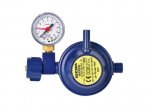
Gas cylinder regulator dangerous failure

C08

Well-Known Member
Joined
8 Feb 2013
Messages
3,959
Visit site
The rubber pipe in the gas locker from the solenoid cut off to the copper pipe to the cooker & heater had come loose so I refitted the hose clip secure again. I just thought it was normal wear and tear where things can come loose. When I put on the gas valve I could hear gas flowing but there was no leak but I was not happy so switched off the gas valve. I checked the locker and bilges and the pipe run but no smell of gas. So with the gas off I turned on the cooker burner and lit it and there was a real flash flame about a foot long. It would seem that the regulator was not regulating and higher pressure gas was passing into the system and what I heard for 2/3 seconds when it was on was the pressure filling up the pipework.
I had not considered the possibility of a regulator failure in this way and if I had not had a little warning by the pipe being blown off initially I would certainly now be in hospital or mortuary. The regulator was a well known Italian make and 5 years old.
My gas system follows all the recommendations regarding locker set up, pipe joints at bulkheads, bubble leak, isolating solenoid, dated flexible pipes etc but I am now thinking about a pressure gauge in the line and visible from the cooker. This sort of problem is probably very rare but the consequences of lighting a stove with high pressure propane from the burner is a horrific situation that I do not wish to risk and I do not see any alternative to a pressure gauge.
 
The rubber pipe in the gas locker
.
.
I do not see any alternative to a pressure gauge.

Dual fuel marine regulators have a built in pressure relief valve to guard against this sort of incident
 
Interesting idea I’ve seen gas supply designs that include a pressure gauge. I think I may well add one in due course. Thanks for the heads up.

The gauges that I have seen, including the "Gaslow" gauges all seem to fit on the high pressure side of the regulator. Intended I think as an aid to leak detection / pressure tests or in the case of the Gaslow gauges to indicate a low gas level..

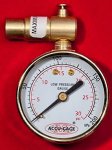
There may well be gauges with an appropriate measurement range for the low pressure gas but I cannot recall seeing them.
 
Last edited:
The gauges that I have seen, including the "Gaslow" gauges all seem to fit on the high pressure side of the regulator. Intended I think as an aid to leak detection / pressure tests or in the case of the Gaslow gauges to indicate a low gas level..

There may well be gauges with an appropriate measurement range for the low pressure gas but I cannot recall seeing them.

One possible problem. High pressure gas from a failed regulator might burst a low pressure gauge and you'd still have a massive leak.
 
One possible problem. High pressure gas from a failed regulator might burst a low pressure gauge and you'd still have a massive leak.

Exactly; what is wanted is a high pressure gauge...

Presumably a regulator will fail to regulate if some dirt prevents its valve sealing properly. Divers must have a similar vulnerability (though it's not something I do). What precautions do they take?

Mike.
 
Fit a so called marine regulator that has the vent for such a problem. No need to fit any gauge as the regulator might just fail in use, making any pressure gauge redundant anyway. Note that there are plenty of styles to choose from, not just the dual fuel types. The tell tale is the vent spigot which should have a length of hose going over board. I am not sure, but I think the term 'marine' designates this feature as well as other features designed to a standard or regulation for sea water environments, not a marketing ploy to charge more.: -

http://www.whayward.com/Results.cfm?category=23&secondary=24
 
I am thinking of changing mine as it has been in use since 2009.

I think this is correct for my installation (camping gaz cylinders). It has a 10bar gauge on the hp side and the dump spigot on the top. Not sure what happens inside if the regulator part fails,
View attachment 70363

M.

What you illustrate will only fit a Camping Gas cylinder with the aid of an adapter valve..

The vent should point downwards

The pressure gauge is on the high pressure side therefore it wont help in detecting a regulator failure
 
Last edited:
My thought now is to have a 150psi 50mm gauge fitted to a T adapter to replace a 90 degree bend behind the cooker and well visible there. If all is ok when switching on the gas it should barely show any pressure on the gauge as I think 37mb is only about 0.5PSI. It is a slightly debatable point as to what pressure gauge to choose and maybe 15PSI would do as I do not think flexible pipe joints made with hose clips would retain full bottle pressure of about 160PSI anyway. At a cost of about £10 and about an hour to fit it seems like a good plan to help avoid blowing oneself up although I suspect regulator failures like I had are pretty rare! Thanks for ideas and suggestions.
 
The regulator failure was one of those one-in-a-million incidents which you're almost certain never to experience again, especially if you buy a good quality Annex M regulator. Fitting a pressure gauge is pretty well pointless, as well as being another set of potential leak points.
 
The regulator failure was one of those one-in-a-million incidents which you're almost certain never to experience again, especially if you buy a good quality Annex M regulator. Fitting a pressure gauge is pretty well pointless, as well as being another set of potential leak points.

+1 over analysing when there is a simple and direct solution for the risk.
 
Top