
Fire on multiple boats and insurance coverage

wawando

Well-Known Member
Joined
18 Nov 2019
Messages
98
Visit site
Burned Yachts.jpg
Hi,
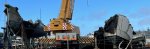
Unfortunately, it is ugly but it does happen. Here is a picture of a real situation of 20 Million Eur yachts burned plus the marina pontoons and a few damaged boats around. At least 30M Eur expense...
My question is: who pays the bill? Until what value is the responsibility of the owner of the boat where the fire started? It is frequent for insurances to cover 300k, 500k but not 20M, 30M...
I was told that for cars, the 3rd party mandatory coverage is 7.29M Eur and above that if you own a 20M car you must insure it yourself. How is it for boats?
I am just trying to understand the risks. Any help?
Thank you!
 
It's not comparable to motor insurance where there are legal requirements and a network to cover uninsured losses (e.g. if you're hit by an uninsured driver). Basically, most marinas insist on a particular level of third-party cover; in the UK usually £3,000,000. The insurance would pay up to that, but beyond that, if the fire was caused by your action or negligence, then you're liable for the rest. In the example you show, it would depend entirely on who was responsible for the fire. The adjacent yachts would be covered by their own insurance policies, but the insurance companies would attempt to recover their loss from whoever they deemed to have caused the fire if anyone was identifiable. Of course, in many cases, there would be no chance of recovering the full value from the insurance of the yacht where the fire originated or from the owner. But if there's no negligence or obvious cause for the fire (for example, suppose the fire was caused by a rat gnawing insulation and causing a short-circuit), the payout would be up to each individual yacht's insurance.

I'm very careful about insurance - my dad lost his boat because his insurance ran out, there was an accident causing damage he couldn't afford to repair, and he ended up selling at a vast loss.
 
Just to add to your deliberations you have to consider the law which applies to any such claim both under the policies and for the insurer exercising rights of subrogation following payout. I guess my first question would be to see a copy of the fire brigade report to identify some facts . My expectation is each owner would claim on their own cover depending on policy terms and the insurer for each would seek recoveries if grounds existed.
 
I asked basically the same question but didn't get an answer from an Insurance type person. Hopefully we will after your post (y)

steveinnice said:
Hypothetical ,sort of, 5 yachts in a yard "a" "b" "c" "d" and "e" . yacht "a" catches fire (genuine claim ) and sets fire to yacht "b" That would be third party claim. but yacht "c" catches fire . whose fault is it ? Yacht "a"" who started the fire or yacht "b" that caused the fire to spread to yacht "c". T he carnage continues and yacht d" and "e" burn out in succession.( that's how fires work one starts the next and so on. ) In motor claims I THINK consequential damage is not covered. eg I tailram you and you tailram the car in front I would be liable for your damage but not the car you hit. Any insurance people on here that can set me straight?
 
Just to add to your deliberations you have to consider the law which applies to any such claim both under the policies and for the insurer exercising rights of subrogation following payout. I guess my first question would be to see a copy of the fire brigade report to identify some facts . My expectation is each owner would claim on their own cover depending on policy terms and the insurer for each would seek recoveries if grounds existed.
But in the case quoted by the OP with a potential claim exceeding the usual third party cover, it is very unlikely that it would be possible to recover anything from the owner of the yacht where the fire started, presuming it was shown to be his (or her) fault. Faced with such a claim, the poor person would have no choice but to declare him/herself bankrupt, and the creditors would be left whistling for it!
 
I asked basically the same question but didn't get an answer from an Insurance type person. Hopefully we will after your post (y)

steveinnice said:
Hypothetical ,sort of, 5 yachts in a yard "a" "b" "c" "d" and "e" . yacht "a" catches fire (genuine claim ) and sets fire to yacht "b" That would be third party claim. but yacht "c" catches fire . whose fault is it ? Yacht "a"" who started the fire or yacht "b" that caused the fire to spread to yacht "c". T he carnage continues and yacht d" and "e" burn out in succession.( that's how fires work one starts the next and so on. ) In motor claims I THINK consequential damage is not covered. eg I tailram you and you tailram the car in front I would be liable for your damage but not the car you hit. Any insurance people on here that can set me straight?
Motor Insurance is a completely different thing; I wouldn't expect parallels with it.
 
There is UK case law regarding fire spread but different countries have different laws -
Are you liable for fire damage to your neighbour’s property? - Willans
That's interesting, but it's not UK law - only England and Wales. I was interested and looked it up, and it is explicitly not the case in Scotland, and it has been struck down in some other countries (e.g. Australia) by legislation.

I am not a lawyer! But reading about it, it seems that it refers to damage caused by something brought onto a site by the landowner which then escapes and causes damage. As fire can't be said to have been deliberately brought onto a site, it escapes liability. BUT all the boats in question were on land owned by A N.Other , and the question of negligence arises. Was the owner of the boat where the fire started negligent? Unless he/she left a naked flame burning, or used electrical equipment known to be defective, it's hard to see how negligence could be proved. Leaving heating or dehumidifiers running unattended is common practice, so it would be hard to label that as negligence.

In the absence of provable negligence, I think that recompense would be up to the insurers of each yacht and of the marina individually.

I am NOT a lawyer!
 
That's interesting, but it's not UK law - only England and Wales. I was interested and looked it up, and it is explicitly not the case in Scotland, and it has been struck down in some other countries (e.g. Australia) by legislation.

I am not a lawyer! But reading about it, it seems that it refers to damage caused by something brought onto a site by the landowner which then escapes and causes damage. As fire can't be said to have been deliberately brought onto a site, it escapes liability. BUT all the boats in question were on land owned by A N.Other , and the question of negligence arises. Was the owner of the boat where the fire started negligent? Unless he/she left a naked flame burning, or used electrical equipment known to be defective, it's hard to see how negligence could be proved. Leaving heating or dehumidifiers running unattended is common practice, so it would be hard to label that as negligence.

In the absence of provable negligence, I think that recompense would be up to the insurers of each yacht and of the marina individually.

I am NOT a lawyer!
Wouldn't using a dehumidifier without ensuring that the filters were clean, or that the bearings were in good condition, or ensuring that the wiring was all in good order and could not lead to a fire not amount to negligence?

It is true that using a dehumidifier usually does not cause a fire, but they have been known to do so and I suspect that once a dehumidifier or a heater is found to be the cause there will be likely be fault on behalf of the user which would amount to negligence.

"res ipsa loquitur "is likely go come into play....
 
Wouldn't using a dehumidifier without ensuring that the filters were clean, or that the bearings were in good condition, or ensuring that the wiring was all in good order and could not lead to a fire not amount to negligence?

It is true that using a dehumidifier usually does not cause a fire, but they have been known to do so and I suspect that once a dehumidifier or a heater is found to be the cause there will be likely be fault on behalf of the user which would amount to negligence.

"res ipsa loquitur "is likely go come into play....
Your first paragraph would be covered by my line about "equipment known to be defective". But not always; I have had two tumble driers burst into flames despite the dust filters being meticulously maintained. In at least one case (probably both), with hindsight, we realized that this was because dust built up in inaccessible parts of the machine, well outside the scope of normal maintenance. Fortunately, in both cases, we were on the scene, realized what was happening, and could get the dryer outside before the fire became too great. The insurance company had no problem with it; we had to claim for damaged flooring on our house insurance (the machine itself was covered by an extended warranty), but there was no question of us being negligent; both insurances paid up without any question. There's a reasonableness test - even if equipment proves to have been defective, if the owner had no way of knowing it was defective, it isn't negligence.

I no longer use a tumble dryer!
 
Does the tonnage limitation clause still exist? I would have thought that this would limit the liability to something like the insured amounts mentioned.
 
Top