Fire Extinguishers

I have a quick release terminal connector. Will that do?
"The fire originated in the starter motor solenoid. This has a permanent, unswitched connection to the battery."

So, probably not ;)

What if the fire is near the battery ?

What happens if the battery has shorted internally, gassing badly and needs isolating ? If you remove the quick release connector the battery is very likely to explode.

Please, fit an isolator.
 
Because the starter motor is on fire because the pinion has got stuck in the start position while the engine is running.
Been there, done that.

So first you isolate the electrics. The fire will probably go out on its own, there isn't much to burn in a starter motor.
 
So first you isolate the electrics. The fire will probably go out on its own, there isn't much to burn in a starter motor.
Plenty of other stuff in the vicinity. Hoses etc. And the engine bearers were not exactly clean.
A decent squirt from the extinguisher was very effective and saved the hoses.
The start motor was dead.
 
So first you isolate the electrics. The fire will probably go out on its own, there isn't much to burn in a starter motor.
It takes quite a set of balls to see your starter motor on fire, isolate the electrics and cross your fingers that it burns out! I can see that it might, or maybe that your fire blanket might be a good choice, but I’d want if out asap and let the insurer stress about the mess!
 
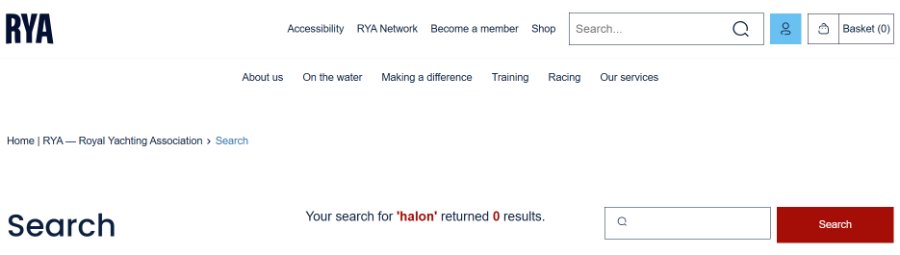
I see the CAA are now facilitating the decommissioning of Halon 1211 and Halon 2402 in handheld fire extinguishers on all aircraft. I wonder if there is something deep within legislation for vessels as a search of the RYA site produces nothing and their Fire Safety On Boats page.

Decommissioning of Halon 1211 and Halon 2402 in Handheld Fire Extinguishers | UK Civil Aviation Authority

View attachment 202862
Halon was banned in all but military and certain aviation use many years ago.
P.S. 22 years ago as of next month.
 
The three dry powder ones that I have aboard are all compacted and past it. Given that dry powder is pretty messy, I thought about replacing them with a pair of CO2 ones. Would that be enough or should I have something else as well ?
35 ft sailing cruiser.
Insurance companies require class A and B class fire extinguishers and dry powder and AFFF Foam cover that but CO2 don't. CO2 is only class B which is flammable liguids. CO2 fire extinguishers should not be kept in a cabin that has accommodation berths, which is any cabin on a 35' sailing yacht. I would buy several dry powder as they are cheap and cover the insurance company ask and buy one Foam and keep it in the companionway or under the aft end of the saloon table. The useful thing about CO2 fire extinguishers is that they have a nozzle hose that you can poke into the engine space fire port bung hole but generally most dry powder extinguishers don't. If you do buy a CO2 extinguisher keep it in a draining cockpit locker that drains outside the vessel, not into the hull.
 
No noxious substances to breath, no mess, 15 year shelf life, and give much longer time actually fire fighting = 50seconds.

4x or 5x longer than typical extinguishers.


What's not to like?

I've no connection to the company. But do need to replace my existing extinguishers.

Seems that if you actually want to.put out a fire in a small space, such as a boat, these fire safety sticks are ideal.
 
Last edited:
The three dry powder ones that I have aboard are all compacted and past it. Given that dry powder is pretty messy, I thought about replacing them with a pair of CO2 ones. Would that be enough or should I have something else as well ?
35 ft sailing cruiser.
Just curious,
How do you know that the dry powder is compacted and therefore ‘past it’ ?

I am very curious because I have three extinguishers onboard my boat. I think they are all dry powder and I have no idea how old they are. But the boat is 12 years old, so I’m guessing they are original.

The thing is, they look OK and the pressure gauges are all in the green.

What should I do about these?
 
If you ever have to let off a dry powder extinguisher:

*They make one he'll of a mess
*Don't breath it in whatever you do
*It's caustic and will eat through wiring looms
*Imagine what would happen if a running engine sucked in the powder?

I intend to have aboard a better alternative! 😄
 
Just curious,
How do you know that the dry powder is compacted and therefore ‘past it’ ?

I am very curious because I have three extinguishers onboard my boat. I think they are all dry powder and I have no idea how old they are. But the boat is 12 years old, so I’m guessing they are original.

The thing is, they look OK and the pressure gauges are all in the green.

What should I do about these?
If you've not shaken them up regularly thay are probably impacted by now.

You don't want to find out in a real fire situation. What's the lifespan of a fire extinguisher? Service dates should be on a sticker on the extinguisher,unless they've been removed...
 
Insurance companies require class A and B class fire extinguishers and dry powder and AFFF Foam cover that but CO2 don't. CO2 is only class B which is flammable liguids. CO2 fire extinguishers should not be kept in a cabin that has accommodation berths, which is any cabin on a 35' sailing yacht. I would buy several dry powder as they are cheap and cover the insurance company ask and buy one Foam and keep it in the companionway or under the aft end of the saloon table. The useful thing about CO2 fire extinguishers is that they have a nozzle hose that you can poke into the engine space fire port bung hole but generally most dry powder extinguishers don't. If you do buy a CO2 extinguisher keep it in a draining cockpit locker that drains outside the vessel, not into the hull.
I have 4 x AFFF extinguishers on my boat - one just inside the entrance hatch, one at the galley and one in each of the larger sleeping cabins. The small mid cabin is immediately opposite the galley, so has access to one . I also have 2 x 2kg CO2 on board. These can be discharged into the engine space via 2 x fire ports. The CO2 extinguishers can also be used on live electrical fires too. My choices were driven by having the required level of cover, plus ease of cleanup should one need to be discharged. We also have a fire blanket at the galley.

You’ve raised an important point of safety with regard to the storage location of the CO2 extinguishers, one which I have overlooked up until now (also by the surveyor) so will be making arrangements to relocate them very soon!
 
Last edited:
CO² is used to fight electrical fires, but rubbish at fighting anything else!

While you might have a short in your electrical system that will ignite solid materials around, we all know that boats are filled with flammable solids, and you need to switch extinguisher type - that's why we have different types.

I've been fortunate enough to do several Fire Warden courses, to demonstrate the point you get to use the 'wrong' extinguisher on a material just to see how ineffective they are.

This is the colour code for UK extinguishers. You will note that CO² is not to be used in confined spaces like a boat.

View attachment 193833
Fun thread. I've had numerous experiences extinguishing incipient fires in industrial settings that involved flammable hydrocarbons, high voltage (>=480 V), welding, and other combustibles. Not wanting to pretend to be an expert, a few thoughts in no particular order. The above chart is not really correct in all details, only general conservative rules that don't always work.
  • A boat cabin is a very confined space. I don't think you can stay for more than a few moments with CO2 or dry chemical. Both are lethal if inhaled in concentration. One lung full could do you in. People have died from both.
  • Water is great for cooling, vital to prevent re-ignition and to quench combustible fires. Nothing else comes close.
  • For fuels water is effective, but must be a very fine mist or it just spreads it and pushes it around without quenching. Cna also cause spattering.
  • Water must be non-conductive for electrical,and most boats have 120 or 240 V systems in addition to 12 V, so distilled it must be non-conductive. Distilled water works on land, but will it become mixed with salt on a boat? For water to be an electrocution hazard it does NOT need to be full salt, only conductive enough. Probably not a real risk, just a thought.
  • Water freezes. A non-starter in many applications.
Don't forget the humble fire blanket. Many uses. In the case of a galley grease fire, put the lid on the pan (you should never be frying in oil on a boat without a lid at hand).

I've been using pump-up sprayers with a fine mist of DI water for fire control when welding for years. It's the best. No breathing hazard, no clean-up, the mist is very effective, minimal electrocution hazard, and cheap. Combined, these mean the workers won't hesitate to use it, even wetting down near by materials as seems prudent.

Dry chemical is dirt cheap. It's relatively idiot proof. For better or worse, those combine to make it popular.
 
If you've not shaken them up regularly thay are probably impacted by now.

You don't want to find out in a real fire situation. What's the lifespan of a fire extinguisher? Service dates should be on a sticker on the extinguisher,unless they've been removed...
Here in Finland, the service life of powder extinguishers used in boats is 10 years from the date of manufacture stamped on the cylinder. They must be inspected annually by a professional who officially records the inspection. During the inspection, the bottle is tapped about 10 times with a rubber mallet, the seal is checked, and the pressure in the bottle is measured with a gauge. Approved bottles receive a sticker indicating the date, manufacturer, and company.

It is mandatory to have a fire extinguisher on board.


I have two powder extinguishers and one liquid extinguisher, as well as a Fire Boy automatic extinguishing system in the engine room, which extinguishes the main engine and generator when activated.

In addition, there are washdown pump connectors for raw water at the bow and stern. I hope I never need to use them.
 
Last edited:
Just curious,
How do you know that the dry powder is compacted and therefore ‘past it’ ?
If it’s been stored vertically then the centre of gravity should be a clue, especially if you can compare with a new one. Not sure if I would stake my life on that though!
 
No noxious substances to breath....
There have fatalities in a confined space. The gases are toxic at some level.

Also, you have only one go.

The other problem in a confined space is zero visability. I tested one and the whole neighborhood was foggy for 20 minutes. Even worse for visability than dry chem, made worse because you can't stop and look; it just keeps going.

But they do work. Great for vehicles on the road. Racing safety crews can keep one on their belt. Good to have one on the boat as a part of your kit, but understand them first.

In the US they do not carry a rating so they do not count towards requirements (which does not mean they don't work), mostly because they do not fit in the testing matrix. They do have an EN rating. Fire blankets do not count towards requirements, but they can be vital kit for some fires.
 
Top