filling and fairing cast iron keels

I kind of half did mine... in the past I’ve found they just rust again so didn’t expend too much effort on that job but I’d aquired a Terco Blaster so gave it a go.
Got to say how impressed I am by it - took my keel back to the metal in very short order. So then I tried applying some Fertan which was equally impressive but I’ll wait to see hoe completely impressed I am in a few months time.
I filled in the worst of the pitting with some ‘marine’ epoxy filler then primed and anti fouled just before the rain came on otherwise I might have spent more time filling.
I’ll make a better job of it next lift if the Fertan works..
 
To get the job done if you have an SDS drill, you can get a needle gun attachment that remove the rust well. I believe it is an annual chore along with the antifowling. (Katy Louise has encapsulated lead ballast.)
 
Slight aside, be wary while using a heavy duty twisted wire brush cup on them. They have sufficient bite to remove chunks from the edges even with a fairly low powered angle grinder.
Ask me how I know ...

Worth using the search feature as this is discussed often here and on other forums.

Which boat?
 
Long reply warning...! But I did a lot of research (on here) into this same job, so thought it might be helpful to digest and share what I came up with (and ultimately did/am doing):

We've undertaken this recently as one of the running jobs on our refit. The rust most severe on the forward and aft thirds (if that makes sense?), where it was bubbling through the factory fairing compound as well as some previous repairs. The middle third was fine - perhaps due to the laminar/turbulent flow inducing corrosion?

I’d aquired a Terco Blaster so gave it a go.
Got to say how impressed I am by it
I considered this, as reviews are generally positive, but the cost was off-putting - especially if you factor in a couple of the discs for a large keel (apparently the tips eventually sheer off) and potentially a sacrificial drill for the job. Apparently if you're careful you can conserve the tips...

you can get a needle gun attachment that remove the rust well
Again, considered this carefully, but I felt that any 'home' (i.e. drill or small compressor) option wouldn't have the grunt to blast through the rust. If it doesn't chip the rust off, it will 'polish' and conceal it like other methods can. I looked at 110v hire options but inc. vat these are still expensive (>£100 here), similarly to get a big enough compressor to run an air version. Plus I've never used one but imagine it is noisy, percussive and pretty miserable work.

In the end the bulk of our rust removal, especially in any badly pitted/pocked areas, was undertaken with chipping/welding hammers. It is hard work but effective. It also proved good for chipping off relatively large chunks of the factory fairing compound (up to a couple of mm thick so lots of dust/grinding required otherwise). One lucky blow with a chipping hammer might take out a 5cm-wide rust pocket, together with a couple of cm of surrounding compound, so it remains an effective method even in the face of various powered alternatives.

be wary while using a heavy duty twisted wire brush cup on them
We actually found the twisted know 'wheel' type were pretty good. These were used after the chipping in the worst areas. I actually liked how they 'threw' chunks of rust/slag away from the surface, rather than just polishing up the rust (this definitely happens btw, so heed those warnings about just machining the rusty surface until it is silvery - it may just be polished rust!). I also heeded the warnings from forum posts about the risks of a) grinding metal particles into the cast iron that will induce future rust (so used it sparingly and avoided brush-shaped attachments) and b) bodily injury (so donned face shield, welders gauntlets, etc.)!

In the end, I found the composite abrasive discs worked well (search 'preparation disc' or 'poly abrasive' discs). They are just about tough enough to grind down or chip off the rust, but obviously contain no metallic particles. They are expensive-ish though, at maybe 1 disc per sq m.

I believe it is an annual chore along with the antifowling.
I head this 'loud and clear' from some previous posts - but our aim was precisely to avoid this. Therefore, after all the above being said, in the end we're having the keel blasted in the next few weeks/days!!! ? The reasons for this are a longer story, but I'm still satisfied that the worse of the rust pocks (which may have even resisted blasting) have been removed, opened up and allowed to breath beforehand.

Again, based on scouring previous posts on here, the schedule will then be to use Jotun Penguard ZP (zinc phosphate) primer, thickened epoxy for the big pocks, then epoxy fairing compound (not perfectly fair, but just for easier final sanding) and then 5 coats of Wests with barrier additive. I want to at least try to avoid having to do this ever again. I know that slapping on several £££s of paint and epoxy raises the stakes somewhat, however!

I’ll make a better job of it next lift if the Fertan works..
Lastly, on the Fertan (and other similar products), they are undoubtedly decent rust 'preventers'. We first exposed the keel around February and slapped a litre of Fertan on it just to prevent further rusting and to try and neutralise any corrosive compounds left on the surface (not sure if the latter would actually work, but it made sense to 'cure' the surface rust there is ever present). It worked great. Over 6+ months = no rust on the Fertan areas, otherwise exposed to atmosphere.

BUT - what it leaves is a powdery black residue. So, despite claiming to be 'primers', I cannot see how Fertan and the like would be any good under a high-tech (i.e. amine epoxy-based) paint/fairing system in an immersive environment. I planned to sand it off before priming. Now it will be blasted, to the same (hopefully better!) effect. Perhaps a solvent like acetone might remove the worse of the residue? Incidentally, other products I've found effective on past projects - such as Bilt Hamber's - also contain things like silicone that I just wouldn't risk leaving as a layer between any primer.

Sorry, long reply, but it condenses all I learned from searching on here before attempting the job!
 
Following all the chipping and blasting paint on sone brick cleaner to remove any pust left. then wash with fresh water the paint on phosphoric acid before painting and filling . If you don't remove all the microscopic rust it will just come back.
 
Dankilb , the instructions say to wash off the dust before overcoating The Fertan?

I wiped it off but there was still residue coming off on my fingers when I primed it which is a bit of a worry.
 
How about taking it off and copper plating it? Would make a quite impression while on full tilt.

They've just re-done the USS Constitution. First coat lasted 219 years.

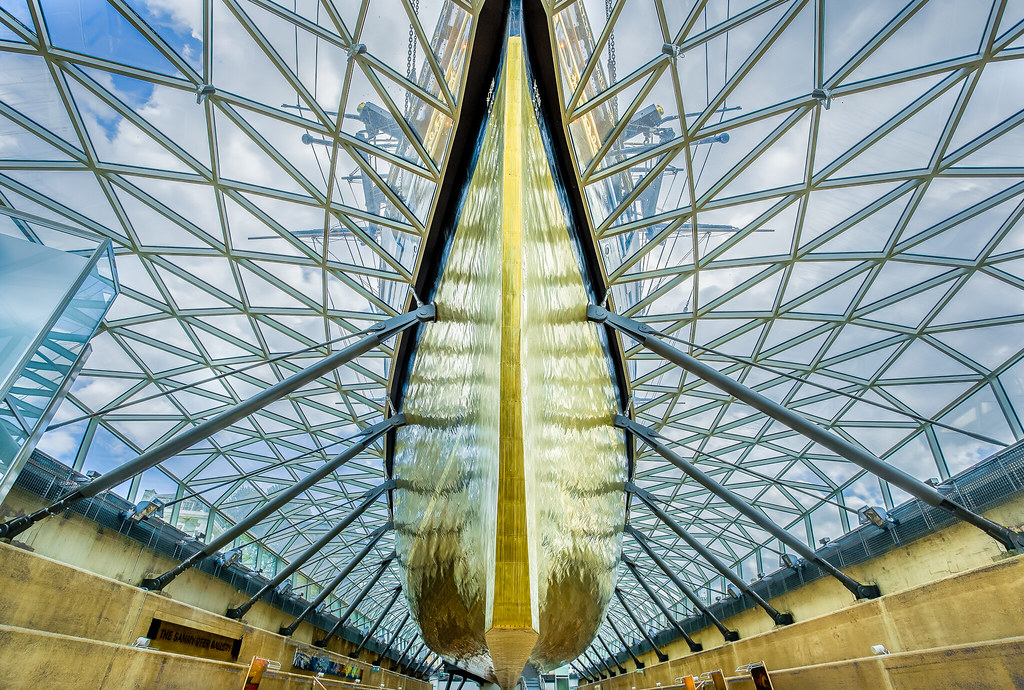
The Cutty Sark.

14207784383_9c22757211_b.jpg
 
Dankilb , the instructions say to wash off the dust before overcoating The Fertan?

I wiped it off but there was still residue coming off on my fingers when I primed it which is a bit of a worry.
Yes, absolutely, the dust seems pretty stubborn, even after washing. Plus the higher-tech paint systems for this sort of application are specified for bare metal, whereas with Fertan (or Vactan or Hydrate80 etc.) there is still a layer of unspecified something below the paint!
 
Yes, absolutely, the dust seems pretty stubborn, even after washing. Plus the higher-tech paint systems for this sort of application are specified for bare metal, whereas with Fertan (or Vactan or Hydrate80 etc.) there is still a layer of unspecified something below the paint!

I suppose I’ll find out in a year or so...
 
I stripped my keel before going back in this year. Tercoo for first strip for old filler and loose rust, then polycarbide disks on grinder. Cleaned back with thinners then zinc based 2-pack epoxy primer, fairing filler/sanding, another zinc primer, 2 coats of epoxy primer for antifoul, 2 coats of hard antifoul.

I'll let you know at the end of the month how it fared (albeit a short season).
 
RUST CURERS.
The most common way to cure rust is to use an acid convertor, these are most commonly water based, epoxy (glue) based or gel based. They have an acid content roughly somewhere between 4-8%. The names of these you will recognise as Ku-Rust, Jenolite, Fertan, etc and then company named products that sell you a complete rust cure and protection system such as Dinitrol, Supertrol, Bilt Hamber, POR-15, Buzz Weld etc. ACF-50 is an entirely different product and not relevant for keels, very good stuff however!

For any of these rust convertors to cure the rust, the corrosion has to be taken right back to pretty much bare metal for them to be 100% effective, this is why they have not worked for the majority of cases of DIYers! Unfortunately they do not soak into deep rusty metal or even shallow rust. You really have to get the surface rust right back to near good metal, every pit, every rust worm and of course this is not easy where welds or seams are involved.

RUST PREVENTORS
So with expected results to be poor, very tough, or thick or rock hard rust "preventers" are used to coat over the rust convertor as part of a rust protection package. Some of these products are misleading as they say they stop rust... they don,t they just stop rust showing through. In fact long term they can be worse in many situations as they trap in the rust and moisture when a gap is created from corrosion underneath and it actually accelerates the rust. Sometimes if the metal was just open to the elements to dry out say on a car chassis it would have been better... I.e. Just spraying with oil actually can be very effective... no good for a keel of course.

Rust preventors like POR-15 chassis original, which used to be marketed with the toughness of being resistant to hitting it with a hammer do have there place. They are excellent for protecting guaranteed rust free metal that is new or has been shot blasted for instance or as part of a treatment where the metal in question will take years to rot out anyway, e.g. Thick heavy duty axles. Unfortunately these products are used to hide rust and they can mislead many customers into thinking they do actually stop corrosion. Sadly they are becoming more widespread on the market, one company actually uses a video of a bloke painting his rusty trailer in the rain claiming that it will stop his rust... sigh!

This is all just happening as effective clear coat products have recently been developed such as Dinitrol 4010. Sorry this Is more vehicle based insight now. This is great as you can keep an eye on the areas you have previously treated over the years and if you request it, it will stop all the cowboys in the undersealing world just slapping on rock hard coverings or thick coverings that hides the complete lack of preparation to the metal. Easy money for them! Thankfully most do a good job.
 
Last edited:
I stripped my keel before going back in this year. Tercoo for first strip for old filler and loose rust, then polycarbide disks on grinder. Cleaned back with thinners then zinc based 2-pack epoxy primer, fairing filler/sanding, another zinc primer, 2 coats of epoxy primer for antifoul, 2 coats of hard antifoul.

I'll let you know at the end of the month how it fared (albeit a short season).
Don’t want to tempt fate - especially as I am following a similar method - but I’m reasonably confident it’ll survive a fair few years. I’m hoping for 5-10 as that’s what Jotun said.

I appreciate that there are lots of variables than can introduce corrosion, but hopefully if the factories could make the majority of the coating resist the rust for 30 years - us amateurs must have a chance at a few years prevention, at least? Fingers crossed anyway.
 
I stripped my keel before going back in this year. Tercoo for first strip for old filler and loose rust, then polycarbide disks on grinder. Cleaned back with thinners then zinc based 2-pack epoxy primer, fairing filler/sanding, another zinc primer, 2 coats of epoxy primer for antifoul, 2 coats of hard antifoul.

I'll let you know at the end of the month how it fared (albeit a short season).
i will wait with interest on your results ,then decide . already have a big list for this year so may not have time but would like to if it turns out to last more than a season .
 
Are there no electronic rust proof protection systems, like Finalcoat for cars?
I am sure there are but the issue with most iron keels is that they are very low quality castings with ;lots of porosity - after all they arent structural in any real sense. In an ideal world you would drop them and send them off to be hot dip galvanised - that would stop corrosion dead. Failing that, rusting of iron requires warmth, water and air. You cant avoid the warmth and some moisture will remain in the pores and surface rough nesss so the key is to avoid the air by encapsulation. Blast them as clean as you can on a nice warm day and then encapsulate with epoxy and woven rovings to a decent thickness. But what do you do about the keel joint? Or the bottom of the keels where they ground?

Truth is, the keels should be lead not iron.
 
But what do you do about the keel joint? Or the bottom of the keels where they ground?

Truth is, the keels should be lead not iron.
Excuse the idiot's question, how would lead work for keels that were structural, as on typical bilge keels that support the boat on the hard?

I've seen a gentleman make up kevlar shoes for his boat, a shallow draft, centre keeled clinker that is ,as per tradition, pulled up and left on gravel beaches.

No idea of the likely longevity, does anyone have any idea?

Joints is a problem, I'm presuming they flex a little and that blending them over and joining the matt to the hull is out of the question, or is it? (I've seen the photos of a fully encapsulated bilge keeler that lower edge had worn through and ballast dropped out).

Is part of the problem that we're just getting into the end phase of this issue due to the age of the respective boats? As in it's just becoming an issue now for 60s, 70s boats?

I've seen an old, very abandonned Westerly who keels where flaking apart impressively, crumbling like old slate, and I would have thought there's were of a better batch of castings.

What's the sticking value of matt covering them even when allowing for the joint? As in how long will it remain sufficiently stuck to act as a rot deterent?
 
Last edited:
Excuse the idiot's question, how would lead work for keels that were structural, as on typical bilge keels that support the boat on the hard?

I've seen a gentleman make up kevlar shoes for his boat, a shallow draft, centre keeled clinker that is ,as per tradition, pulled up and left on gravel beaches.

No idea of the likely longevity, does anyone have any idea?

Joints is a problem, I'm presuming they flex a little and that blending them over and joining the matt to the hull is out of the question, or is it? (I've seen the photos of a fully encapsulated bilge keeler that lower edge had worn through and ballast dropped out).

Is part of the problem that we're just getting into the end phase of this issue due to the age of the respective boats? As in it's just becoming an issue now for 60s, 70s boats?

I've seen an old, very abandonned Westerly who keels where flaking apart impressively, crumbling like old slate, and I would have thought there's were of a better batch of castings.

What's the sticking value of matt covering them even when allowing for the joint? As in how long will it remain sufficiently stuck to act as a rot deterent?

On a typical fin keeled boat the keel still takes the boat's weight as the pad are "just" there to stop it falling over.

In most cases the keel hardened by including antinomy.

The iron keel on my last boat seemed particularly prone to rusting such that it needed the "grit blasting" at just three years old, current boat has a lead keel so saved the annual task of treating the bit of rust that appeared each year.
 
Top
