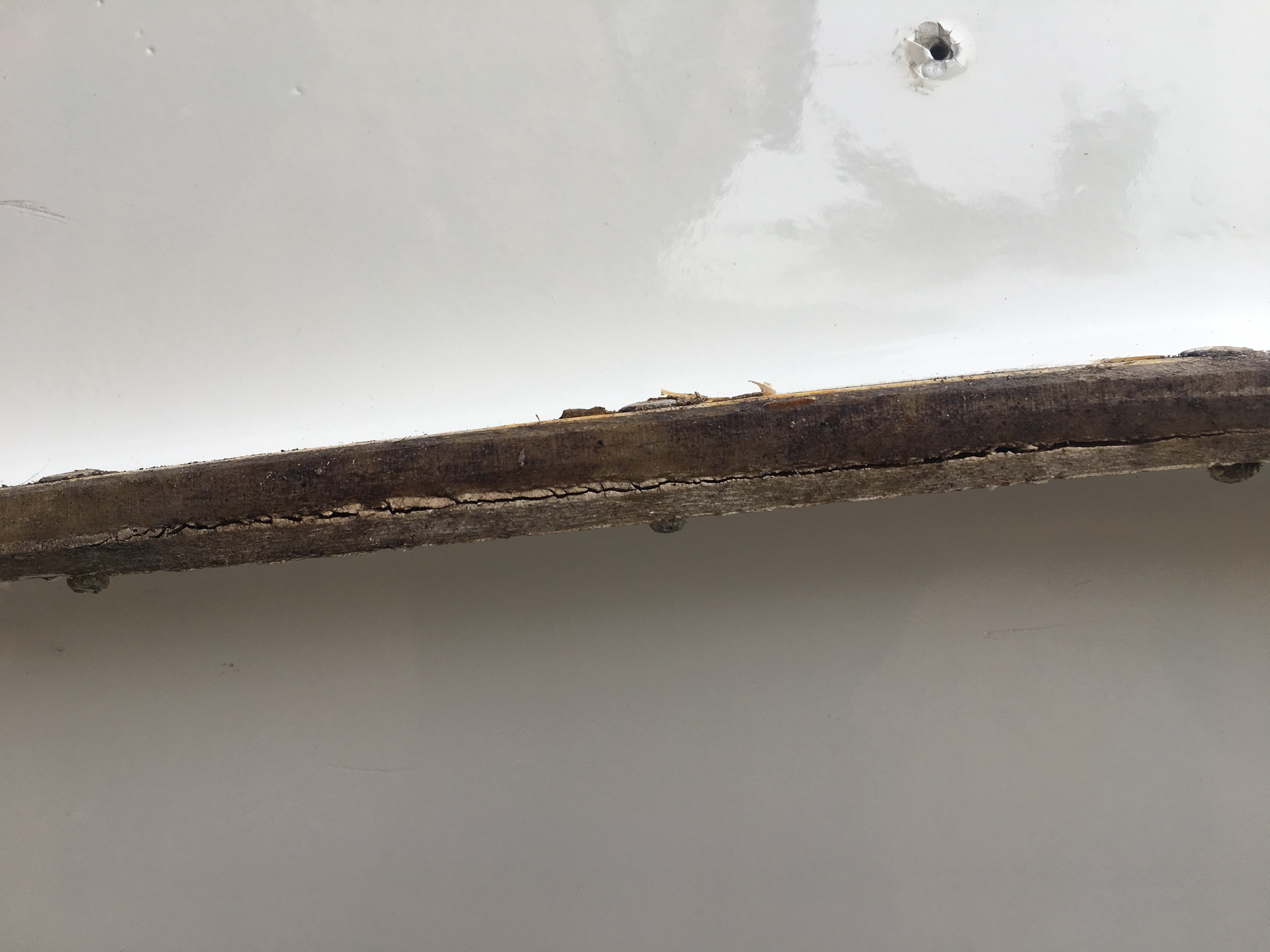
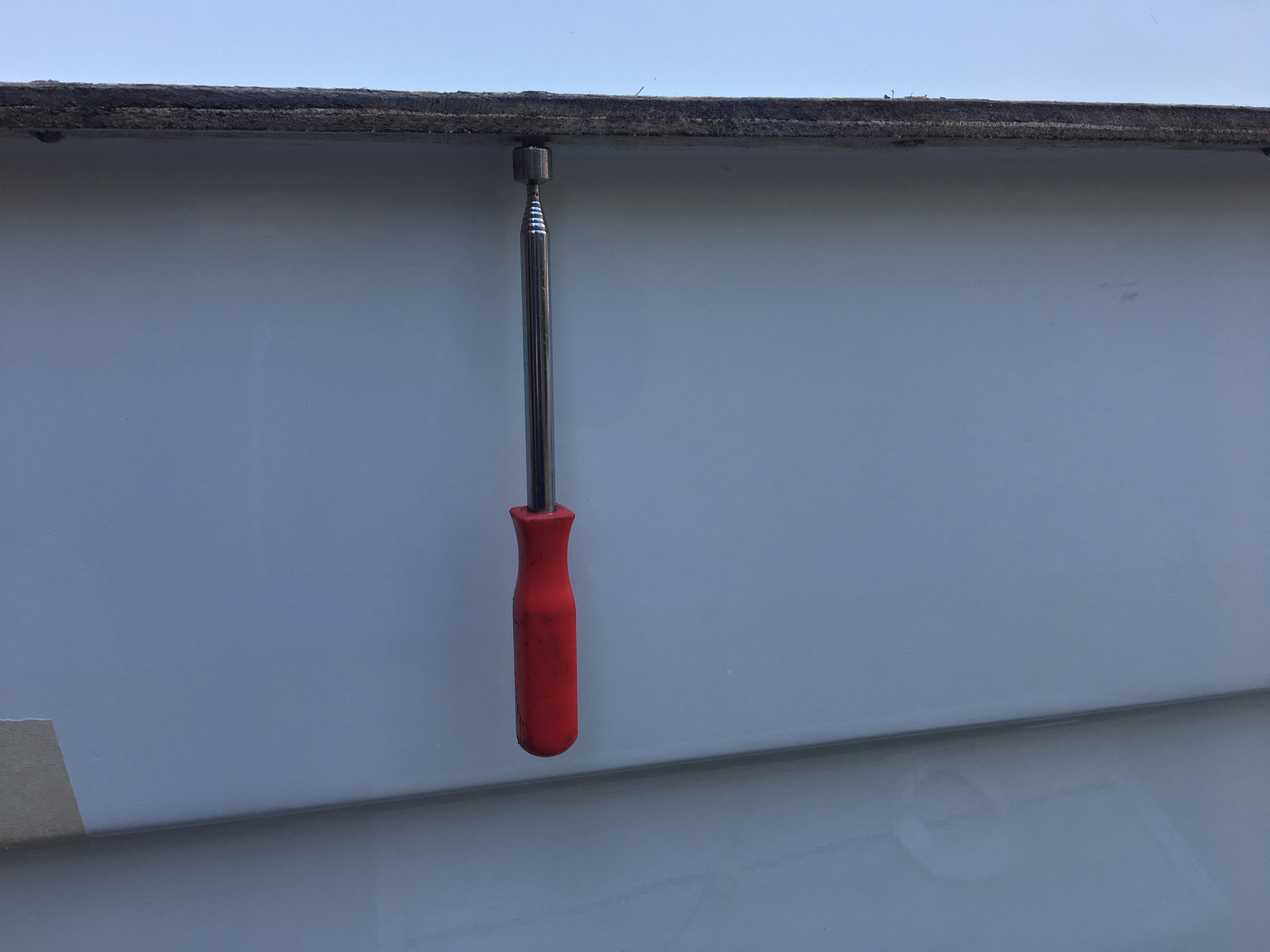
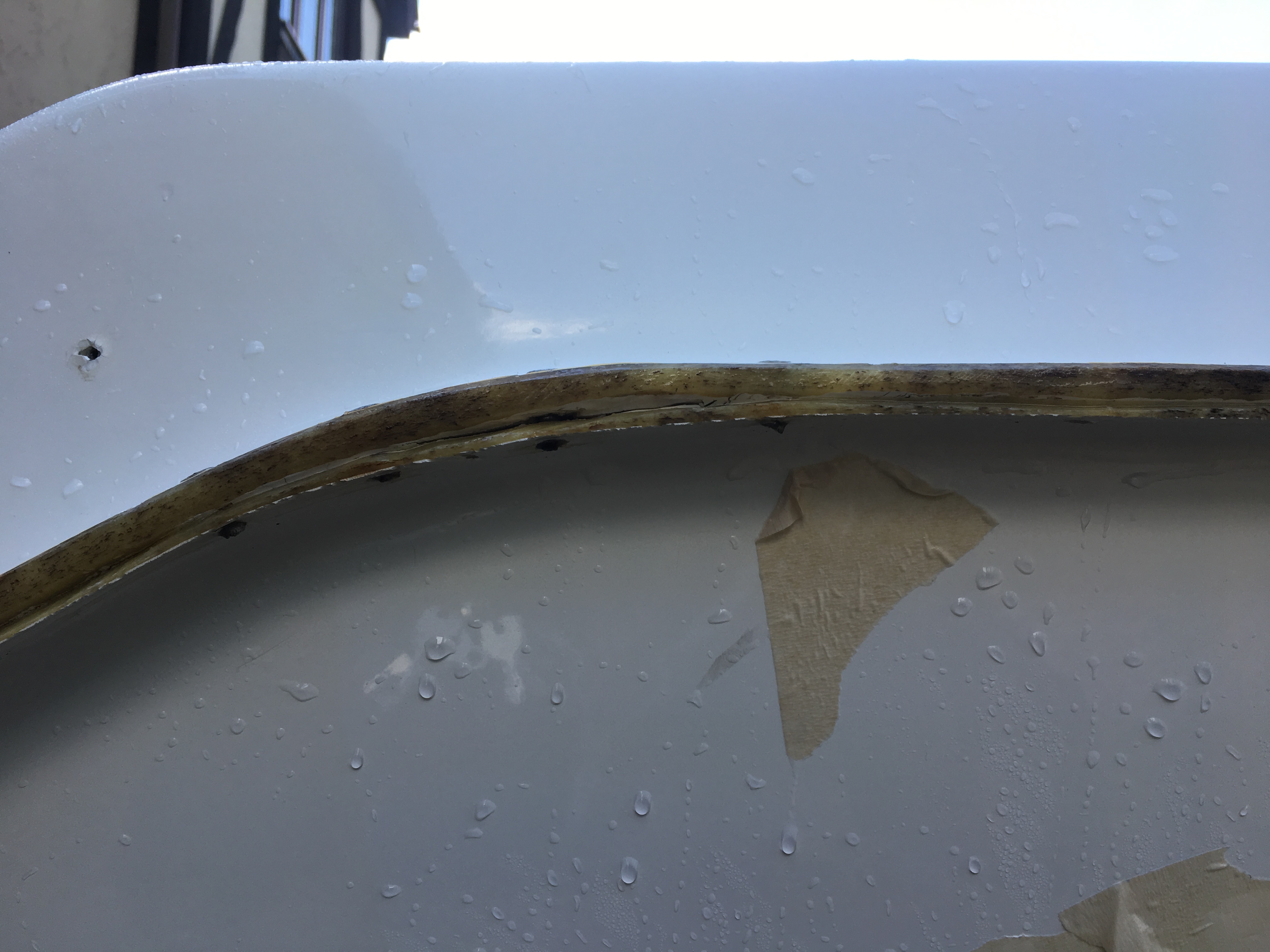
Hi, I am doing up a RYDS's 475GT and I have just removed the rubber bumper strip and found some of the top section of the boat has come un-bonded from the bottom section.
Not ideal
It is not unusual for boats like this to rely on pop rivets for bonding. There might be some sika or similar but that won't hold for long in an application like this. Check the inside to see if there is any grp applied, I doubt there will be but maybe there are sections that have been better bonded.
Thanks for your reply, you are right it is riveted every 100mm.
Generally most of the bond that has come apart is in the middle of two rivets where it can flex.
I could easily drill and put 1 or even two rivets between each pair of original rivets.
Do you need any special grade of rivets for marine?
If the existing rivets are nicely fixed I don't think you need to do anything and if many of them are not your problem won't be fixed by adding rivets. There are typically 2 major molds in this type of boat, the hull and the "inside" of the boat. These parts have a stronger bond in areas you probably can't see as its between the 2 molds.
Looking in different compartments of the boat it does look like the hull is made first and then the top section/inside is lowered on and bonded/riveted.
At a rough guess there is around 80-90 rivets holding the top and bottom together around the edge.
Really, the only way to do an effective repair is to lift the top and clean it all out to remove all that crud and wipe with a little acetone to ensure it is clean, apply a good sealer such as Sikaflex and rivet back down and clean off the excess.
Adding extra rivets will do nothing and using monel will also do nothing as you need a much stronger rivet gun to put them in, while there is all that crud between the joints it will only grow and further crack the current seal.
Isnt that just the old sealant that has dried and cracked? I had similar on an old Picton that I owned. I just scraped out the old sealant best I could where cracked and replaced with a suitable silicon.
Had this with an old Laser dinghy when I was a kid, there were voids in the hull deck join which were letting in water. I turned the boat over as the join faced downwards, scraped out the old sealant and poured in epoxy to seal. Then I sanded it back and it actually looked good as the epoxy matched the remaining sealant - also the hull remained watertight for years after.
Your challenge might be that you will be fighting gravity with your join so maybe inject liquid epoxy and follow up with epoxy paste (epoxy with filler particles added)?
Thanks for the replys guys, I will have a clean up today and access.
I have only done one trip from Warsash to the Portsmouth Forts but everything seemed ok.
I only initially removed the rear rubber fender to aid with a job and saw some cracking in places in the sealant so removed the complete rubber fender to take a look.
If I hadn't removed the fender I wouldn't have seen the cracking in places anyway.
Boat was built around 1990 and used by Chichester sailing club, then a private family bought it for there holiday boat and re-engined it in 2002 with a new Yam 70, the engine is still in great condition today and only has 187 run hours on it.
I have had a cleanup and to be honest it doesn't look that bad.
Most of the cracking of the adhesive is where the top and bottom section doesn't fully sit flat with each other in places and where the adhesive is hard and has no real flex it's cracked.
I have die grindered the old adhesive out and I am going to run some adhesive/sealant back in there and put an extra rivet in the middle.
Do you guys recommend a hard glue again or something like Sikaflex?.
I already have some Sikaflex 291 and 292.