Dino
Well-Known Member
Hi folks,
As previously mentioned, I’m planning an extended trip at sea this year and that old chestnut of diesel tank cleaning raised its head recently. I decided that it was time to take on my diesel tanks after finding more crud in the Separ fuel filters. As always, access is the big issue but I managed to get into the centre section of the tank by removing the floor of a cabinet over the port tank. Access was only through a 6 inch square hole that is usually covered by a plate that holds the diesel feed and return for the port engine and a separate feed and return for the generator.
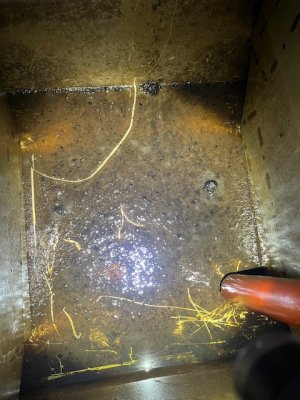
So this is what greeted me. Not too bad but not ideal.
The access to the top of the other two sections was very limited and I didn’t want to remove the cabinetry to cut holes in the top of the tank. So I sprayed lots of Jizer degreaser all over the accessible section and then sprayed as much as possible through the holes in the baffles. I left it overnight and returned the following day and wet vacced as much crud out as possible. To get at the other side of the baffles I bought two useful tools, a radiator cleaning brush and a pipe cleaning hose from Lidl.
The radiator cleaning brush fitted through the holes in the corners of the baffles and helped loosen dirt. Then I hooked my power washer up to the drain cleaning hose and fed it through the baffle holes. Lots of dirt came out and I was able to pump out the tank into 5 litre water containers using a drill pump connected to the drain plug.
This is the drain cleaning hose. It’s from the Parkside range in Lidl.
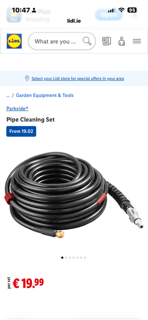
I fed the drain cleaning hose through the four holes in the corners of each baffle and blasted out the dirt. There are 4 jets that spray out the side of the nozzle.
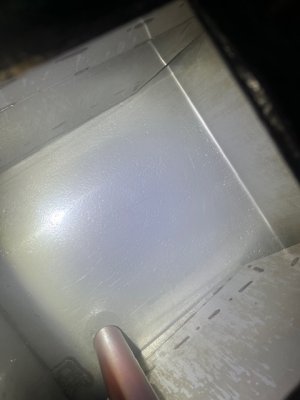
After lots of scrubbing, blasting and hosing, the tank was clean and I used a flexible scope to look in past the baffles.
I then dosed the tank with Marine 16 and filled up with diesel.
The only thing that I probably should have paid more attention to was drying out the tank before refilling. The photo above is before I tried to dry it out with cloths and some warm air. I could see a few tiny water droplets under the diesel but these should filter out in the coming months and the Marine 16 will emulsify any moisture too.
I’ve started the second tank now and it’s similar. I have also ordered a small 500w plug in fan heater and I plan to hang that in the tank to help dry it out at a low temperature setting.
I also replaced the Separ prefilters and cleaned the units and I fitted new secondary filters on the engines.
Overall, I’m very happy with the results. The Lidl drain cleaner definitely saved a lot of cutting of tanks and removal of cabinets.
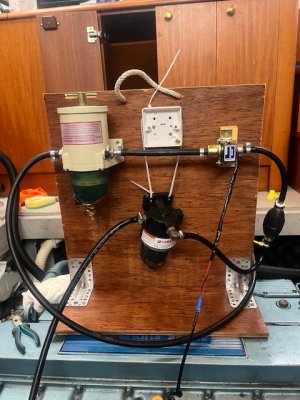
I also made up a fuel polishing rig to transfer the fuel from the old tank to the clean tank. It’s a Racor Chinese copy with a genuine Racor 10 micron filter fitted. The Yamaha pre filter was an afterthought as I had bought a cheap inline filter to collect any large crud but it fell apart while I was assembling it.
Thanks also to Whopper of this group who had been through this on the same boat and had some very good insights.
I’ll definitely be feeling happier about my tanks when I head to sea this year.
As previously mentioned, I’m planning an extended trip at sea this year and that old chestnut of diesel tank cleaning raised its head recently. I decided that it was time to take on my diesel tanks after finding more crud in the Separ fuel filters. As always, access is the big issue but I managed to get into the centre section of the tank by removing the floor of a cabinet over the port tank. Access was only through a 6 inch square hole that is usually covered by a plate that holds the diesel feed and return for the port engine and a separate feed and return for the generator.
So this is what greeted me. Not too bad but not ideal.
The access to the top of the other two sections was very limited and I didn’t want to remove the cabinetry to cut holes in the top of the tank. So I sprayed lots of Jizer degreaser all over the accessible section and then sprayed as much as possible through the holes in the baffles. I left it overnight and returned the following day and wet vacced as much crud out as possible. To get at the other side of the baffles I bought two useful tools, a radiator cleaning brush and a pipe cleaning hose from Lidl.
The radiator cleaning brush fitted through the holes in the corners of the baffles and helped loosen dirt. Then I hooked my power washer up to the drain cleaning hose and fed it through the baffle holes. Lots of dirt came out and I was able to pump out the tank into 5 litre water containers using a drill pump connected to the drain plug.
This is the drain cleaning hose. It’s from the Parkside range in Lidl.
I fed the drain cleaning hose through the four holes in the corners of each baffle and blasted out the dirt. There are 4 jets that spray out the side of the nozzle.
After lots of scrubbing, blasting and hosing, the tank was clean and I used a flexible scope to look in past the baffles.
I then dosed the tank with Marine 16 and filled up with diesel.
The only thing that I probably should have paid more attention to was drying out the tank before refilling. The photo above is before I tried to dry it out with cloths and some warm air. I could see a few tiny water droplets under the diesel but these should filter out in the coming months and the Marine 16 will emulsify any moisture too.
I’ve started the second tank now and it’s similar. I have also ordered a small 500w plug in fan heater and I plan to hang that in the tank to help dry it out at a low temperature setting.
I also replaced the Separ prefilters and cleaned the units and I fitted new secondary filters on the engines.
Overall, I’m very happy with the results. The Lidl drain cleaner definitely saved a lot of cutting of tanks and removal of cabinets.
I also made up a fuel polishing rig to transfer the fuel from the old tank to the clean tank. It’s a Racor Chinese copy with a genuine Racor 10 micron filter fitted. The Yamaha pre filter was an afterthought as I had bought a cheap inline filter to collect any large crud but it fell apart while I was assembling it.
Thanks also to Whopper of this group who had been through this on the same boat and had some very good insights.
I’ll definitely be feeling happier about my tanks when I head to sea this year.
Last edited: