Diesel feed options for Webasto heater

Jokani

Well-Known Member
Joined
21 May 2014
Messages
849
Visit site
I have just treated myself to a new Webasto, but I'm unsure of the best way to set up the fuel system.

Possible options I can think of:

  1. Spare dip pipe, but I'm unsure what length, but would guess same as the engine dip
  2. Separate small tank
  3. T join after existing filter
Is any of the options (or any I have overlooked) significantly better than the others. Any advice much appreciated. TIA.
 
Would suggest a small additional tank, we tend to use more diesel for heating rather than engine and it would easy to get caught out and have a low level for engine. The heating tank has a small hand transfer pump so that we can send to main tank to use as reserve. This is just a fuel bulb used for outboards
 
As long as you have a tank large enough you don't have to keep your eye on consumption too closely, T joint after water separator will be the most painless option. A non return valve (without spring with low back pressure) on the heater line just after the T will add extra security against air entering the engine fuel system. That is how I have installed my 2 heaters anyway :-). Make sure the dosing pump is within the max. height specified by the manufacturer above the bottom of the tank. A tip: fit a push-button enabling you to supply 12 V pulses to the + connection of the dosing pump. This will enable you to prime the pump without repetitive starting the heater - a big load on the battery and wear of the glowplug.
 
Last edited:
I have just treated myself to a new Webasto, but I'm unsure of the best way to set up the fuel system.

Possible options I can think of:

  1. Spare dip pipe, but I'm unsure what length, but would guess same as the engine dip
  2. Separate small tank
  3. T join after existing filter
Is any of the options (or any I have overlooked) significantly better than the others. Any advice much appreciated. TIA.

I use a dip pipe in my main diesel tank for my Eberspacher. However, it is shorter than the engine dip pipe, so that I will have fuel left when the heater runs out; at least enough to get me to the fuel berth (and probably a lot further!).
 
Fuel consumption is tiny, so the impact on the main fuel tank is negligible (OK, I have a 200 litre tank...). I put the tube into the main fuel tank. I would not recommend interfering with the engine fuel supply, the last thing you need is an air leak which stops the engine. Same tank, different feeds, best solution in my opinion. Here's the relevant post from my re-build blog https://harley25refit.blogspot.co.uk/2014/04/a-new-floor.html
 
I have just treated myself to a new Webasto, but I'm unsure of the best way to set up the fuel system.

Possible options I can think of:

  1. Spare dip pipe, but I'm unsure what length, but would guess same as the engine dip
  2. Separate small tank
  3. T join after existing filter
Is any of the options (or any I have overlooked) significantly better than the others. Any advice much appreciated. TIA.

Don't know about Webasto but i fitted my own Eberspacher 4 years ago. Do the instructions not tell you exactly what to do? I agree with the previous posts. Advice for the Eber was not to T into the main fuel line but to fit a dip tube (the bore of the tube must be correct as if it is too big the pump will struggle to suck) or fit a seperate tank. I fitted a dip tube that went down about 2/3 into the fuel so the heater can never drink your reserve. It is nice using the main tank as you never have to worry about topping up a separate smaller tank. I would worry about interfering with the engine fuel supply hoses so prefer to keep the heater totally separate.

Www.solocoastalsailing.co.uk
 
Last edited:
Don't know about Webasto but i fitted my own Eberspacher 4 years ago. Do the instructions not tell you exactly what to do? I agree with the previous posts. Advice for the Eber was not to T into the main fuel line but to fit a dip tube (the bore of the tube must be correct as if it is too big the pump will struggle to suck) or fit a seperate tank. I fitted a dip tube that went down about 2/3 into the fuel so the heater can never drink your reserve. It is nice using the main tank as you never have to worry about topping up a separate smaller tank. I would worry about interfering with the engine fuel supply hoses so prefer to keep the heater totally separate.

Www.solocoastalsailing.co.uk

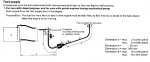
I agree the separate pipe is safer, especially while ending higher in the tank than engine feed. However, it is not true Eber doesn't recommend tapping into engine feed fuel supply.JPG , as you can see from the manual for D3LC compact I randomly opened. Also is not true a bigger bore pipe would impede suction.
I am not nite-picking, just trying to help people who may struggle with access to the tank, finding difficult to run the hose from that location etc. Again, can't stress enough an utmost care has to be taken to do this job properly and adding the non return valve on the heater line as I commanded in my first post should be mandatory.
 
I fitted my D1LC diesel feed to a spare output port of my glass bowl filter. Used a 1/4 x 1/4 brass hose barb to reduce down to 6mm pipe to feed the Eberspacher ticker pump.
Took 3 x start cycles to draw the diesel through the pump to the D1LC and all seems fine now. In the future, I think I will add a small isolation valve/tap in the line to stop backfeeding when the unit isn't used for some time or for maintenance.
Your Centaur probably has a similar sized fuel tank to my Griffon (about 12 gallons?) Looking at the diesel consumption of an Eber on low to mid power, I think you shouldn't have an issue with running out of fuel, but probably best to keep a couple of gallons in a spare tank just in case!
 
I fitted my D1LC diesel feed to a spare output port of my glass bowl filter. Used a 1/4 x 1/4 brass hose barb to reduce down to 6mm pipe to feed the Eberspacher ticker pump.
Took 3 x start cycles to draw the diesel through the pump to the D1LC and all seems fine now. In the future, I think I will add a small isolation valve/tap in the line to stop backfeeding when the unit isn't used for some time or for maintenance........

I believe more simple and elegant solution to this problem is the pushbutton feed of 12 V to the + pump terminal allowing to prime the pump without operating the whole heater, as I suggested in my first post. I know this problem well and especially with a long fuel line priming of the pump by operating heater is very painful for the battery and glowplug.
 
I agree the separate pipe is safer, especially while ending higher in the tank than engine feed. However, it is not true Eber doesn't recommend tapping into engine feed View attachment 69728 , as you can see from the manual for D3LC compact I randomly opened. Also is not true a bigger bore pipe would impede suction.
I am not nite-picking, just trying to help people who may struggle with access to the tank, finding difficult to run the hose from that location etc. Again, can't stress enough an utmost care has to be taken to do this job properly and adding the non return valve on the heater line as I commanded in my first post should be mandatory.

Thanks for balancing the different approaches. Maybe I worry too much but I was influenced by the wording in the Eber marine instalation document that said
"The diagram illustrates a typical installation using a fuel
standpipe, which is the preferred method for the fuel
take off. This minimises any problems caused by over
pressuring, fuel starvation and air leaks that can occur if
connected to an engine fuel line.
However, fuel can be taken from an engine fuel line if
it is approved by Eberspächer, and the engine / boat
manufacturer (See technical description manual).
Unapproved connection may affect the terms of your
warranties."

Www.solocoastalsailing.co.uk
 
Recently I found the return line back to the tank to be most useful for this. The dosing pump didn't have enough power to pull through a filter, and allowed air in if fitted on the suction side.
It is a planar.

Mike
 
That's an interesting approach I never thought of :cool:. After a bit of thinking I can't fault it. Can't see any danger of interfering with the engine operation. The only catch may be, in some cases the line may end quite high in the tank - if too high, it may prevent the heater from running at low fuel level. On the other hand, if just a bit higher than the engine feed pipe, it may provide the "reserve" safety function described in the previous posts. Definitely worth of considering, I would prefer it over a separate standpipe that requires drilling hole in the top of tank. Not dangerous? Think again. If you don't seal it properly, you can get water in fuel in case bilge water rises over the top of the tank. Ask me, how I know :nonchalance:. And if you ask me if I prefer to get air or water in the fuel system, you may guess the answer.
 
Bast taken from the main filter, heaters like clean fuel. The heater pump interfering with the engine supply is a myth. The pump is intrinsically a one way valve and a stop cock is a good idea as well.
 
Bast taken from the main filter, heaters like clean fuel. The heater pump interfering with the engine supply is a myth. The pump is intrinsically a one way valve and a stop cock is a good idea as well.

Don't necessarily agree with all points. Assuming the filter is before the engine supply pump. If a bit dirty, the drop of pressure there can cause the heater pump to starve when engine is running.
Also, yes, the dosing pump functions as a check valve too - but it can fail as I learned from experience. The back-leak in the pump was minimal and the heater was operating normally. But, the heater wouldn't start after a few hours of Idling and engine would stop due to air in fuel if the heater wasn't running. A non-return valve from a car window washer I got free from a wrecker stopped all the problems. BTW: authorised Eber service was going to charge me the equivalent of 300 quid for a new pump! The modified heater was running for another 3 years before it died of other causes.
Anyway, I do believe Mike's takeoff from the return line is the best I ever heard of. Notice: it is actually a filtered fuel too when engine is running:). When not, the small filter supplied in the heater kit will do. Heater pumps are not anywhere near as fussy on fuel purity as engine injection systems.
 
Last edited:
Over a period of 3 weeks, which included fitting a new lift pump, new filter housing and hoses, my personal finding is that with the pump sucking from the feed side of the fuel system to the engine that the engine will stop when you least need it to. When fitted to the return it doesn't.
I can say in my case it's certainly not a myth, and I wouldn't like anyone else to go through the grief I did. A randomly stopping engine isn't good fun. Trying to bleed it in the confines of a marina while drifting isn't top on my list of things to do. Gets the heart going though.
I did try to pull clean diesel through the filter unit, with a clean filter, but the heater kept stopping.
It is as I said a Planar heater, which now runs perfectly (and quiter than an Eber too).

Mike
 
I have just treated myself to a new Webasto, but I'm unsure of the best way to set up the fuel system.

Possible options I can think of:

  1. Spare dip pipe, but I'm unsure what length, but would guess same as the engine dip
  2. Separate small tank
  3. T join after existing filter
Is any of the options (or any I have overlooked) significantly better than the others. Any advice much appreciated. TIA.

I DIYed a Webasto 2000 about a year ago into a Westerly Tempest. The kit came with a tank dip so installed that into the main tank in a way that it would leave about a 3rd of fuel in the tank. I also added a seperate filter. My main reason for this method was that I didn't want to T off the main fuel line and potentially cause issues with the engine.

I also wired the heater directly to the non starter battery with its own isolator switch.

The fuel and electric consumption is hardly noticeable for this small 2 duct heater and most of my thinking/planning time was where to install the heater unit and how best to run the ducting ;)
 
I believe the eberspacher instructions say use a separate dip pipe to avoid problems of fuel starvation but several people I know have used the spare connection on the filter without problems.
 
Apologies for the late reply, I have been out of the office for a week :-)

I like the idea of using the engine return line back to the fuel tank, it would be really simple for me, as it passes by where I will likley install the heater.

But, I thought that fuel would only flow through this pipe when the engine was running? Would the Webasto be able to pull the fuel through when the engine was switched off?

-
 
Apologies for the late reply, I have been out of the office for a week :-)

I like the idea of using the engine return line back to the fuel tank, it would be really simple for me, as it passes by where I will likley install the heater.

But, I thought that fuel would only flow through this pipe when the engine was running? Would the Webasto be able to pull the fuel through when the engine was switched off?

Depends whether the return line goes down into the tank, or just dumps the fuel near the top of the tank. Personally, I'd always use a separate dip tube, and have it shorter than the engine dip tube, so that the heater can't use all the fuel.
 
Personally, I'd always use a separate dip tube, and have it shorter than the engine dip tube, so that the heater can't use all the fuel.

I do have a blanked off dip tube already in the tank, but it will be the same length as the engine dip, it is welded in with a plastic weld, so I don't think I can remove an shorten it. But I usually carry 20l extra diesel so even if I was negligent and let it run out, I should always have spare.

I was hoping not to have to spend the cash on another fuel filter, but maybe that is the way to go.
 
Top