diesel bug?

Elessar

Well-Known Member
Joined
10 Jul 2003
Messages
10,294
Location
Antibes, South of France
Visit site
I had a problem I think with bug last year. It wasn't blocking the filter but actually blocking the pipe prior to the filter.

I dosed the tank and blew the line through. And I haven't been using the boat much as I had a bad leg but the few little trips I did were all fine.

Went to cowes yesterday from southampton. It was a bit bumpy ( gusting 45 knots wind - top end of F8) so the tank got a good agitation - and the engine went again.

Switched to the other tank and all was well thankfully as I didn't fancy berthing on 1 engine in that wind.

Filter is clear.

So what does the panel think? Is it bug? Suggested fixes either way please. There is no drain off on the bottom of the tank nor is there an inspection hatch.
 
Hi Elessar,

I had a similar experience shortly after purchasing our first diesel boat, and I didn't know such a thing as an organism that lived in diesel even existed. I completed the deal on Xmas eve, and the boat was lifted and remained on the hard with pretty low tanks for c3 months before it was moved to her home port.

A few months later at the end of a long journey, with the tanks running low we experienced the same problem.

Once in port i called an engineer who diagnosed diesel bug.

On my boat (a Sealine) the connectors from the hose to the fuel tank are super thin. In this example the blockage happened there before any of it gets into the system. E.g the filters appeared to be clear, though we changed them anyway. The engineer simply cleaned the gunk off the end of the pipe, and she was good to go.

I was told the bug grows in the gap between the top of the fuel, and the top of the tank. At the time i feared it might be difficult to shift, but by following the steps outlined below we never had a repeat occurrence in the following years

1. I always add Marine 16 when filling up
2. I keep the tanks as full as possible when leaving the boat for long period of time (e.g. over winter). to minimise the opportunity for growth.
3. I suspect using the boat and getting everything slopping around in the fuel tank also helps

DW
 
I had it bad a couple of years ago and the engineers offered options like, remove tanks and steam clean or try to polish diesel in the tanks. However in the end I had a constructive conversation with Marine 16.

Put a whole bottle in each tank, leave for a few days, this seems to turn the bug to little grit like bits which you can keep an eye on and clean through the glass pre filter. Continue to overdose throughout the season and the little bits left disintegrate. After 12 months fuel was clear and the cost was only circa £200.
 
I had it bad a couple of years ago and the engineers offered options like, remove tanks and steam clean or try to polish diesel in the tanks. However in the end I had a constructive conversation with Marine 16.

Put a whole bottle in each tank, leave for a few days, this seems to turn the bug to little grit like bits which you can keep an eye on and clean through the glass pre filter. Continue to overdose throughout the season and the little bits left disintegrate. After 12 months fuel was clear and the cost was only circa £200.

+1 re serious dosing. However if the filters are still clean it might be some other cr@p in the tank that has found its way into the pipes. Probably worth running a stiff wire through all pipes that feed that engine. I had a similar problem on a sealine 410/F43 and it was a piece of metal swarf. It got stuck in the switch over valve assembly.
 
Hi Elessar,

I had a similar experience shortly after purchasing our first diesel boat, and I didn't know such a thing as an organism that lived in diesel even existed. ———/———

I was told the bug grows in the gap between the top of the fuel, and the top of the tank. At the time i feared it might be difficult to shift, but by following the steps outlined below we never had a repeat occurrence in the following years


DW

The tank full bit is to minimise the exposed surface area of cold metal inside the tank for condensation to form and drip down .
The water that condensers falls eventually to the bottom near the pick up .If there’s a drain cock it can be poured out or at least regularly inspected by running a pint off now and again .

The “bug “ it’s self is mixture of anaerobic organisms basically airborne , carried in the air .

You need water without water it can’t proliferated so because Med boats generally stay warm even in winter it’s rare in the Med as if anything it’s a dryer climate not cold and damp .

Antimicrobial agents can work , indeed do work but like any microorganisms there’s a risk they develop resistance .Hence the suggestion of rotating products.

The way I tackle it and have done uneventfully for the past 14 years is come from the water side of the equation.
No water no bug .
I’ve been adding Startron additives , the idea is not antimicrobial but water dissolution.This “ snake oil “ reckons to dissolve any water in the fuel tanks into the diesel which is reckons then to burn out harmlessly to the engines in the normal way .
In other words preventing the water / oil interface the “ bugs “ thrive in .
There are many different “ bugs “ not one hence my scepticism on the antimicrobial approach as I don’t think you can rely on those products to totally eliminate all life .
Leave 3 % behind , in other words the stuff you choose after 24 hrs kills 97 % , in 7 days that 3 % has proliferated up to occupy the void you kindly made wiping out its competition, back to sq 1 .

Remember no water nothing lives ,

Thus far I have no trouble .
One of my neighbours a CAT Camargue 44 has had to have a fuel barge do a full tank and system decontamination.
Admittedly it’s only used 4 weeks a year so stood idle for 11 months isn’t helping. So dispute me mentioning the warm less prone to condensation Med, as said the “ bugs “ are airborne everywhere.

In cold climates- keep the tanks topped up in the coldest season .
Regulars start and run up to prevent stagnation , keep the pipes patent .
Add a prophylactic agent - your call on antimicrobial or anti water layer forming .

Bear in mind antimicrobial resistance if you opt only for the antimicrobial route .
Those with CR engines spare a thought for the injector pump and injector tips if you elect to do nothing .
 
I got rid of a bug problem in my tanks only to have pre-filters blocking with flakes of rust the following season, only option was to take out engines and fit new stainless tanks.
When I got the old tanks home I cut the bases out to find an inch of rust and sludge in the bottom, no amount of polishing was going to help, tanks were 35 year old mild steel.
 
Could it be where excess silicone has got into tank when inspection hatch was sealed down ? I have read that can be an issue on Sealines and more likely to block pipe than filter.
 
Hi Mark, I had a prob recently, purchased a lucas/ su fuel pump replacement, connected after fuel filters , pumped all fuel out thru filters. changed filters. dosed fuel, refuelled. thx Richard

Hey - how are you - I remember you changing filters many times on a very long and very bumpy trip back from Cherbourg! You must have a thing with diesel.

Thanks for your reply and to all the other replies too - all good food for thought.

This seems like a good plan - after all it must be what the pros do.

I’m worried though it might be other crap in the tank, not bug, as others have suggested/experienced.

The tanks are aluminium so no rust thankfully.

I think i overdose then polish at least I know that’s not the problem.

Next step is to cut an inspection hatch in the tank.

As it’s an aft cabin boat the thought of getting the engines out to get the tanks out fills me with dread.

I’ve heard of people cutting the hull sides out to get them out and repairing that. Please no!!
 
My next boat will be diesel and have often wandered how to avoid fuel contamination.
Are the Racor turbine filters worth considering? Advantages of a glass inspection bowl and three stages of filtering.
 
Are they still worth the investment as apposed to the standard filters?

Yes....but you don’t need to buy genuine

https://www.ebay.co.uk/itm/500FG-50...m=223391860146&_trksid=p2047675.c100005.m1851

I’ve had Chinese copies on both my boats. No issues at all.....I use genuine racor filters though. They are £12 each :)

To avoid contamination...fill up from a decent and high use source, dose with whatever you prefer, check deck filler seals. I had the fuel polished on my current boat. No other reason than it was an unknown. They went through the sender hole...even took pictures of the tank bottom and a report of the fuel before and after. Moisture content etc...

https://www.tanktechfuel.co.uk/

y4meDQEDJEmyNPSMm6ZJ3SzPiCDUx_vBNcOSWp1_yiqGUfydfv7NggdZhL_DdVfL6fnapFvgsK8lSAAGnvs1S3sfgoBU9xDmdsOIkBW1CSAvjVfyRZ7fnwaoGAU1Kpw4SLGGkRPAZf67miaZMaQVS8gLEx2CMkSnbJXQlE7Dk-v8iUJsxx_5JNgM_txUPV-VrGk2TmBuJ879raWIOF6ie0VHw


y4mWtjWmTM177lT6crp9xyn_Oua4o4hmU7gRkG41VNp27KR4LhFU-D9_A_AojyGb_BwuozCrcga_RxiAYuiEoubRXWNjleqG4Uacby67Tx57awaBaLkyzu_Jzo80lbMqtc8QC_StBwro4gVG-MhChnhuwsk0U3Cqy1-az3QbOZ8EjoGfEaU1hFMZQYOocZCARh8KgA6keNm-SGgirGVTY8h1Q
 
Last edited:
The tank full bit is to minimise the exposed surface area of cold metal inside the tank for condensation to form and drip down .
The water that condensers falls eventually to the bottom near the pick up .If there’s a drain cock it can be poured out or at least regularly inspected by running a pint off now and again .

The “bug “ it’s self is mixture of anaerobic organisms basically airborne , carried in the air .

You need water without water it can’t proliferated so because Med boats generally stay warm even in winter it’s rare in the Med as if anything it’s a dryer climate not cold and damp .

Antimicrobial agents can work , indeed do work but like any microorganisms there’s a risk they develop resistance .Hence the suggestion of rotating products.

The way I tackle it and have done uneventfully for the past 14 years is come from the water side of the equation.
No water no bug .
I’ve been adding Startron additives , the idea is not antimicrobial but water dissolution.This “ snake oil “ reckons to dissolve any water in the fuel tanks into the diesel which is reckons then to burn out harmlessly to the engines in the normal way .
In other words preventing the water / oil interface the “ bugs “ thrive in .
There are many different “ bugs “ not one hence my scepticism on the antimicrobial approach as I don’t think you can rely on those products to totally eliminate all life .
Leave 3 % behind , in other words the stuff you choose after 24 hrs kills 97 % , in 7 days that 3 % has proliferated up to occupy the void you kindly made wiping out its competition, back to sq 1 .

Remember no water nothing lives ,

Thus far I have no trouble .
One of my neighbours a CAT Camargue 44 has had to have a fuel barge do a full tank and system decontamination.
Admittedly it’s only used 4 weeks a year so stood idle for 11 months isn’t helping. So dispute me mentioning the warm less prone to condensation Med, as said the “ bugs “ are airborne everywhere.

In cold climates- keep the tanks topped up in the coldest season .
Regulars start and run up to prevent stagnation , keep the pipes patent .
Add a prophylactic agent - your call on antimicrobial or anti water layer forming .

Bear in mind antimicrobial resistance if you opt only for the antimicrobial route .
Those with CR engines spare a thought for the injector pump and injector tips if you elect to do nothing .
The Sunsail sailing yachts at Lefkas in Greece suffer from the bug. Winters get down to low single figure temps, and Sunsail are too tight to fill the tanks.
 
I had a problem I think with bug last year. It wasn't blocking the filter but actually blocking the pipe prior to the filter.

I dosed the tank and blew the line through. And I haven't been using the boat much as I had a bad leg but the few little trips I did were all fine.

Went to cowes yesterday from southampton. It was a bit bumpy ( gusting 45 knots wind - top end of F8) so the tank got a good agitation - and the engine went again.

Switched to the other tank and all was well thankfully as I didn't fancy berthing on 1 engine in that wind.

Filter is clear.

So what does the panel think? Is it bug? Suggested fixes either way please. There is no drain off on the bottom of the tank nor is there an inspection hatch.
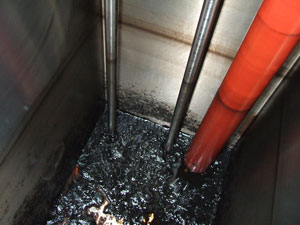
I had exactly the same problem as you have described - engine cutting out in lumpy seas but nothing appearing in the filter(s). Here's what was in the tank:
Tank1.jpg

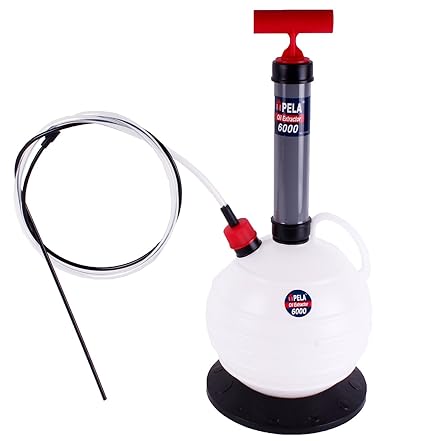
Can you sample from the bottom of the tank using a long tube, such as the "wand" of a PELA pump, inserted via the filler pipe?
61Y2KtCFIpL._SX425_.jpg
 
Top