Damp tiller pilot

webcraft

Well-Known Member
Joined
8 Jul 2001
Messages
40,415
Location
Cyberspace
www.bluemoment.com
Our TP10 threw its hand in day before yesterday in very wet conditions and started behaving erratically.

Today, alongside, it was first behaving erratically then seemed to start working.

I have opened it up and can maybe see very slight traces of dampness. I plan to waft it with a hairdryer and wrap it in clingfilm in future when using it in the wet.

Dpes the team think a modest squirt of Corrosion X on the circuit board is a good idea before screwing it back together?

- W
 
We find ours (actually both of them, we have 2) eratic at times even when not wet. e,g sometimes you will enable it and it will promptly turn the tiller hard over. Try again and it works fine.

If doing anything to the pcb be very careful, the very fine wires connecting to the fluxgate compass have little strain protection and it's a rather clumsy assembly so hard to do anything with the pcb without stressing the tiny wires.
 
I have the Raymarine version, similar problems. Stripped it down , found the plastic end stops had pieces broken ( bits of black plastic gathering in the area under compass .,possibly fouling compass gimbal) . Repair carried out on end stops, a couple of neoprene O rings fitted onto each end of internal guide rods to provide additional damping on full extent. On reasonable smear of grease on case O ring seal and also onthe o ring that the push rod exits. Been great since until a rouge wave decided to join me in the cockpit. Immediately blank screen on tiller pilot, I thought its buggered again. Turned out to be the plug connection on the combing , dried out next day all fine n dandy again.,
Now looking for decent two pin connection that fully waterproof but doesn't stick out too much , as I am forever catching it with my size 10 when trying to get comfortable
 
Our TP10 threw its hand in day before yesterday in very wet conditions and started behaving erratically.

Today, alongside, it was first behaving erratically then seemed to start working.

I have opened it up and can maybe see very slight traces of dampness. I plan to waft it with a hairdryer and wrap it in clingfilm in future when using it in the wet.

Dpes the team think a modest squirt of Corrosion X on the circuit board is a good idea before screwing it back together?

- W
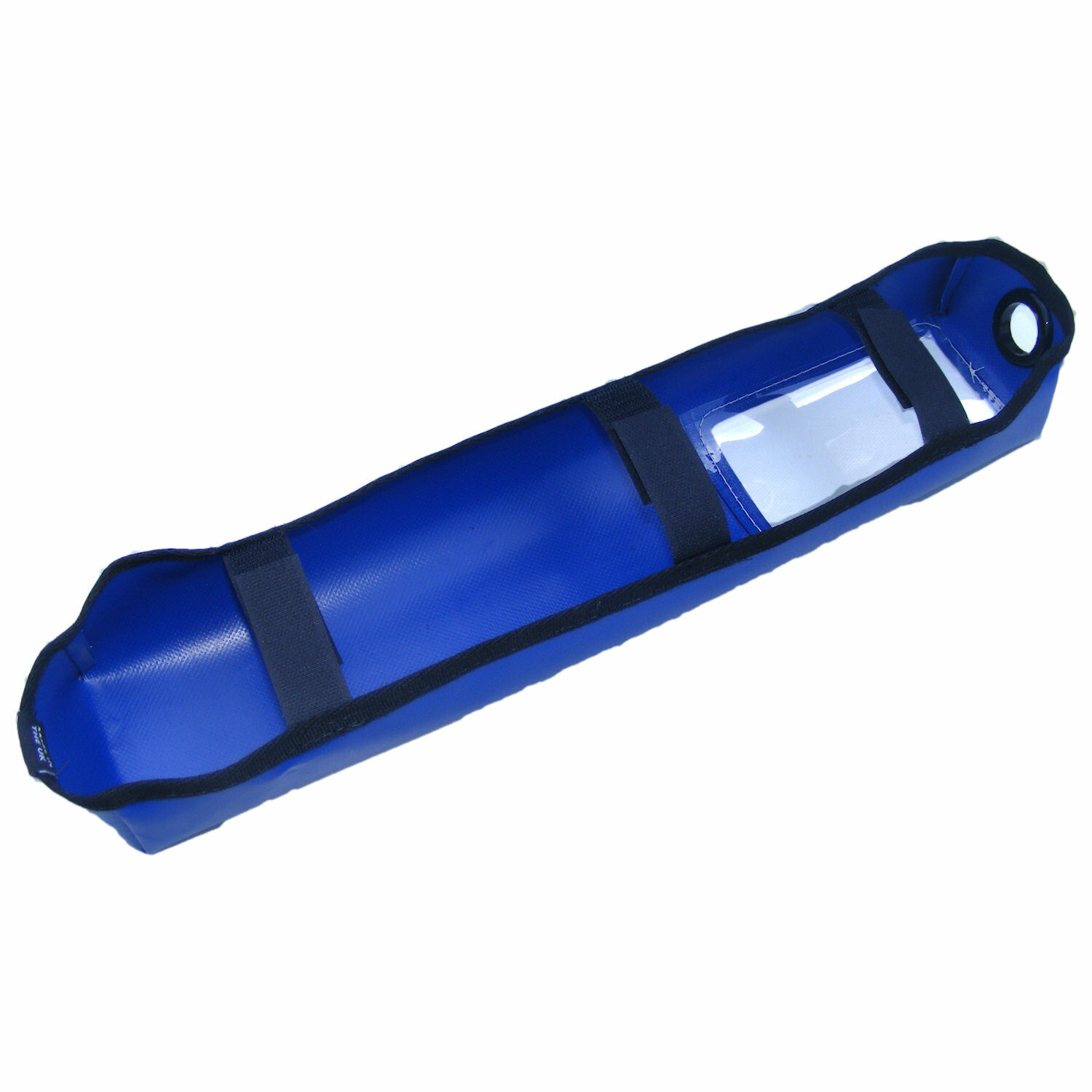
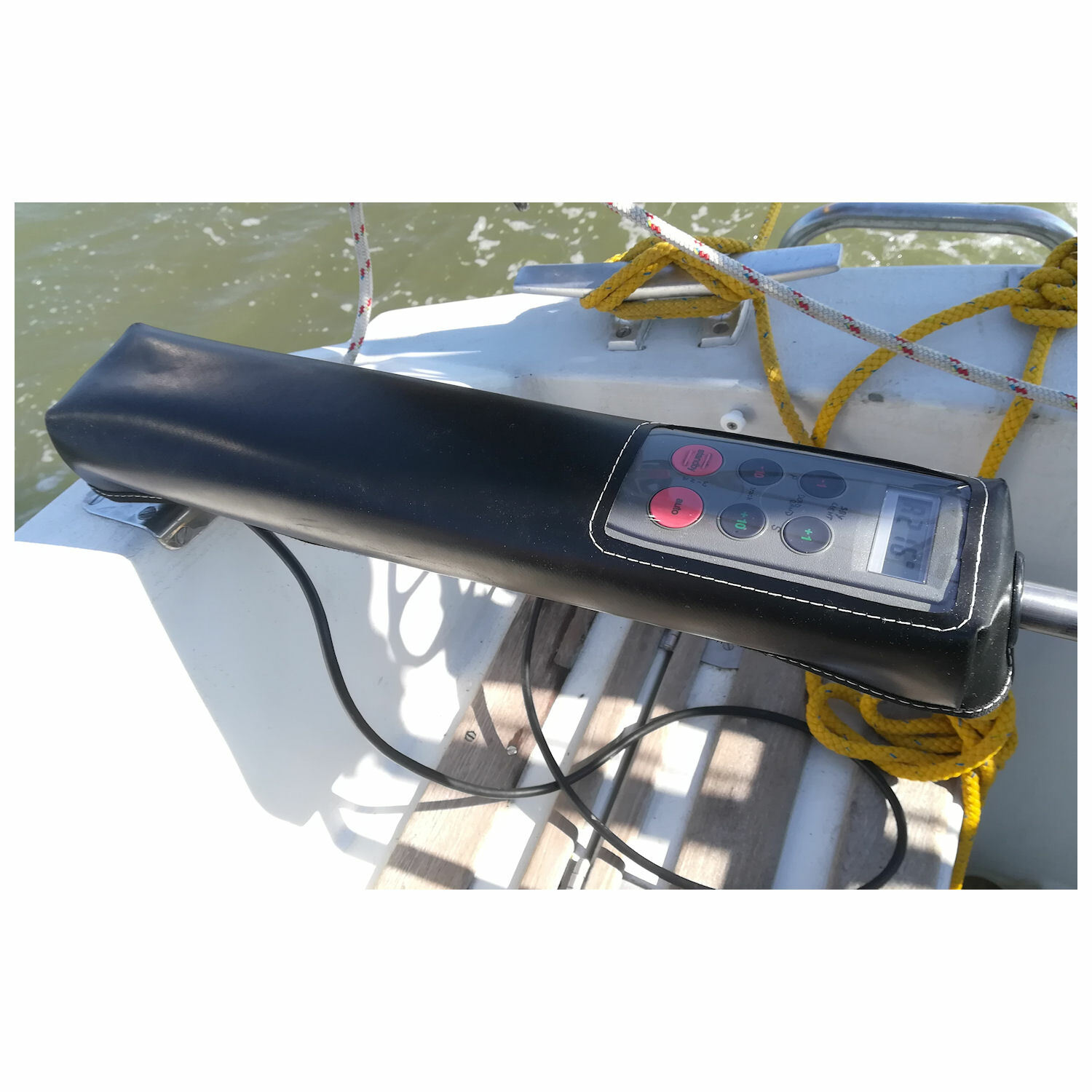
Look on Ebay. They sell covers.

Plastic wrap won't work that well. Normally the water is coming in the shaft seal, when the temperature drops and it pulls a vacuum. The cover needs to give some overhang over the shaft so that it can drip off. A little Vaseline, or better yet silicon grease, on the seal should help.
 
WD40 was made for this. Sadly I was too late with my TP32 which needs a new motor and hall sensor! I switched to a NAC driving a cheap Chinese actuator. I can get 2 spare drives for the price of the TP spares.
 
I've mentioned before I was surprised to read on here, years ago, of people often having trouble with water ingress to Raymarine (and other) tiller pilots. I'd by then had years of good service from my Raymarine types, and it hadn't occurred to me that they might be unreliable.

Of course, once I'd read about it, my tiller pilot promptly failed in rain on a return trip from Boulogne! As a result of a change in the weather forecast mid-Channel, risking us being weather-bound in Dover when I needed to be back at work, we diverted direct to Harwich. As I result I ended up spending 15+ hours on the tiller, including overnight, much of it in the rain.

It didn't help that the gas regulator also failed. Not only did that rule out tea and coffee, but, being at the end of a holiday, all that we had to eat that didn't need cooking was a Mars bar and several packets of cheese straws. (It was a long time before I could face another cheese straw!)

On arrival at Shotley I collapsed into sleep for a few hours, then went to the Shipwreck absolutely ravenous. I can't remember if options were particularly limited at that time, but I ordered soup and a roll. The roll was inedible dough. It was apparently the part-baked type, which instead of putting in a hot oven for a few minutes, they'd simply given a quick blast in a microwave. I complained politely, the manager was rudely dismissive, and I was very reluctantly given another, which turned out to be just the same. I don't think I've been back since.


Things on the tiller pilot front, though, were more upbeat. After a couple of days in the airing cupboard it was right as, er, rain.
 
I have the Raymarine version, similar problems. Stripped it down , found the plastic end stops had pieces broken ( bits of black plastic gathering in the area under compass .,possibly fouling compass gimbal) . Repair carried out on end stops, a couple of neoprene O rings fitted onto each end of internal guide rods to provide additional damping on full extent. On reasonable smear of grease on case O ring seal and also onthe o ring that the push rod exits. Been great since until a rouge wave decided to join me in the cockpit. Immediately blank screen on tiller pilot, I thought its buggered again. Turned out to be the plug connection on the combing , dried out next day all fine n dandy again.,
Now looking for decent two pin connection that fully waterproof but doesn't stick out too much , as I am forever catching it with my size 10 when trying to get comfortable
I use a two pin version of this Force 4 3 Pin 3 Amp Waterproof Plug & Socket | Force 4 Chandlery
 
WD40 was made for this. Sadly I was too late with my TP32 which needs a new motor and hall sensor! I switched to a NAC driving a cheap Chinese actuator. I can get 2 spare drives for the price of the TP spares.

PLEASE PLEASE PLEASE DO NOT USE WD40 !!!!!

OP has the right product : Corrosion X.

He should do as he asked - dry the internals and then spray with Corrosion X - a proven product specifically for this type of use.

WD40 is definitely NOT for this .... keep it for those locks / padlocks etc that need freeing.

When I assisted a car service many years ago in return for use of their gear for my Club Race Car .... I used to sort out car's that would not start etc. Mini's / 1100's were most common ... why ? Distributors at front of engine and getting crap on them in bad weather .. owners would spray loads of WD40 and wonder why the car was then unreliable starter ... it got to be a standard question to owner - Did you use WD40 ??
Usual was to remove distributor cap and use literally a whole can of contact cleaner to get that crap WD40 residue out of distributor and cap .. amazing - car would then start fine ....
 
he's not cleaning contacts, he's displacing water. The clue is in the name. ;-)

I am well aware of what he needs to do and I repeat :

DO NOT USE WD40 .....

He does not need to dispel water and then leave WD40 crap behind .... go back and read his post where it says :

"I have opened it up and can maybe see very slight traces of dampness. I plan to waft it with a hairdryer"

Which is best way to deal with it .... and then treat with Corrosion X.

You CANNOT use Corrosion X after WD40 unless you liberally use Contact Cleaner to remove WD40 shite ... the WD40 shite will inhibit Corrosion X effectiveness.
 
I have the older but last versions of the AH800, AH1000 and AH2000 tiller pilots ... and I never use a cover or whatever to keep them dry ... I am a great believer in letting them air .... put on a cover - especially a non-breathable one and maybe you end up with seepage into the unit ?

Given that all 3 are still working fine after decades of use ??? I only had a pal replace one of the 'pots' in the AH1000 from a 'spares and repair' one I got of eBay ... as he said - it was old !!
 
After a career of dealing with underwater electronics, my go to is WD40 for mating underwater connectors of (pretty much) all types. I used it throughout my career because it works.
On most ROV's it's used, usually from a small spray bottle, which has been filled from a 5 litre container. It's used primarily as a water dispersing lubricant, for which it is ideal on connectors. I've never seen it react badly with any connector or surface.
The very worst thing to use on a connector such as the item mentioned in post #08, is grease. The connector shouldn't be assembled dry, it should have a lube, thus I'd use WD40.
The above statement should be taken in line with not having experienced Corrosion X, as it was never in any environment that I saw when offshore.
However, using any solid grease, such as MS4 or MS111 which are also universally available on ROV systems for use as an 'O' ring lube, is dreadful, as the grease can't be removed from the female part of the connector, and will very quickly cause poorly mated joints by expanding the female part and decreasing the pin contact area of the male. I'm resisting the temptation of a very simple analogy here that people of my age might understand, which was how it was explained to me 'back in the day', but it's true.
 
I am well aware of what he needs to do and I repeat :

DO NOT USE WD40 .....
Whilst I think in OP’s case Refueler is right - WD40 not the best thing here - I’d just dry pcb then use conformal coating - I have saved my electric outboard with wd40 before. It’s an early Torqeedo and not very waterproof at all. It’s took a dunking and stopped working- liberal spray of WD on all connectors got it going again. It’s good for dispersing water, it’s just a crap lubricant
 
I have the older but last versions of the AH800, AH1000 and AH2000 tiller pilots ... and I never use a cover or whatever to keep them dry ... I am a great believer in letting them air .... put on a cover - especially a non-breathable one and maybe you end up with seepage into the unit ?

Given that all 3 are still working fine after decades of use ??? I only had a pal replace one of the 'pots' in the AH1000 from a 'spares and repair' one I got of eBay ... as he said - it was old !!
The covers are more like umbrellas, with the bottom open. Most come off in 2 seconds with a single Velcro strap.

I don't use the TP in the rain that much, but it is quite old (came with the boat). My last one lasted until I sold the boat, more than a decade. It got moisture inside a few times before I made a cover (similar to these but different--one piece clear vinyl with no seams). That solved it. The cover was only on when it rained.

s-l1600.jpg


s-l1600.jpg
 
Top