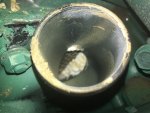
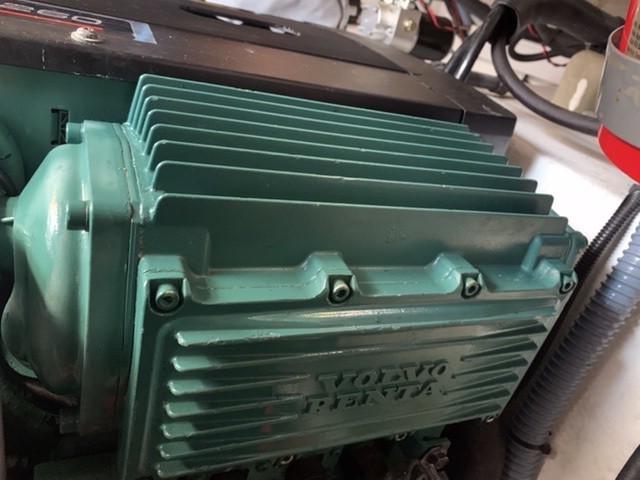
D4 heat exchangers leaking after overhaul....

The forward plastic cover is distorted ,I’m just doing some now And always use a sealant even with new o rings as you can never tell if they wont leak when fitted back to the engine , your engineer should know better whoever he is .
Did volvo exchange the plastic cover , under warranty.
 
Has he used the Volvo seals (Expensive) or an after market alternative (pennies).

Last one I went to had same problem removed cap dipped in Rydlyme to thoroughly clean and refitted with new Volvo Seal.

Had a good look at the seal removed and it was a totally different Shore.

Just another Marine company taking short cuts on parts at owners cost.
 
Drilling down deeper behind the rationale behind the plastic components used in heat cycle environment, tough environment like the heat exchanger end cap(s) , does anyone know why ?
Why did Volvo choose that material when they already made traditional metal end capped HE s ?

Leads me to believe a change of strategy....a move to a throwaway part , with a life ....short life .
Begs the question.....does anybody know the service , the official service schedule for theses plastic end capped HE ,s is there anything written down about a timed total change out ?

Reason I, am flying this idea the “timed life “ is that what CAT currently do with there charge air coolers ( CAC s) .
Particularly on the mighty C32 .
It took a class action law suit in the states , which was eventually won by the hundreds of plaintiffs for CAT to re think there service strategy on the CAC s .
It’s now written as a chuck away part every 7 years , the whole thing .
CAT were plagued galvanic corrosion issues , sub contractors , in house , por design as they drained down past the pencil anodes , dissimilar metals ....the whole shooting match resulting in catastrophic leaks and in the case of the CAC water entering the engine and destruction.
Just to be clear this leak of the D series end caps on the HE is not catastrophic.
CAT even apparently latterly moved away from dissimilar metals as much as possible .
It cost them millions , but the point is is ...it’s now written in the service bulletin s replace the CAC s every 6 or 7 years ( can’t remember exactly) .
To save another tsunami of successful plaintiffs.

So the point is if you move to chuck way parts ...then it’s not so crucial about the build quality??
Additionally the motivation from Volvo is expanding the after sales / parts revenue side of the global brand as well .
Win , win .

I Don,t buy into incompetence from VP .

CAT sure , that’s what happened with the C32 CAC and they were dragged through the courts at huge expense.
 
they only used plastic end caps on the early engines
Drilling down deeper behind the rationale behind the plastic components used in heat cycle environment, tough environment like the heat exchanger end cap(s) , does anyone know why ?
Why did Volvo choose that material when they already made traditional metal end capped HE s ?

Leads me to believe a change of strategy....a move to a throwaway part , with a life ....short life .
Begs the question.....does anybody know the service , the official service schedule for theses plastic end capped HE ,s is there anything written down about a timed total change out ?

Reason I, am flying this idea the “timed life “ is that what CAT currently do with there charge air coolers ( CAC s) .
Particularly on the mighty C32 .
It took a class action law suit in the states , which was eventually won by the hundreds of plaintiffs for CAT to re think there service strategy on the CAC s .
It’s now written as a chuck away part every 7 years , the whole thing .
CAT were plagued galvanic corrosion issues , sub contractors , in house , por design as they drained down past the pencil anodes , dissimilar metals ....the whole shooting match resulting in catastrophic leaks and in the case of the CAC water entering the engine and destruction.
Just to be clear this leak of the D series end caps on the HE is not catastrophic.
CAT even apparently latterly moved away from dissimilar metals as much as possible .
It cost them millions , but the point is is ...it’s now written in the service bulletin s replace the CAC s every 6 or 7 years ( can’t remember exactly) .
To save another tsunami of successful plaintiffs.

So the point is if you move to chuck way parts ...then it’s not so crucial about the build quality??
Additionally the motivation from Volvo is expanding the after sales / parts revenue side of the global brand as well .
Win , win .

I Don,t buy into incompetence from VP .

CAT sure , that’s what happened with the C32 CAC and they were dragged through the courts at huge expense.

they only used plastic end caps on the early engines, they switched to a metal end cap quite quickly . No idea why they used plastic in the first place, I guess they must have had their reasons.
 
Last edited:
they only used plastic end caps on the early engines


they only used plastic end caps on the early engines, they switched to a metal end cap, which is what everyone should be using in their d4's by now.
And the guy who signed off the plastic .....is no longer with the company.:)

Was rather hoping something along the lines of EU directive 123 XYZ ..recycle ability or such ...they had there arms twisted up there back .

The date of the switch back to metal , was it after the CAT judgement in the state’s ? .Does anybody know ?
Sounds like VP have dodged the bullet .....(y)
 
the O seals were genuine Volvo, I supplied them to my engineer. We had nothing in the service history to show that they had been off and refurbished before, so he had no reason to suspect that they had been machined, and it was not visible to the naked eye, it was only a matter of half a millimetre difference. All being well he will get the seals Monday and get them built and fitted ready for launch and sea trial end of the week!!
 
Ozzie did you have other problems with the D4s? Seems that your current problem with the exchanger is more a with the engineer rather than Volvo...
 
Drilling down deeper behind the rationale behind the plastic components used in heat cycle environment, tough environment like the heat exchanger end cap(s) , does anyone know why ?
Why did Volvo choose that material when they already made traditional metal end capped HE s ?

Leads me to believe a change of strategy....a move to a throwaway part , with a life ....short life .

Begs the question.....does anybody know the service , the official service schedule for theses plastic end capped HE ,s is there anything written down about a timed total change out ?

Reason I, am flying this idea the “timed life “ is that what CAT currently do with there charge air coolers ( CAC s) .
Particularly on the mighty C32 .
It took a class action law suit in the states , which was eventually won by the hundreds of plaintiffs for CAT to re think there service strategy on the CAC s .
It’s now written as a chuck away part every 7 years , the whole thing .
CAT were plagued galvanic corrosion issues , sub contractors , in house , por design as they drained down past the pencil anodes , dissimilar metals ....the whole shooting match resulting in catastrophic leaks and in the case of the CAC water entering the engine and destruction.
Just to be clear this leak of the D series end caps on the HE is not catastrophic.
CAT even apparently latterly moved away from dissimilar metals as much as possible .
It cost them millions , but the point is is ...it’s now written in the service bulletin s replace the CAC s every 6 or 7 years ( can’t remember exactly) .
To save another tsunami of successful plaintiffs.

So the point is if you move to chuck way parts ...then it’s not so crucial about the build quality??
Additionally the motivation from Volvo is expanding the after sales / parts revenue side of the global brand as well .
Win , win .

I Don,t buy into incompetence from VP .

CAT sure , that’s what happened with the C32 CAC and they were dragged through the courts at huge expense.

Yes, cost, what happened was that many components were swapped to plastic and the plastic component suppliers supplied manufacturers with inaccurate data as in service use showed that many plastics absorbed water, distorted with heat, and they only really found this out when a component was in use as they did lab testing only and not any real testing to save money.

Many parts are being changed to throwaway parts and there is sufficient evidence to suggest your question is a reasonable one.
 
Ozzie did you have other problems with the D4s? Seems that your current problem with the exchanger is more a with the engineer rather than Volvo...
Orthop, yes over the previous 3 years we have undertaken planned maintenance. First 2 years it was the aftercoolers. Should have been strip, clean and new seals but one housing had to be replaced due to corrosion and the other the tube stack had to be replaced for the same reason. The heat exchangers were the last items to be refurbed. Apparently they were bad, and had been done before my ownership, and must have been quite bad to require machining.
 
When I rebuilt the V8 engine in my car the cylinder liners are of the "wet" type and are sealed by 3 O rings that sit in grooves in the block and the liners are then lubricated and pushed in.
My point is that these grooves in the ali block suffer from some corrossion as in the heat exchangers on our engines.
The recommended method is to use a LIGHT smear of Dow Corning 732 High performance silicone on the O ring and this fills any small pitts that may cause a leak.
This does stand the test of time and has been used for years.
Hope this helps
 
When I rebuilt the V8 engine in my car the cylinder liners are of the "wet" type and are sealed by 3 O rings that sit in grooves in the block and the liners are then lubricated and pushed in.
My point is that these grooves in the ali block suffer from some corrossion as in the heat exchangers on our engines.
The recommended method is to use a LIGHT smear of Dow Corning 732 High performance silicone on the O ring and this fills any small pitts that may cause a leak.
This does stand the test of time and has been used for years.
Hope this helps
Ah wet liners .
I think Volvo have moved away to chuck away blocks with the D 4/3 ? .but I get your finer engineering mitigation of the dissimilarity of the metals = corrosion = distorts the seal .

How ever ....while you have raised the issue , of hidden dissimilar metals ......

Another reason those alloy or otherwise blocks start to corrode with trad wet liners is folks falling away from the closed coolant change regime,
The inherent anti corrosive additives deplete with time .
So its vital coolant is refreshed regularly.I do mine on the boat at the end of the season each year just a easy partial 1/3 rd each year .Its too much of a phaff to do a whole system every 3 or 4 or what ever .
My classic car is a doddle so every 2 years .
Once I was looking at a Cummins K19 powered boat and they ( according to Mr Google ) suffer from corrosion of those sealing groves in the block you mention and the three rings loosing integrity.
Theres a test you can do ( buy an on line kit ) to see if the coolant is starting to contaminate .
But really it’s down to checking the history and looking for the stuff in the invoices .
MAN s do wet liners in an iron block and it’s a none issue btw .....but all the same I prefer my engines closed system to be protected .
A lot of marine engines should have regular fresh coolant anyhow if the HE are removed , but unless you are there watching I guess it’s easy and more profitable for the techs to simply drain off the old and put it back .
Those who rydlime more than a total strip down need to check when the closed coolant was last changed ?
 
Yes you are quite right.
Proper and REGULAR maintenance is even more vital on a boat then a car because of the environment they are in.
Oil and filters changed every year and also the vital coolant with inhibitors.
A properly maintained engine will give many years of trouble free service.
 
Happy Days - Thank You to VolvoPaul :)

RryFOJ.jpg
 
Last edited:
Top