Sticky Fingers
Well-Known Member
VP / FP What year / hours are your engines? I've got D4s, hopefully not needed yet
but be useful to know when it might start to come up.
Last edited:
VP / FP What year / hours are your engines? I've got D4s, hopefully not needed yetbut be useful to know when it might start ti come up.
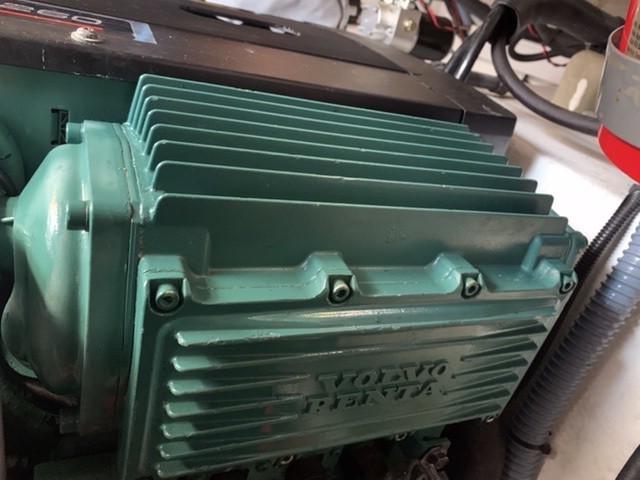
Did volvo exchange the plastic cover , under warranty.The forward plastic cover is distorted ,I’m just doing some now And always use a sealant even with new o rings as you can never tell if they wont leak when fitted back to the engine , your engineer should know better whoever he is .
VP / FP What year / hours are your engines? I've got D4s, hopefully not needed yetbut be useful to know when it might start to come up.
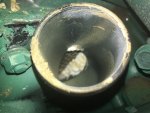
Hey there’s a copyright on these pics
Thank you.10 years old, 295 hours.
Yuk!
Drilling down deeper behind the rationale behind the plastic components used in heat cycle environment, tough environment like the heat exchanger end cap(s) , does anyone know why ?
Why did Volvo choose that material when they already made traditional metal end capped HE s ?
Leads me to believe a change of strategy....a move to a throwaway part , with a life ....short life .
Begs the question.....does anybody know the service , the official service schedule for theses plastic end capped HE ,s is there anything written down about a timed total change out ?
Reason I, am flying this idea the “timed life “ is that what CAT currently do with there charge air coolers ( CAC s) .
Particularly on the mighty C32 .
It took a class action law suit in the states , which was eventually won by the hundreds of plaintiffs for CAT to re think there service strategy on the CAC s .
It’s now written as a chuck away part every 7 years , the whole thing .
CAT were plagued galvanic corrosion issues , sub contractors , in house , por design as they drained down past the pencil anodes , dissimilar metals ....the whole shooting match resulting in catastrophic leaks and in the case of the CAC water entering the engine and destruction.
Just to be clear this leak of the D series end caps on the HE is not catastrophic.
CAT even apparently latterly moved away from dissimilar metals as much as possible .
It cost them millions , but the point is is ...it’s now written in the service bulletin s replace the CAC s every 6 or 7 years ( can’t remember exactly) .
To save another tsunami of successful plaintiffs.
So the point is if you move to chuck way parts ...then it’s not so crucial about the build quality??
Additionally the motivation from Volvo is expanding the after sales / parts revenue side of the global brand as well .
Win , win .
I Don,t buy into incompetence from VP .
CAT sure , that’s what happened with the C32 CAC and they were dragged through the courts at huge expense.
And the guy who signed off the plastic .....is no longer with the company.they only used plastic end caps on the early engines
they only used plastic end caps on the early engines, they switched to a metal end cap, which is what everyone should be using in their d4's by now.
Drilling down deeper behind the rationale behind the plastic components used in heat cycle environment, tough environment like the heat exchanger end cap(s) , does anyone know why ?
Why did Volvo choose that material when they already made traditional metal end capped HE s ?
Leads me to believe a change of strategy....a move to a throwaway part , with a life ....short life .
Begs the question.....does anybody know the service , the official service schedule for theses plastic end capped HE ,s is there anything written down about a timed total change out ?
Reason I, am flying this idea the “timed life “ is that what CAT currently do with there charge air coolers ( CAC s) .
Particularly on the mighty C32 .
It took a class action law suit in the states , which was eventually won by the hundreds of plaintiffs for CAT to re think there service strategy on the CAC s .
It’s now written as a chuck away part every 7 years , the whole thing .
CAT were plagued galvanic corrosion issues , sub contractors , in house , por design as they drained down past the pencil anodes , dissimilar metals ....the whole shooting match resulting in catastrophic leaks and in the case of the CAC water entering the engine and destruction.
Just to be clear this leak of the D series end caps on the HE is not catastrophic.
CAT even apparently latterly moved away from dissimilar metals as much as possible .
It cost them millions , but the point is is ...it’s now written in the service bulletin s replace the CAC s every 6 or 7 years ( can’t remember exactly) .
To save another tsunami of successful plaintiffs.
So the point is if you move to chuck way parts ...then it’s not so crucial about the build quality??
Additionally the motivation from Volvo is expanding the after sales / parts revenue side of the global brand as well .
Win , win .
I Don,t buy into incompetence from VP .
CAT sure , that’s what happened with the C32 CAC and they were dragged through the courts at huge expense.
Orthop, yes over the previous 3 years we have undertaken planned maintenance. First 2 years it was the aftercoolers. Should have been strip, clean and new seals but one housing had to be replaced due to corrosion and the other the tube stack had to be replaced for the same reason. The heat exchangers were the last items to be refurbed. Apparently they were bad, and had been done before my ownership, and must have been quite bad to require machining.Ozzie did you have other problems with the D4s? Seems that your current problem with the exchanger is more a with the engineer rather than Volvo...
Ah wet liners .When I rebuilt the V8 engine in my car the cylinder liners are of the "wet" type and are sealed by 3 O rings that sit in grooves in the block and the liners are then lubricated and pushed in.
My point is that these grooves in the ali block suffer from some corrossion as in the heat exchangers on our engines.
The recommended method is to use a LIGHT smear of Dow Corning 732 High performance silicone on the O ring and this fills any small pitts that may cause a leak.
This does stand the test of time and has been used for years.
Hope this helps