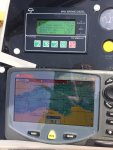
D12 high temp.. or false sensor reading

my D12s have run at just below 90 degrees since I bought the boat 5 years ago.
It makes no difference on water temp outside and no difference if i am pootling or running them flat out?
They have been like this for 5 years and always felt they were running a bit hot but as they are the same all the time tend to go with it.
 
Volvo Penta official dealer visit my boat today.. We did sea trial with diagnostic computer and laser on the engines... 82-84C
The problem is electronic as many of you told me! A cable... who knows.. They told me that the engines works perfect.. I was with 5bf waves and I run it full rpm. Very hard test and still the temps was ok.. Also very impressived with my boat. I didn't believed that we could do a proper sea trial with 5bf.. I was quite feared.. But even with full rpm my fairline passed the waves easy.. I am very happy!
 
Last edited:
I just found this forum I have a 2008 mq 50 iv been fighting this problem for 4 years after 1810 rpm it overheats I slow down back to 1810 and cool’s off I had the exchange’s professionally cleaned put a new water pump on new turbos on and risers new temp sending unit and still does it and I keep this boat on a lift also I put on water pressure gauges both engines read around 33 psi my problem engine is the starboard any ideas out there still to try
 
I just found this forum I have a 2008 mq 50 iv been fighting this problem for 4 years after 1810 rpm it overheats I slow down back to 1810 and cool’s off I had the exchange’s professionally cleaned put a new water pump on new turbos on and risers new temp sending unit and still does it and I keep this boat on a lift also I put on water pressure gauges both engines read around 33 psi my problem engine is the starboard any ideas out there still to try
Worm cam in sea water pump
 
One way or another you don’t have sufficient water flow or the exchangers a clogged with impeller bits or scale.
I suppose also there could be a limited drop of fresh water coolant due to air lock or similar.

Volvo Paul knows his stuff. at the end of the day the system is simple. It puts large volumes of water through the exchanger and spits it out the exhaust
 
One way or another you don’t have sufficient water flow or the exchangers a clogged with impeller bits or scale.
I suppose also there could be a limited drop of fresh water coolant due to air lock or similar.

Volvo Paul knows his stuff. at the end of the day the system is simple. It puts large volumes of water through the exchanger and spits it out the exhaust
Yeh but you have go through time consuming and thus expensive parts throwing fest in the absence of a way on the dash seeing fully calibrated OEM “ coolant .press .water pump “.Not after market shots in the dark like she’s done .

If you could see access this life would be far smoother.
13A05B2F-5B8E-49C5-B3F1-7895C973A7B4.jpeg
Monitor the drop off of pump pressure ..if you are bothered .

MAN engines pumps are gear driven btw , but the rubber impellers like all deteriorate .If only Jersey girl could see this ? …..the actual pump pressure from OEM gauges ,,,with or without a fresh impeller !Or expensive cooler stack refurb .
 
Last edited:
+1 on Porto,

on my last long runs 140nm each way at D speed I was synching engines with EGT and monitoring only impeller seawater pressure at the top after the seawater pump and before the first charge cooler. 5psi lower on port engine wasn't worth spending a couple of hours on the e/r will do sometime this coming week together with fresh anodes.
 
+1 on Porto,

on my last long runs 140nm each way at D speed I was synching engines with EGT and monitoring only impeller seawater pressure at the top after the seawater pump and before the first charge cooler. 5psi lower on port engine wasn't worth spending a couple of hours on the e/r will do sometime this coming week together with fresh anodes.
So I put my own liquid filled gages on both engines permanently mounted at 1810 rpm the good engine has 33 psi water pressure and the engine showing overheating is at 35 psi at a 1000 rpm there basically the same
 
How / where are you measuring the pressure ? That is not a standard d12 feature.

I would say that pressure and flow rate are not related and other than one engine does not overheat you have no reference as to what it should be. The higher the pressure the more the blockage depending on where you measure the pressure In the system.

Water flow cools it not water pressure

has the fresh water coolant been changed together with the fresh water coolant filter ?
 
Last edited:
Could you change the unbiblical s over ?Doubt it’s feasible on D12 .
It what my engineer did when I had KAD 300s .Also not mentioned have you infra red gunned them .Both to compare .
The problem followed the unbiblical wire .
We had previously fitted new thermostats , sensor and gauge .Hence the eventual diagnosis of some sort of resistance breakdown in loom tripping the ECU into thinking it’s was a overheat despite the IR gun contradicting the gauge .
There was never according to the engineer with a IR gun an actual overheat .Just dash alarms and high gauge reading .

Something else .
Have you checked or replaced the black coolant pipes ? They can delaminate inside with age and restrict flow .
Assuming the after market flow gauges are erroneous….JRudges point ^ . We don’t know what the base line pressure is .

The “ coolant pressure - water pump “ on mine are NOT on the pump .The sensors are on the engine somewhere measuring the circulation pressure around the coolers .Additionally we have oil temp gauge .The oil is cooled by a cooler too - closed system but nether the less , if there was an internal sea water pressure loss it’s temp would rise too .
This begs the Q ….are both your oil temps the same when the alarm goes off ?

The pumps on mine are Jabsco off the shelf as far as iam aware theses no direct sensors on them .

We also measure “Charge air temp “ to monitor the efficiency of the CAC .So all in all combined together - the jacket temp , CAC temp the coolant water P , the oil temp ( pressure is separate) you can get a pretty accurate picture of the coolant health .
I have the manuals and can dig out the exact location of the coolant P sensor , but it’s no use to your predicament .

You have had the mechanical stuff stripped or replaced .These pump pressures .Mine are 39 psi at 1800 rpm rising to 45 at WOT .Different engines but same size FWIW gear driven so directly proportionate to engine speed.

Have you checked ( if available?) what the D12 spec s circulation pressure should be at around 1800 rpm upwards ?
If they are cam driven and the cams worn then maybe as VP said they can’t keep up at higher rpms ?

Do they plateau out at or before 1800 rpm , the 33 and 35 psi you reported.Or do they continue to move up as the rpms risers , they should .But as you say odd the higher 35 is the alarming one ?
You could swop the sensors round to verify them somewhat .

Just one last thing .
When you say it alarms off at 1810 rpm is that when they are basically cold or warmed up to 82/84 or what ever .
You haven’t said what the water temp gauge is reading when you hit 1810 rpm .I was assuming it was climbing to the alarm chime level say 92/94 or what ever ? Even after all the work done and parts replaced ?

Its just I wait until I see 60 on the gauges [ some one once advised ) then open them up .
Theres a few mins of lag for the water temp to reach 84 ( Med sea temps ), to catch up with the rising rpms so to speak + where it stays no matter how high the rpm .

So are you saying it alarms bang on 1810 rpm irrespective of the water temp gauge?
 
Could you change the unbiblical s over ?Doubt it’s feasible on D12 .
It what my engineer did when I had KAD 300s .Also not mentioned have you infra red gunned them .Both to compare .
The problem followed the unbiblical wire .
We had previously fitted new thermostats , sensor and gauge .Hence the eventual diagnosis of some sort of resistance breakdown in loom tripping the ECU into thinking it’s was a overheat despite the IR gun contradicting the gauge .
There was never according to the engineer with a IR gun an actual overheat .Just dash alarms and high gauge reading .

Something else .
Have you checked or replaced the black coolant pipes ? They can delaminate inside with age and restrict flow .
Assuming the after market flow gauges are erroneous….JRudges point ^ . We don’t know what the base line pressure is .

The “ coolant pressure - water pump “ on mine are NOT on the pump .The sensors are on the engine somewhere measuring the circulation pressure around the coolers .Additionally we have oil temp gauge .The oil is cooled by a cooler too - closed system but nether the less , if there was an internal sea water pressure loss it’s temp would rise too .
This begs the Q ….are both your oil temps the same when the alarm goes off ?

The pumps on mine are Jabsco off the shelf as far as iam aware theses no direct sensors on them .

We also measure “Charge air temp “ to monitor the efficiency of the CAC .So all in all combined together - the jacket temp , CAC temp the coolant water P , the oil temp ( pressure is separate) you can get a pretty accurate picture of the coolant health .
I have the manuals and can dig out the exact location of the coolant P sensor , but it’s no use to your predicament .

You have had the mechanical stuff stripped or replaced .These pump pressures .Mine are 39 psi at 1800 rpm rising to 45 at WOT .Different engines but same size FWIW gear driven so directly proportionate to engine speed.

Have you checked ( if available?) what the D12 spec s circulation pressure should be at around 1800 rpm upwards ?
If they are cam driven and the cams worn then maybe as VP said they can’t keep up at higher rpms ?

Do they plateau out at or before 1800 rpm , the 33 and 35 psi you reported.Or do they continue to move up as the rpms risers , they should .But as you say odd the higher 35 is the alarming one ?
You could swop the sensors round to verify them somewhat .

Just one last thing .
When you say it alarms off at 1810 rpm is that when they are basically cold or warmed up to 82/84 or what ever .
You haven’t said what the water temp gauge is reading when you hit 1810 rpm .I was assuming it was climbing to the alarm chime level say 92/94 or what ever ? Even after all the work done and parts replaced ?

Its just I wait until I see 60 on the gauges [ some one once advised ) then open them up .
Theres a few mins of lag for the water temp to reach 84 ( Med sea temps ), to catch up with the rising rpms so to speak + where it stays no matter how high the rpm .

So are you saying it alarms bang on 1810 rpm irrespective of the water temp gauge?
So I can run at 1810 rpm all day I go higher than that the temperature climbs in a couple minutes it will hit 203 degrees and the alarm goes off I can’t really see my water pressure at a higher rpm because I have to be in the engine room to watch the gauges and my wife has to drive and she’s not comfortable slowing the boat down that fast but from what iv found is 33 to 35 psi is correct for d12 Volvo I’m thinking I acid flush the whole engine even though my mechanic said he scoped all he could when the heat exchangers were off but like I said I keep the boat on a lift but I haven’t been flushing the engines with fresh water and when I laser the charged air cooler it is a little hotter than the good engine so maybe it’s plugged but I have changed my coolant an every 3 years and filter
 
Swop the pumps over now to be sure to eliminate any pump issues Did you have the whole rebuild inc the cam done ?

Either the issue will move across which identifies the pump , or it won’t which means there’s a blockage .Just better to know this before tearing down the whole cooling system.I mean inc the exhaust water exits as well as well as the engine pipe age .

Did you see the old impellers …..I mean were they pretty shredded ?
 
The impellers were fine the mechanic said the pump had grooves in it and that might be not pumping 100 percent so I kept the old one for a spare and put a whole new one on iv scheduled a guy to come out and do the acid flush and I’m flying down to watch
 
Ok one last thing assuming the cooling system is ok .

” clogged “ injectors .

Your EDC and ECUs might or might not throw codes if the injector tips have “clogged “
If they don’t throw codes ? Then at higher rpms the flow of fuels higher = more heat.

Other signs according to Google are lumpy idle and gen feeling ( at higher rpms ) lack of power .But theses are generic and could easily be masked by the size of the boat and the good engine , and underwater exhausts .

Generally a lot of low rpm running out side optimum Exhaust Gas Temp ( EGT s ) lead to unburnt properly fuel sticking to the tips and “ clogging “
Depends on the age of your motors the intelligence of the EDC / ECU s to change the fuelling , re calibrate it at low rpms .Some common rail do quite well theses days at accommodate low rpm running ,Older motors less so and really need a good run out or a good 1/2 hr blast after a prolonged period of slow sub optimal running . To de clog the crap of the tips .

When where the injectors last pulled ? How much slow D speed running do you do ?

Or some other deep ECU / EDC issues that over fuels that motor over 1810 rpm ?and does not throw a code on the dash . Except the eventual and inevitable jacket temp overheat when it reaches as you say 95 .This needs checking out via the up to date current Vodia Volvo diagnostic computer hooked up .

Can you see EGT s on a dash screen ? Can you see the load .If so theses would point at fuelling/ injector issues .
Save ripping the cooling systems apart - again !
 
Last edited:
I post you this link here …To show amongst other pump info, the impellers can take a pretty hard beating in the Jabsco pumps on a 12.8 , motor and still do there job .There’s quite a bit of latitude in the cooling system for a let’s word it - a far from perfect pump . A pump overhaul is normal practice .

MAN water pump overhaul
 
I’m not for sure if I have egt on my screen I’ll look into that and I generally run her at 2000 rpm or higher until this heat problem started
 
I figured it out after 3 years I had a charged air leak and it was blowing directly at the heat sensor and you could only feel it at higher rpm’s when the turbo was making a lot of boost it was a bad oring at a joint in the pipe if in doubt take a liscense plate and block the sensor from air blowing on it and give it a run
 
I figured it out after 3 years I had a charged air leak and it was blowing directly at the heat sensor and you could only feel it at higher rpm’s when the turbo was making a lot of boost it was a bad oring at a joint in the pipe if in doubt take a liscense plate and block the sensor from air blowing on it and give it a run
Thx for the feed back .Something simple in the end .You have spent a lot of money on this . I innocently ( and turns out incorrectly) assumed the various engineers replacing parts along the way would have checked for basic pipe leaks .
Anyhow a result .

Pity you could not access via a screen “ charge air temp “ see a rise if it’s pissing air - leaking? Or with comparing a difference between the engines alerting you where to investigate first ?
 
Last edited:
Top