Cutting a bevel in GRP

Joined
20 Jun 2007
Messages
16,234
Location
Live in Kent, boat in Canary Islands
www.bavariayacht.info
Further to this ...

I recently contacted Gougeon Brothers (West System) as follows:

I have read your document at http://www.westsystem.com/ss/repairing-machined-holes-in-fiberglass/ I have a 1" drilled hole at the bottom of my hull, currently occupied by an unused 3/4" through-hull (skin fitting). The GRP is about 1" thick at this point, cutting a 12:1 taper will result in a huge area. Please can you advise the best solution.

Reply:

Ideally, you would grind a bevel from both sides - in and out. This allows you to reduce the bevel to 8:1 so the effective thickness of the laminate becomes 1/2" making the bevel 4" from the edge of the hole on both sides. I wouldn't recommend you go any less on the bevel since this area is a high risk area where failure could be catastrophic.
Bruce Niederer | Senior Tech Advisor
Gougeon Brothers, Inc

I've been considering ways to cut such a bevel around the removed through-hull. From the outside it is easy, but on the inside I have very little space around the hole. My latest idea is to use a powered sander, with a modified disc and pad.

The required bevel extends 100mm around the 25mm hole, so 225mm diameter. I can modify a backing pad so it has a conical shape with a 225mm base, then re-apply the hook backing. If I then cut a segment out of a 250mm sanding disc, I could apply this to the pad, with an overlap in the right direction. I think 60G is the lowest grit I can get in this size.

Thoughts?
 
Last edited:
Just use a flap-disk on an angle grinder and do the best you can. The famous "bevel" is not critical at all for such a repair; this is not mathematics.

On NO account should you change the shape of the disk! This would unbalance it and, at the high revs of a hand grinder would be VERY dangerous!
 
I can't help but think this is all well OTT. You are not trying to bond in a ring to support the whole hulls weight, just filling in an unwanted hole

Think about it - you used to have a skin fitting there. The neck of that wasn't bevelled 1/12 or any other number.

You just need the bevel to ensure that water pressure won't pop it out. The previous fitting had a flange either side for that purpose,
 
I have used a small angle grinder with sanding disc with packing to make quite precise scarfs in thin plywood panels when repairing plywood panels in a mirror dinghy so to chamfer a hole in GRP should be easy.

You need a more precise joint scarfing ply together than GRP repairs.
 
I've just ground mine back using a 4" grinder with a backing pad and course sanding pad. Not a quick job, i think you'll be there for a while with a 60 grit sander Nigel.

If you can't get the grinder flat, us the edge of a grinding disk. Another possibility could be a die grinder/dremmel and do as much as possible from the outside.

It makes a lot of mess inside :(
 
I have just done this job as my paddle wheel log was leaking and when it was not leaking was generally clogged with barnacles so not good anyway. I bevelled inside and outside to about 10 degrees both sides using a Powerfile and 40 grit belts in about 20 minutes.. These are cracking tools for boat work-best thing I have bought in ages. You do not need as much elbow room as a disc on a drill or angle grinder and seems a safer tool to use.
 
U
I have just done this job as my paddle wheel log was leaking and when it was not leaking was generally clogged with barnacles so not good anyway. I bevelled inside and outside to about 10 degrees both sides using a Powerfile and 40 grit belts in about 20 minutes.. These are cracking tools for boat work-best thing I have bought in ages. You do not need as much elbow room as a disc on a drill or angle grinder and seems a safer tool to use.
I'be been thinking of buying one of those. Which make did you buy?
 
I cut a bevel using my Fein with a narrow blade. Marked the OD of the taper and then marked around the hole where I wanted the taper to stop. Then just cut down a series of slits, quite a lot of slits at the correct angle. The working with the edge of blade cut from the outside into the taper slicing away the chunks. It was quite easy to get the correct angle. Dressed it off with a rasp when finished. I tried to use my Dremel to dress off but the drum like sander was not man enough for the job.
 
I can't help but think this is all well OTT. You are not trying to bond in a ring to support the whole hulls weight, just filling in an unwanted hole

Think about it - you used to have a skin fitting there. The neck of that wasn't bevelled 1/12 or any other number.

You just need the bevel to ensure that water pressure won't pop it out. The previous fitting had a flange either side for that purpose,

Exactly.
If it really is an inch thick, you could get away with no bevel at all.
Calculate the strength of that area of epoxy and compare with the force of water....
But you need to abrade the surface to get a decent bond, so you might as well put a bit of chamfer on it.
I see no merit in removing much material for a job like this, you don't need the repair to be part of the hull structure, you just need it to stay put, cope with the water pressure and get a fair finish.
I'd probably use some really hi-tech tool like a bit of sandpaper wrapped around a bit of wood. Or a dremel. Or a file.
 
Exactly.
If it really is an inch thick, you could get away with no bevel at all.
Calculate the strength of that area of epoxy and compare with the force of water....
But you need to abrade the surface to get a decent bond, so you might as well put a bit of chamfer on it.
I see no merit in removing much material for a job like this, you don't need the repair to be part of the hull structure, you just need it to stay put, cope with the water pressure and get a fair finish.
I'd probably use some really hi-tech tool like a bit of sandpaper wrapped around a bit of wood. Or a dremel. Or a file.

Yep it will be a bit of a chamfer for us inside and out to create a minimal egg timer shape - then fill with epoxy- maybe rovings inside depending on how thicknesses work out- to easily put on a bit of a bevel I'm gonna use the the battery powered drill with a side cutter bit- easy for the restricted space inside
 
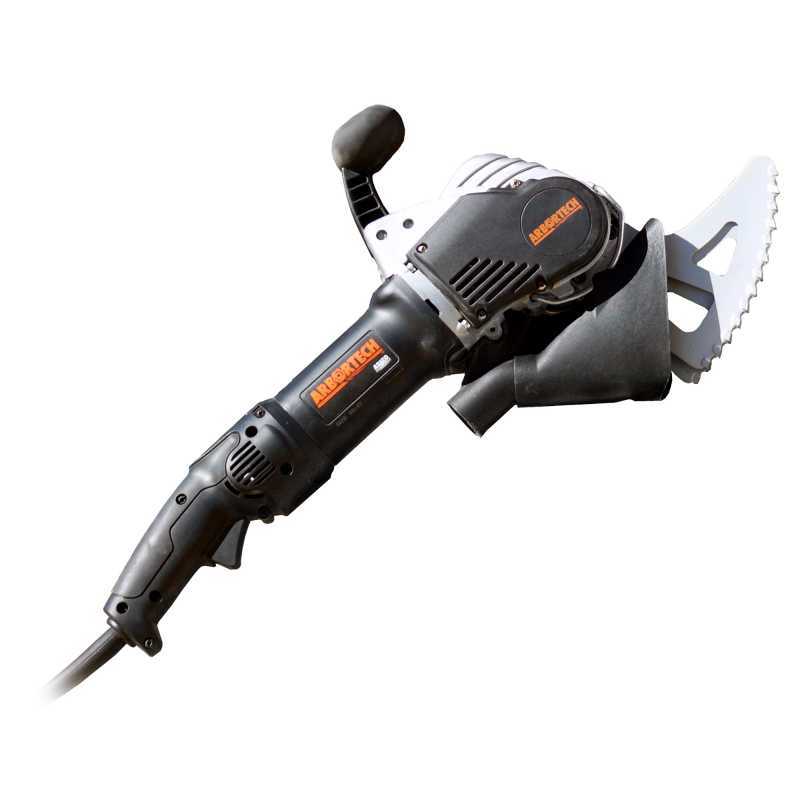
Anyone tried one of these:
arbortec-allsaw-as170.jpg

to cut a bevel?
 
If it is the inside of the hull and the patch will be covered with floor etc then you do not need so much bevel as you can make a lump of GRP that extends beyond the hole itself. The bevel is necessary on the outside because you want a flat finish. So if it is too difficult to cut a bevel just clean up the inside surface of the hull and lay glass over the hole extending well beyond the hole. olewill
 
I guess what I really want is a massive countersink bit :)

I bought a small angle grinder,
GetImage.ashx
one that could be held and used in one hand, for such a job. I considered trying to make some sort of conical backing pad but in the end just used the ordinary flexible backing pads and a coarse sanding disc ( the grinding disc was far too aggressive) and did the "repair" from the outside anyway, although I started with a layer of biaxial glass cloth on the inside laid up against peel ply supported by a flexible pad taped to the outside
 
Last edited:

Other threads that may be of interest

Top