

MM5AHO
Well-Known Member
I went through the Caledonian and the Crinan Canal again this month. I'd done the same route in 2015, and note that as last time, the difference between the management of these two is obvious. The Caledonian is OK, the Crinan seems to have very little traffic and is crumbling away. I've been round the Mull three times this year so far, so a canal passage to keep up to date seemed in order, and the southerly beat south sounded less inviting.
We were travelling south, so starting at the Crinan end I noted the following.
Calling on their advertised channel of Ch 74 isn't of much use. They don't answer. So you mooch about and wait for an obvious opening and enter the sealock.
We were in late, so decided to stay the night in the basin. Next morning there were two boats wanting to descend into the basin, and 2 boats wanting to rise out of it.
Meanwhile we used the amenities. These are relatively new (was it 2014? I forget). The shower have a complicated timer that doesn't work, the showers just run. There are no hooks in the showers in the dry area, only in the wet part. And only a few. Most sailors have loads of clothing to hang up. The lights in the toilets (mens) don't work. They're automatic (sensor), but click and no light. The showers are uni-sex, but I can imagine some people not liking the smoky glass partitions which are not see through, but are quite translucent when wet.
They're short of water. So they say. Two waiting to descend, 2 waiting to ascend. Lock 14, first one past the basin.
So they emptied the full lock to let us up, then took the 2 yachts above down. That seemed to me to waste a lock's worth of water.
We motored onwards to L13. On arrival we found the lock half full with one sluice open draining it and one open filling it. Over the years I think I have found almost every combination of sluices and gates on arrival at some locks. No-one about, no instructions to do anything other than carry on, so I went to close the upper sluice and drain the lock. No sluice key. I've also seen that plenty of times, no key other than to walk to the next lock. That's why some years ago I made my own and carry it aboard.
On operating the sluices someone appeared to tell me off. They were running water it seems but forgot to tell the people using the lock! So we waited half an hour. I reckon that the ran enough water to replace the wasted lock 14!
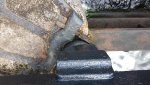
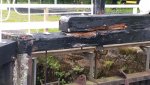
At one point I noted how the gate arms are rotting away. At risk of breaking I'd say. To one side there are replacement timbers already cut and shaped, but the grass is growing through them, and they'll soon rot too. They were there last year I seem to remember.
At another point the steel sheet piling is rusted out, and there will be a bank collapse soon.
There are bank collapses anyway, and they put barrier tape round it. That'll help!
Our depth sounder is right. It reads depth under our keel. Our saltwater draft is 1.4m. Lowest centre of channel reading noted was 0.2m. That's a water depth of about 1.6m (less the difference for salt vs fresh water). That might cause some trouble I thought!. Generally there are banks exposed about 0.3-0.4m. I mean the water level is that much lower than normal. Generally the level was 0.4-0.6m below our keel (1.8 - 2.0m water), except in locks where it's deeper.
At the Dunardry locks I noticed some workers starting to repair a landing stage. It's a rusty steel frame (not galvanized you see), and some fibreglass grating was to be fitted. But to a frame that won't last long anyway.
After lock 14 there are two bridges before Dunardry. I noted that the same person who operated the sealock was at both bridges. So a bit short of staff I thought. Until we got to Dunardry where a squad of Scottish Canal Blue tops was evident. So a bit disjointed in people allocations.
Cairnbarn was uneventful, and straightforward, though as before I had yet to recognise a single employee from last year.
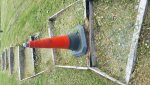
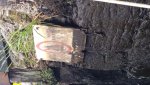
I noticed that the adusting mechanism on the lock door axle bearings hasn't been touched. No sign of adjustment or grease anywhere. The signs that warn of the cill's presence are illegible. At one point where a step on a path has broken there's a cone. It was there last year. It fixes the broken step.
At Ardrishaig things were again quite smooth, the two road bridges not having the problem problem we'd encountered last year on 2018's single passage through. (5 times round the Mull).
We started at lock 14 at 0830, and were out the Ardrishaig sealock at 1530.
We passed two boats going the other way at lock 14, and 1 boat later. There was little movement evident.
Oh well, back to the MoK I guess for the rest of the season.
We were travelling south, so starting at the Crinan end I noted the following.
Calling on their advertised channel of Ch 74 isn't of much use. They don't answer. So you mooch about and wait for an obvious opening and enter the sealock.
We were in late, so decided to stay the night in the basin. Next morning there were two boats wanting to descend into the basin, and 2 boats wanting to rise out of it.
Meanwhile we used the amenities. These are relatively new (was it 2014? I forget). The shower have a complicated timer that doesn't work, the showers just run. There are no hooks in the showers in the dry area, only in the wet part. And only a few. Most sailors have loads of clothing to hang up. The lights in the toilets (mens) don't work. They're automatic (sensor), but click and no light. The showers are uni-sex, but I can imagine some people not liking the smoky glass partitions which are not see through, but are quite translucent when wet.
They're short of water. So they say. Two waiting to descend, 2 waiting to ascend. Lock 14, first one past the basin.
So they emptied the full lock to let us up, then took the 2 yachts above down. That seemed to me to waste a lock's worth of water.
We motored onwards to L13. On arrival we found the lock half full with one sluice open draining it and one open filling it. Over the years I think I have found almost every combination of sluices and gates on arrival at some locks. No-one about, no instructions to do anything other than carry on, so I went to close the upper sluice and drain the lock. No sluice key. I've also seen that plenty of times, no key other than to walk to the next lock. That's why some years ago I made my own and carry it aboard.
On operating the sluices someone appeared to tell me off. They were running water it seems but forgot to tell the people using the lock! So we waited half an hour. I reckon that the ran enough water to replace the wasted lock 14!
At one point I noted how the gate arms are rotting away. At risk of breaking I'd say. To one side there are replacement timbers already cut and shaped, but the grass is growing through them, and they'll soon rot too. They were there last year I seem to remember.
At another point the steel sheet piling is rusted out, and there will be a bank collapse soon.
There are bank collapses anyway, and they put barrier tape round it. That'll help!
Our depth sounder is right. It reads depth under our keel. Our saltwater draft is 1.4m. Lowest centre of channel reading noted was 0.2m. That's a water depth of about 1.6m (less the difference for salt vs fresh water). That might cause some trouble I thought!. Generally there are banks exposed about 0.3-0.4m. I mean the water level is that much lower than normal. Generally the level was 0.4-0.6m below our keel (1.8 - 2.0m water), except in locks where it's deeper.
At the Dunardry locks I noticed some workers starting to repair a landing stage. It's a rusty steel frame (not galvanized you see), and some fibreglass grating was to be fitted. But to a frame that won't last long anyway.
After lock 14 there are two bridges before Dunardry. I noted that the same person who operated the sealock was at both bridges. So a bit short of staff I thought. Until we got to Dunardry where a squad of Scottish Canal Blue tops was evident. So a bit disjointed in people allocations.
Cairnbarn was uneventful, and straightforward, though as before I had yet to recognise a single employee from last year.
I noticed that the adusting mechanism on the lock door axle bearings hasn't been touched. No sign of adjustment or grease anywhere. The signs that warn of the cill's presence are illegible. At one point where a step on a path has broken there's a cone. It was there last year. It fixes the broken step.
At Ardrishaig things were again quite smooth, the two road bridges not having the problem problem we'd encountered last year on 2018's single passage through. (5 times round the Mull).
We started at lock 14 at 0830, and were out the Ardrishaig sealock at 1530.
We passed two boats going the other way at lock 14, and 1 boat later. There was little movement evident.
Oh well, back to the MoK I guess for the rest of the season.


