cooling water flow detector

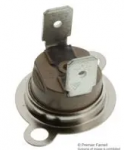
I use a normally open bimetallic switch on the exhaust elbow with a simple buzzer. They are available in a range of temperatures. I think I used 90deg C and could probably have gone lower at about 70deg C as the elbow never seems to get very hot. I put a flashing LED in series with the buzzer to draw attention to the cause of the alarm and it also makes the sound pulsate.
1656571340590.png
temperature sensors
 
One of these will quickly tell you you've lost cooling water, although not quite as quick as a flow alarm...
SM010
I should be on commission, that's the second time I've recommend this is two days. No connection with Silicon Marine, apart from being a happy customer...

+1

Having fitted one I was surprised at the actual low temp of a running exhaust (27C ish). Works well.
 
I use a normally open bimetallic switch on the exhaust elbow with a simple buzzer. They are available in a range of temperatures. I think I used 90deg C and could probably have gone lower at about 70deg C as the elbow never seems to get very hot. I put a flashing LED in series with the buzzer to draw attention to the cause of the alarm and it also makes the sound pulsate.
View attachment 137705
temperature sensors
or these;-
5pcs KSD301 NO Temperature Controlled Switch Thermostat 250V 10A | eBay
 
Marine Spares in the UK Save Your Engine Kit - LOW FLOW 12v 1/2", 3/4" - AQ20064-LF - AQ20064-LF12v | Trickett Marine supplied the Aqualarm that I bought last week. Excellent service!
I’ve used the Aqualarm system on three separate engine installations over the past fifteen years. Initially fitted one having suffered an engine overheat indication because of seawater inlet blockage. Unfortunately the latency of the overtemp alarm system allowed the impeller to be destroyed before sounding the alarm. Incidentally the pump had a Speedseal fitted but that didn’t prevent the impeller vane tips from suffering severe friction damage. The Aqualarm system has worked well,sounding in one instance when plastic sheeting got wrapped around a drive leg. On my present installation the water pump rotates at crankshaft speed which means at a low idle speed the flow is inadequate to trigger the alarm off. My solution has been to slightly increase the surface area of the paddle by screwing and bonding a plate which increases its flow facing area by about 10%. An easy fix and the alarm stops and the warning light goes out as soon as idle speed is reached. My opinion, for what it’s worth is that any temperature indication system has the disadvantage that the exhaust has to increase n temperature before the alarm sound, whereas the flow alarm system gives an immediate warning. in my experience much easier to install too. Just remove a section of hose from the pump outlet and connect some simple wiring. So big thumbs up for Aqualarm, big thumbs down for Speedseal ( don’t get me started on that solution for a problem that never existed. Convincing marketing sucked me into that one!)
Mike
 
Badly adjusted drive belt.

Ah. Interesting. How old was the belt? When was it last checked and adjusted?

Surely the fix here is more attentive maintenance, which could ultimately cost very little, just a few mins.

More preferrable than adding another gadget that may be able to fail without you knowing about it having failed?
 
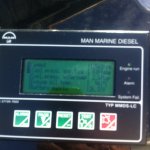
MAN do measure “ coolant pressure water pump “:
42AE7D8C-D60D-4A5D-B33C-B11BB5F5FF97.jpeg
2.6 bar in this screen shot .It will alarm off if it drops below a factory preset limit .ie a bag sucks on the inlet .
All rubber impeller water pump boat engines should have this .
 
Ah. Interesting. How old was the belt? When was it last checked and adjusted?

Surely the fix here is more attentive maintenance, which could ultimately cost very little, just a few mins.

More preferrable than adding another gadget that may be able to fail without you knowing about it having failed?
I had just changed the alternator belt (they both are crankshaft driven) and tensioning that affected the tension in the jabsco pump drive. I quickly noticed the jabsco not turning but was concentrating on the alternator drive.

Forgiven?
 
I had just changed the alternator belt (they both are crankshaft driven) and tensioning that affected the tension in the jabsco pump drive. I quickly noticed the jabsco not turning but was concentrating on the alternator drive.

Forgiven?

I apologise if I came across as critical, that wasnt my intention, I was trying to understand your logic.

I see a lot of talk about flow sensors for raw water, exhaust temp alarms, gas alarms, carbon monoxide alarms, low oil pressure buzzers, high temp buzzers and the list goes on.

My boats have never had any of those things, I'm in a big refit and spend a lot of time trying to work out what I really need.
 
Run dry impellers may help delay problem but that still leaves risk of damage to plastic water locks and rubber exhaust pipes !
 
I've just fitted one of these wired to one of these, on the back of this thread. They arrived within a day and I fitted them yesterday. The thermostat clipped to the water inlet pipe at the exhaust, and the LED/Buzzer to an 'instrument panel' (Ha!) in my eyeline at the front of the cockpit.
I adjusted the warning temperature to 50°C, then ran the engine with & without the coolant water, and very quickly saw that the indicator reacted, and would swiftly have gone on to activate the buzzer/LED.
The PCB is hidden from sight as I've no interest in the actual figure that it's displaying, only the warning being given, indicating that the cooling water has failed.
 
Last edited:
I apologise if I came across as critical, that wasnt my intention, I was trying to understand your logic.

I see a lot of talk about flow sensors for raw water, exhaust temp alarms, gas alarms, carbon monoxide alarms, low oil pressure buzzers, high temp buzzers and the list goes on.

My boats have never had any of those things, I'm in a big refit and spend a lot of time trying to work out what I really need.
My personal experience says at least seawater flow or exhaust injection bend temperature.

Believe me one engine rebuild, even with an insurance payout, convinces one why !!!
 
I used to have a simple dual Kitchen digital thermometer ...... the wire bimetal probe was clipped to the exhaust where it came of manifold .... so I had a direct reading of ambient and exhaust temps.
The display also had a user settable alarm for the probe .... its so long ago - I cannot remember setting I used .... but it worked.

After a while I removed it .... as I needed same for my Laser Cutter machines cooling system. Never got round to replacing it. One day I will ....
 
I would vote for temperature rather than flow. Here is why:
My other boat is an 18 ft powerboat with 90 HP Yamaha. (The kids can't water-ski behind the yacht!) Beautiful winters day here in NZ and visiting son no 2 wanted to go fishing.
Launched the boat and started up and then checked tell tale. Water flow seemed OK, but we only got 200 metres from dock before over temperature alarm went off.
The rubber impellor was intact but had gone hard and "set". Clearly it was pumping some but not enough.
Quick change of impellor and all was good. (I had planned an engine service before spring - honest!)(Yes we caught a good feed of fish too.)
Point is a flow rate alarm would have to have been very finely set to catch this problem.
Cheers
 
I think a seawater pressure sender is a really good way to have one gauge showing all you want to know about the seawater circuit:
main engines (turbocharged 6cyl 6.7lt) sender is after the pump and on the entrance of the first heat exchanger
yanmar 2gmf generator, sender is at the (single) heat exchanger before the elbow

Now, if entrance blocked, pressure will be low
if heat exchangers blocked, pressure will be high sorted. All are converted and streamed on the N2K network with high and low alarms so don't need to look at the screens.

for the record the yanmar at 3k rpm (2pole generator) is at .5bar, 0.2bar at 1k rpm
main engines are usually at 0.25bar at 1400-1500rpm

cheers

V.
 
I used to have a simple dual Kitchen digital thermometer ...... the wire bimetal probe was clipped to the exhaust where it came of manifold .... so I had a direct reading of ambient and exhaust temps.
The display also had a user settable alarm for the probe .... its so long ago - I cannot remember setting I used .... but it worked.

After a while I removed it .... as I needed same for my Laser Cutter machines cooling system. Never got round to replacing it. One day I will ....

I fitted something similar to a BUKH DV20 many years ago. It actually worked really well and picked up blockages before I spotted loss of water. I had a Southerly and often used the engine in very shallow water.

The 150 Euro part mentioned earlier seems expensive. I 'd probably buy a sensor and ESP32 these days, possibly £15-£20 for bits and have alarm, display and also wirelessly alert my via phone. :D

Something like this sensor, probably around £8.
Interface Water Flow Sensor Using ESP32 Board | Tutorials of Cytron Technologies
 

Other threads that may be of interest

Top