Cleat style pros and cons

That happened on my old Hallberg-Rassy. I fitted the replacements on sealant on top of a thin sheet of nitrile rubber. No problems afterwards.
Also happened on mine, there was significantly less metal remaining when viewed from underneath, even though they looked fine from above.

I changed them to s/s to match the bolts..I was replacing the cap rails so new holes were not an issue.
 
Fraid not.

Centre line fixings will create a rocking effect which would be more crushing to the deck than four-hole fixings.


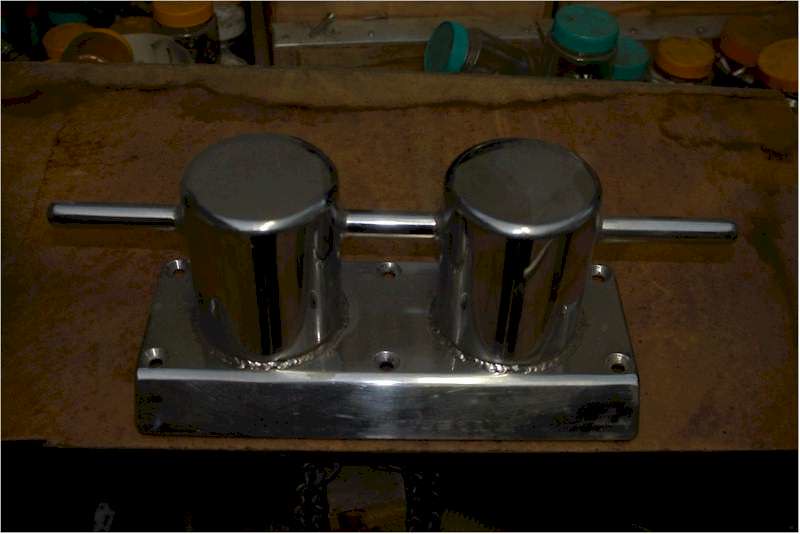
This i one of the reason I make my own cleats with a much larger base than normal to resist deck crushing. Some times on very high loaded clears/bollards I also fit hard rubber sealing under the cleat.

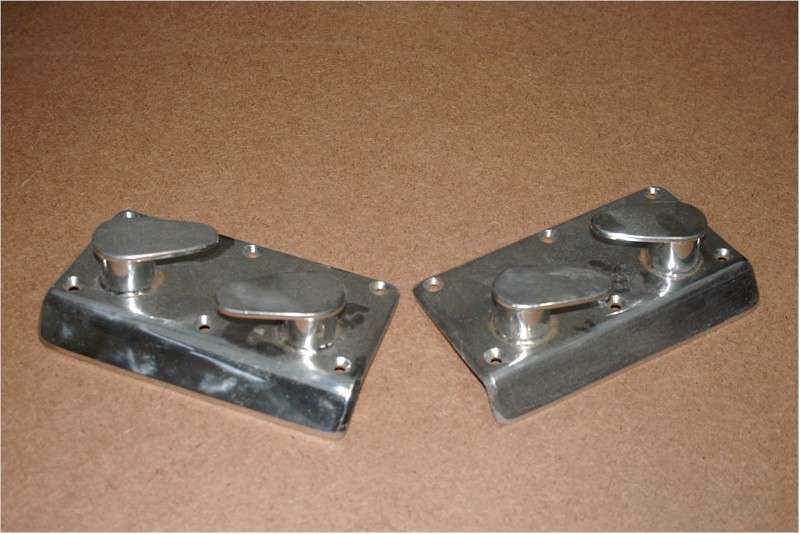
I also include a lip at the outer edge of the cleat base to act as a chafe relief to prevent damage to the warps and the edge of the deck.

I also tend to fit a plate under the cleat base with tapped holes to hold the cleat down so the cleat can be removed if damaged without the need to get under the deck or remove any head lining from inside the boat.

My fairleads also have a similar large plate with lip to help prevent chafe

Some of my cleat/bollards are shown on my web site in my sig.
 
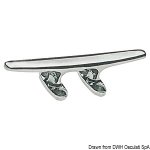
I don't like number 1...... not enough space and not as smooth edges as other two . I like number 2...... lots of space and easy to bolt down. Number 3 is better than number 1 but not as good as number 2. Only my opinion.
I like No 1 for the 4 hole fixing. I would further query if it is necessary to use lots of turns to secure a line
I do admit that it would be easier to pass a loop between the legs & over a horn of No 2 so I might go for that as well. As much importance needs to be given to the substrate fixing. No point having a strong cleat if it is going to rip out of the deck.
 
Also happened on mine, there was significantly less metal remaining when viewed from underneath, even though they looked fine from above.

I changed them to s/s to match the bolts..I was replacing the cap rails so new holes were not an issue.

Yes, mine had corroded badly underneath, but the swelling of the corrosion products had actually broken 2 of the 4 lugs on each rear quarter cleat! As I wasn't replacing the wood, I got identical cleats from HR Parts.
 
I vote number 2 because there is plenty of room to pass a spliced loop through the middle and over the horns.

It is best to chamfer the edges of the backing plates, or use one large and then one smaller plate layered together under the deck as this avoids concentrating any flex in the deck under heavy loads along the edge of the backing plate, which can cause hairline cracks in the gelcoat above
 
I've found these from Osculati which seem to be a compromise between option 1 and 2.
They have 4 x M8 fixings which I feel should be adequate unless anyone thinks otherwise.
Are there any forum member experiences generally with Osculati quality/products?
40.129.xx.jpg
 
This is how I designed my deck side cleats which include a protection lip to prevent the dock lines chafing the deck edge paint.

35696465420_e315e98035_c.jpg


My fairleads also have the same chafe protection lip

35696465030_c9f328053d_c.jpg


These are also bolted to a tapped plate fixed and sealed to the deck so the cleat and fairleads can be removed and fixed if get damaged

36046374126_ff53a8b243_c.jpg


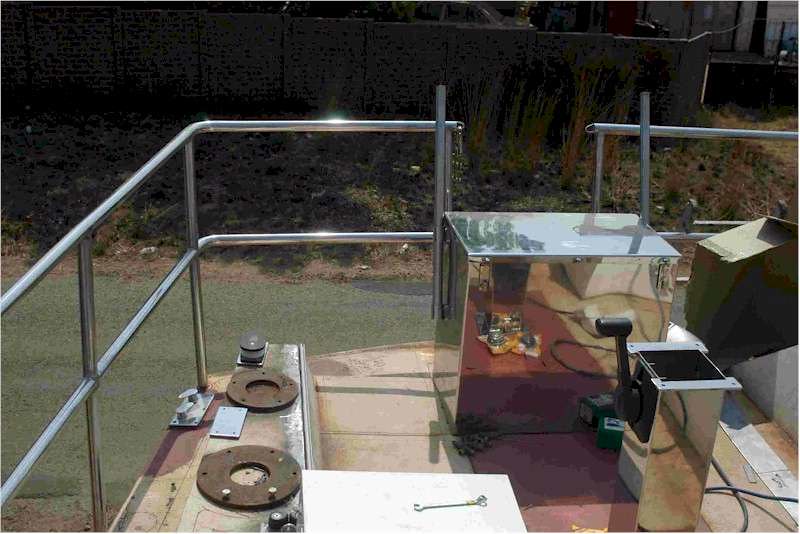
Here you ca see the fairlead test fitted and the plates for fixing down my winches and lead blocks

On a GRP boat you can bolt the plate down with counter sunk bolts then the cleat/fairleads simply bolted to the tapped hole in the now fixed plate
 
Last edited by a moderator:
Top