Cleaning off JBWeld from round a through-hull (on the inside)

webcraft

Well-Known Member
Joined
8 Jul 2001
Messages
40,439
Location
Cyberspace
www.bluemoment.com
Three years ago I discovered a small leak at the speed/log through-hull. As the boat was in comisdion and away from home I elected to bodge it up from the inside with JBWeld underwater epoxy plasticine stuff.

Now I would like to replace the through-hull, but I have no idea how to safely remove the epoxy bodge without risking damage to the hull.
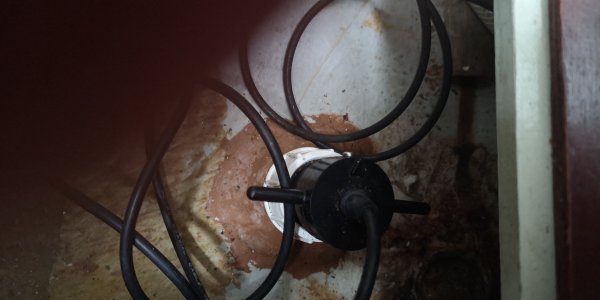
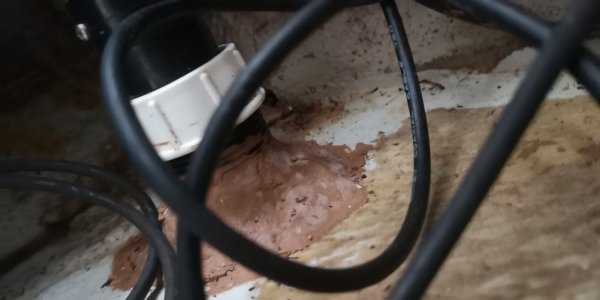
IMG_20250621_125616.jpgIMG_20250621_125623.jpg
 
Epoxy of the WEST variety is easily softened with boiling water.

I don't know if that would work for JB epoxy but no harm in trying.

Failing that, I would try a hairdryer or a heatgun.
 
Last edited:
Given that usually such repair only superficially adheres to the orignal structure .... often you can literally 'crack' it off by inserting blade in the outer edges ...
One of those oscillating grinder / saw jobbies would easily remove that allowing you to control the 'cut' .... better than a grinder.
 
Given that usually such repair only superficially adheres to the orignal structure .... often you can literally 'crack' it off by inserting blade in the outer edges ...
One of those oscillating grinder / saw jobbies would easily remove that allowing you to control the 'cut' .... better than a grinder.

I have an oscillating multitool - it;s just a question of whether or not I can get it into the limited space, if I can it would be ideal.

Thanks refueler.

- W
 
Given that usually such repair only superficially adheres to the orignal structure .... often you can literally 'crack' it off by inserting blade in the outer edges ...
One of those oscillating grinder / saw jobbies would easily remove that allowing you to control the 'cut' .... better than a grinder.

I wouldn't be so optimistic, depends how clean the surface was but this stuff sets very hard. Oscillating tool might get in but there isn't much space. Definitely not an angle grinder, no! Dremel has already been mentioned.

ETA, if the epoxy putty has to come out of the threads of the fitting that's going to be hours of fun! Bits of hacksaw blade, needle files, etc.
 
"if the epoxy putty has to come out of the threads of the fitting that's going to be hours of fun! Bits of hacksaw blade, needle files, etc."

Replacement through hulls are cheap enough ...

The OP's looks like the typical Nasa job .... and often the epoxy doesn't stick that well to them !!
 
Three years ago I discovered a small leak at the speed/log through-hull. As the boat was in comisdion and away from home I elected to bodge it up from the inside with JBWeld underwater epoxy plasticine stuff.

Now I would like to replace the through-hull, but I have no idea how to safely remove the epoxy bodge without risking damage to the hull.

Epoxy and plasticine are in no way similar or related. Sorry.

I'd probably use an angle grinder with a cut-off wheel and be done in less time than this takes to post. A multi-tool would also be good. My choice would depend on the space. A Dremel would take hours, I suspect. An angle grinder does take some practice to control well and safety matters.

Nicking the hull is not the end of the world. You will (should) be bonding a backing plate with epoxy anyway. Use a GRP backing plate and it won't matter, just bond with thickened epoxy and the hull, no matter how butchered, will be stronger than new.

plas·ti·cine
/ˈplastəˌsēn/


noun
trademark
noun: plasticine
  1. a soft modeling material, used especially by children.


Backing plate ?

How many actually fit a backing plate ?? I for one cannot remember last time I saw a backing plate used .. I have 5 transducers here - 4 of which are through hull .... please indicate where backing plates .....

UjSjWwcl.jpg


YcPIaIgl.jpg


As to Plasticine ... I think OP was using the term more as description of the epoxy product visually than chemically.
 
When I fitted a NASA Speed/Log transducer I din't need a backing plate because the GRP hull was so thick in that area; about 5/8" as I recall.
 
Backing plate ?

How many actually fit a backing plate ?? I for one cannot remember last time I saw a backing plate used .. I have 5 transducers here - 4 of which are through hull .... please indicate where backing plates .....

UjSjWwcl.jpg


YcPIaIgl.jpg


As to Plasticine ... I think OP was using the term more as description of the epoxy product visually than chemically.

Backing plates.
  • To make sure the inside and outside surface are completely parallel. Often, there is a taper as an artifact of the layup near the keel. This is a leading cause of leakage. A (tapered) backing plate makes it easy to adjust the surfaces. Additionally, the hole much be drilled at exactly 90 degrees.
  • Some hulls are thin. They need the stiffening. You also need some thickness for the champher. The threads do not always start close enough to tighten properly on thin hulls. Many fittings, particularly flush fittings, have a considerable minimum thickness requirement. A thin plate solves the problem very neatly.
If the hull is parallel and thick enough he does not need a plate. But if he nicks the hull, or there is a slight hole size discrepancy, a bonded GRP plates solves all of the problems. A simple solution. So easy.
Fig%200331%20Bevel.jpg
 
Epoxy and plasticine are in no way similar or related. Sorry.

I'd probably use an angle grinder with a cut-off wheel and be done in less time than this takes to post. A multi-tool would also be good. My choice would depend on the space. A Dremel would take hours, I suspect. An angle grinder does take some practice to control well and safety matters.

Nicking the hull is not the end of the world. You will (should) be bonding a backing plate with epoxy anyway. Use a GRP backing plate and it won't matter, just bond with thickened epoxy and the hull, no matter how butchered, will be stronger than new.

plas·ti·cine
/ˈplastəˌsēn/


noun
trademark
noun: plasticine
  1. a soft modeling material, used especially by children.

Anyone who’s used the product would recognise the description- it has the consistency and mouldability of modelling clay (plasticine) but once reacted/hardened is rock solid.
 
Backing plates.
  • To make sure the inside and outside surface are completely parallel. Often, there is a taper as an artifact of the layup near the keel. This is a leading cause of leakage. A (tapered) backing plate makes it easy to adjust the surfaces. Additionally, the hole much be drilled at exactly 90 degrees.
  • Some hulls are thin. They need the stiffening. You also need some thickness for the champher. The threads do not always start close enough to tighten properly on thin hulls. Many fittings, particularly flush fittings, have a considerable minimum thickness requirement. A thin plate solves the problem very neatly.
If the hull is parallel and thick enough he does not need a plate. But if he nicks the hull, or there is a slight hole size discrepancy, a bonded GRP plates solves all of the problems. A simple solution. So easy.
Fig%200331%20Bevel.jpg

With all due respect - I do not need instruction on what backing plates are ...

Second - the usual medium used when fitting a through hull is a 'sealing compound' similar to bath / kitchen caulking .... which remains somewhat softer than epoxy etc. This such as Sikaflex will fill and seal small to moderate imperfections between the fitting and hull.

I will refrain from comparing latter years and todays USA hull forms and most European hulls ... where many in USA are built for Intracostal and not 'North Sea' !!
 

Nasa ....

It is possible that this modification to the original mounting instructions about use of GRP to finish off - could be due to the examples of the outer flange breaking away from the tube ....

TBH - I have never added that last GRP bit on any I mounted ... never had a failure.
 
With all due respect - I do not need instruction on what backing plates are ...

Second - the usual medium used when fitting a through hull is a 'sealing compound' similar to bath / kitchen caulking .... which remains somewhat softer than epoxy etc. This such as Sikaflex will fill and seal small to moderate imperfections between the fitting and hull.

I will refrain from comparing latter years and todays USA hull forms and most European hulls ... where many in USA are built for Intracostal and not 'North Sea' !!
:ROFLMAO: :ROFLMAO:
 
ETA, if the epoxy putty has to come out of the threads of the fitting that's going to be hours of fun! Bits of hacksaw blade, needle files, etc.
It's a plastic skin fitting that is being replaced - it can just be hacked off with a multitool, dremel, hacksaw blade, etc.

The epoxy putty is a harder job, it wears blades like buggery. I'd be tempted to take a heat gun and an old chisel to it.
 
Top