
You are using an out of date browser. It may not display this or other websites correctly.
You should upgrade or use an alternative browser.
You should upgrade or use an alternative browser.
Cheap self steering system
- Thread starter Sybarite
- Start date
Rossynant
Well-Known Member
Normal. Guess a lot of people have tried it, for ages 
Works, but how well - much depends on boat.
On a well balanced and stable not much is necessary to selfsteer. But on nervous finkeeler it's constant tuning. Some strong gust and you have to correct as sail gets the tiller too far, or the boat gets weather helm when heeled (or otherwise a lull and opposite).
Works, but how well - much depends on boat.
On a well balanced and stable not much is necessary to selfsteer. But on nervous finkeeler it's constant tuning. Some strong gust and you have to correct as sail gets the tiller too far, or the boat gets weather helm when heeled (or otherwise a lull and opposite).
PhillM
Well-Known Member
I am intrested in self steering but have not taken the plunge, mainly because there are so many other jobs to do this year. However, I do wonder why the wind vane products cost SO much. It looks like about £1.5K for a new unit of £800 for secondhand.
I can see that they need to be well engineered but cost does seem high for the end product.
I can see that they need to be well engineered but cost does seem high for the end product.
tawhiri
Well-Known Member
self steering
I do not think it will work down wind. The boom is pined against the speaders.
I do not think it will work down wind. The boom is pined against the speaders.
mikeinkwazi
Well-Known Member
Tried this years ago on a small Tri. Not so good as the when the boat speeded up on waves presures changed too much. Ok going to windward however.
I intend to try it again with my Twister 28. Roll on summer


charles_reed
Well-Known Member
It's the method Josh Slocum used on "Spray".
Works well on a close reach or beat on boats without any foresail overlap and is increasingly unreliable as you move farther off the wind.
In practice with my boat, enough wind and a small enough foresail I don't need to attach the sheet to the tiller on a beat.
However the YouTuber is totally incorrect about the autopilot, providing it's man enough for the job, it's the best method of steering a boat for any single hander - one does have to be careful about balancing the boat and having the right amount of canvas up - correctly set up an electric autopilot is very frugal.
The main problems with a windpilot are: a) that they can only be used on offshore passages and b) on a boat which does not surf c) they play hell with navigation if you aren't constantly checking CMG.
For most boaters involved in coastal passage making they're as much use as a chocolate spoon. But for transoceanic passages they're better than a couple of extra crew, especially in heavy weather.
I've got both, usually sail single handed for the last 22 years.
Works well on a close reach or beat on boats without any foresail overlap and is increasingly unreliable as you move farther off the wind.
In practice with my boat, enough wind and a small enough foresail I don't need to attach the sheet to the tiller on a beat.
However the YouTuber is totally incorrect about the autopilot, providing it's man enough for the job, it's the best method of steering a boat for any single hander - one does have to be careful about balancing the boat and having the right amount of canvas up - correctly set up an electric autopilot is very frugal.
The main problems with a windpilot are: a) that they can only be used on offshore passages and b) on a boat which does not surf c) they play hell with navigation if you aren't constantly checking CMG.
For most boaters involved in coastal passage making they're as much use as a chocolate spoon. But for transoceanic passages they're better than a couple of extra crew, especially in heavy weather.
I've got both, usually sail single handed for the last 22 years.
Rossynant
Well-Known Member
Will not, yes. For this the mainsail has to lose the wind when turning tu windward.I do not think it will work down wind. The boom is pined against the speaders.
Down wind a jib sheet may be used - not the sheet itself but a line taken from it to tiller. As sheet hardens it pulls the tiller. But this on well balanced boat that keeps going strait until something turns it off-course. Modern ones - I doubt greatly

On cutter rigged it's also possible to take a small staysail sheet to steer, and this is surest way; staysail is not rigged then to drive the boat in fact, but just set as steering sail.
Daydream believer
Well-Known Member
However the YouTuber is totally incorrect about the autopilot, providing it's man enough for the job, it's the best method of steering a boat for any single hander - one does have to be careful about balancing the boat and having the right amount of canvas up - correctly set up an electric autopilot is very frugal.
The main problems with a windpilot are: a) that they can only be used on offshore passages and b) on a boat which does not surf c) they play hell with navigation if you aren't constantly checking CMG.
For most boaters involved in coastal passage making they're as much use as a chocolate spoon. But for transoceanic passages they're better than a couple of extra crew, especially in heavy weather.
I've got both, usually sail single handed for the last 22 years.
I have no idea what wind steering system you have but i have an Aeries on a Hanse 312 & you cannot have a much more directionally unstable boat than that.
So--1) i find it dead simple to use as soon as my sails are up & use it close to home most of the time so your item A is in dispute
2) i agree if you accelerate quickly & the wind is not strong as it takes the wind out of the vane but no problem on my cruiser. Useless on a multihull
3) As with all courses one tries to steer to the wind & a wind steering device does this. The navigator just has to "average" the course as they would for a human helm. It is not a problem to one with a reasonable amount of experience
4)My self tacking jib does not give me well balanced sails & i bought my Aeries because the helm was heavy. It is a fallacy that you need to balance the rig. My Aeries has more pull than a fit man can resist for long at 6 kts. True it os easier if balanced but by no means necessary
5) one of my best buys was my Aeries certainly NOT a chocolate spoon
I accept that they are not "plug & play" but once you understand how it performs it is a brilliant piece of kit
6) whilst i have a Simrad TP32 autopilot it does not cope in heavy weather as it is underpowered. I tend to use only when motoring
Like you i have been single handed sailing for years
sailor211
Well-Known Member
I have no idea what wind steering system you have but i have an Aeries on a Hanse 312 & you cannot have a much more directionally unstable boat than that.
So--1) i find it dead simple to use as soon as my sails are up & use it close to home most of the time so your item A is in dispute
2) i agree if you accelerate quickly & the wind is not strong as it takes the wind out of the vane but no problem on my cruiser. Useless on a multihull
3) As with all courses one tries to steer to the wind & a wind steering device does this. The navigator just has to "average" the course as they would for a human helm. It is not a problem to one with a reasonable amount of experience
4)My self tacking jib does not give me well balanced sails & i bought my Aeries because the helm was heavy. It is a fallacy that you need to balance the rig. My Aeries has more pull than a fit man can resist for long at 6 kts. True it os easier if balanced but by no means necessary
5) one of my best buys was my Aeries certainly NOT a chocolate spoon
I accept that they are not "plug & play" but once you understand how it performs it is a brilliant piece of kit
6) whilst i have a Simrad TP32 autopilot it does not cope in heavy weather as it is underpowered. I tend to use only when motoring
Like you i have been single handed sailing for years
I agree, I have a monitor and use it extensively on short coastal passages. Only problem which is minor is if I leave the paddle down and try to reverse in a marina!!.
I have always tended to sail a course to the wind. And adjust course to my desired course through the water. I would stil expect to find a bouy in the fog.
Wind vanes are good quiet and very useful.

fishermantwo
Well-Known Member
I am intrested in self steering but have not taken the plunge, mainly because there are so many other jobs to do this year. However, I do wonder why the wind vane products cost SO much. It looks like about £1.5K for a new unit of £800 for secondhand.
I can see that they need to be well engineered but cost does seem high for the end product.
Cost of material is low but there is a lot of labour involved. My replica monitor in SS probably cost me $150 in materials but many hours on the lathe or hand finishing. I can see where the money goes.

CAPTAIN FANTASTIC
Well-Known Member
Yes, I have. I made up a set for the main and for the foresail and I was practising in the Solent last season. It works when the wind is steady. I found it difficult to make it work with very light wind.
You need to have a few elastic bands of various strength to be able to hold back and to balance the tiller against the force from the sail. I will play around with it again this summer. However, my Simrad TP32 works well when I balance the sails.
Rossynant
Well-Known Member
Changing the position of lines on the tiller is easiest way to tune this.
macd
Well-Known Member
It looks like about £1.5K for a new unit of £800 for secondhand.
In your dreams...
stancho
New Member
Are there any wind vane self steering KITS out there please provide the links
Thanks
Thanks
Bernie.f
New Member
Alternative sheet to tiller to reduce the clutter in the cockpit.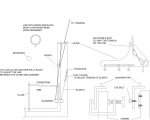
Other threads that may be of interest
- Replies
- 5
- Views
- 257


- Replies
- 63
- Views
- 2K