Charging starting battery from solar?

The typical cross-sectional area of many gold rings is not high. If you manage to create a short circuit via a gold ring it may melt. A copper wire with a similar resistance would behave in the same way.

Wearing a gold ring when it melts is not likely to be a good day :).
Definitely would not want to short circuit a ring, even a really thick one, but you need to pass a lot of current through one in circuit to cause a problem.
 
Definitely would not want to short circuit a ring, even a really thick one, but you need to pass a lot of current through one in circuit to cause a problem.

That's OK Paul - I'm a liar ... it never happened. Does that suit you ?

For everyone else who have open minds ... the incident was many years ago - but remembered vividly .... Sam - Transport Manager for Rayfield Haulage (who was great friend of mine and taught me to drive trucks / tractors / cars etc) ... was jumping a dead battery in a Ford Zephyr 6 from a Ford Cortina Mk1 GT.
As he made the last connection - his ring got caught and there was a flash ... Sam yelled in pain .. and luckily hand and clip fell away ..

The ring, one of the drivers who was close by - had to cut the remains of ring off Sams finger .. it had blown a break in the ring and like many wedding rings was a tight fit and we were not going to try pull the ring off ...
Sam's ring finger carried the scar till the sad day he died.
 
That's OK Paul - I'm a liar ... it never happened. Does that suit you ?
Didn't say you were a liar, i said it must have been a short, rather than the ring completing a circuit.
For everyone else who have open minds ... the incident was many years ago - but remembered vividly .... Sam - Transport Manager for Rayfield Haulage (who was great friend of mine and taught me to drive trucks / tractors / cars etc) ... was jumping a dead battery in a Ford Zephyr 6 from a Ford Cortina Mk1 GT.
As he made the last connection - his ring got caught and there was a flash ... Sam yelled in pain .. and luckily hand and clip fell away ..
Sounds like a short.
 
Ok here is what happened when turned to Both. Domestic battery was floating with the mppt solar at 13.8 and starting battery resting at 12.9. A max current of 4.8amps was visible on the battery monitor flowing from the domestic( +solar current) to the starting battery
So a very low current occured even with a 0.9 voltage difference. Ofcourse the starting battery is small only 50Ah.
Still sunny, after a while the starting battery started sucking amps from the domestic, and the mppt would give 0.5 to 1 amps always remaining at float mode. After it would stop, and then give again for a while etc.
NOW the important mistake here is that the starting battery definitely needs a bulk and absorbtion charging but the charger senses the whole bank which never went bellow 13.8 volts and never started the bulk charge. So I finally think keeping the banks separate with a small panel on the starting battery and have their own life😀
 
NOW the important mistake here is that the starting battery definitely needs a bulk and absorbtion charging but the charger senses the whole bank which never went bellow 13.8 volts and never started the bulk charge. So I finally think keeping the banks separate with a small panel on the starting battery and have their own life😀
Most solar controllers will start a new charge cycle (bulk -absorption- float) each new solar day.
 
Almost.....

The solar controller and mains charger should be connected to the batteries before the isolator.

The VSR should be connected before the isolators if you want to solar to keep the bow batteries charged when you're not onboard.

No need for the fuse at the solar panel.

The Lithium batteries should have individual fuses and isolator, then connect to the busbar. Both cable runs must be exactly the same length.

The Lithium negatives should go to a busbar, using the same length cables again, then take the domestic negatives to this busbar.

Not sure why you are using Earth symbols on all of the negatives. These need to be connected together, but no need to connect to Earth.
 
Ok here is what happened when turned to Both. Domestic battery was floating with the mppt solar at 13.8 and starting battery resting at 12.9. A max current of 4.8amps was visible on the battery monitor flowing from the domestic( +solar current) to the starting battery
So a very low current occured even with a 0.9 voltage difference. Ofcourse the starting battery is small only 50Ah.
Still sunny, after a while the starting battery started sucking amps from the domestic, and the mppt would give 0.5 to 1 amps always remaining at float mode. After it would stop, and then give again for a while etc.
NOW the important mistake here is that the starting battery definitely needs a bulk and absorbtion charging but the charger senses the whole bank which never went bellow 13.8 volts and never started the bulk charge. So I finally think keeping the banks separate with a small panel on the starting battery and have their own life😀
interesting as this is pretty much what I have done to keep batteries charged over winter: 2 small solar panels connected via Victron PWM controller to engine battery then left the 1-2-Both switch on Both. Seems to keep it and domestic battery at 13.8 V. Apart from the stated issue of forgetting to move the switch from Both (which I won't do as it is a past sin I paid for) is there anything wrong with this?
 
interesting as this is pretty much what I have done to keep batteries charged over winter: 2 small solar panels connected via Victron PWM controller to engine battery then left the 1-2-Both switch on Both. Seems to keep it and domestic battery at 13.8 V. Apart from the stated issue of forgetting to move the switch from Both (which I won't do as it is a past sin I paid for) is there anything wrong with this?
and of course followed Mr Rainbow's advice with a fuse close to the engine battery
 
interesting as this is pretty much what I have done to keep batteries charged over winter: 2 small solar panels connected via Victron PWM controller to engine battery then left the 1-2-Both switch on Both. Seems to keep it and domestic battery at 13.8 V. Apart from the stated issue of forgetting to move the switch from Both (which I won't do as it is a past sin I paid for) is there anything wrong with this?
Probably not. If the charge current is always feeding both batteries ( very sunny day?) Otherwise if there is a heavy cloud for 15 minutes, the weakest battery will charge from the stongest..
I guess thats the purpose of the VSR. To protect each side ( donestic and engine)
 
interesting as this is pretty much what I have done to keep batteries charged over winter: 2 small solar panels connected via Victron PWM controller to engine battery then left the 1-2-Both switch on Both. Seems to keep it and domestic battery at 13.8 V. Apart from the stated issue of forgetting to move the switch from Both (which I won't do as it is a past sin I paid for) is there anything wrong with this?
With the switch on both, a failed battery will flatten and likely kill any other batteries.

How small are the solar panels ?
 
A look at a typical solar panel output curve (see below)will show that we can measure the output of any solar panel at any voltage up to its Voc. Each line is for a fixed set of conditions. How is such a graph produced if the voltage of the solar panel fixed and cannot be altered?

The voltage of the solar panel is not fixed; it is dependent on the impedance of what it is connected to. By adjusting its input impedance, a MPPT controller alters the voltage of the solar panel. It does this to try and maintain the maximum output from the solar panel.

The label on the back of every solar panel even shows two significantly different voltage measurements produced under identical lighting (STC) conditions. Voc and Vmp. How is this possible if the voltage of the solar panel is fixed and only dependent on the lighting conditions as you claim?

If you don’t think an MPPT controller is tracking and optimising the solar panel voltage to maximise the output of the solar panel, what is it doing? How is the controller maximising the output? What is it adjusting to keep the panel at the maximum power point? What happens to the solar panel voltage if you don't use a controller and connect the solar panel directly to the battery with thick wire? Does the solar panel maintain its 18V when the battery is say 14V?

You will find with some thought that the idea that the solar panel is at one fixed immovable voltage for each lighting level does not make sense.


A MPPT controller will typically extract more energy from a solar panel than a PWM controller, and slightly above the solar panel rating is possible in exceptional conditions. But I have certainly never indicated it is possible to extract 150W from a 100W panel.

View attachment 189480
We have extracted 420w from 360w of solar with a Victron Mppt on regular occasions in the tropics.
 
We have extracted 420w from 360w of solar with a Victron Mppt on regular occasions in the tropics.
(y).

Exceeding the rating of the solar panel by this type of degree is certainly possible in exceptional conditions. These high peak outputs are only brief, but they indicate that the solar system is healthy.

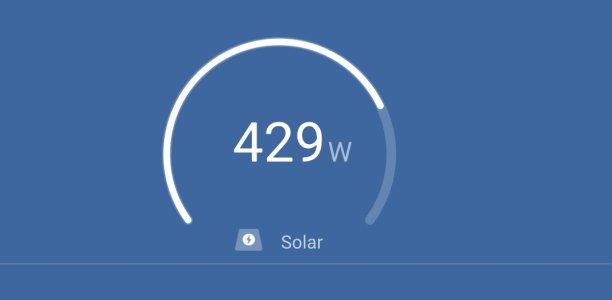
Our best peak results are very similar to yours. Here is 429W from a flat 335W panel. Post #23 both stated that "If the solar panel array is rated at 100 watts, that is the maximum you will get out of it" is obviously incorrect, as both our practical reports show.

IMG_5060.jpeg
 
Last edited:
With the switch on both, a failed battery will flatten and likely kill any other batteries.

How small are the solar panels ?
2x 20 W (in parallel from memory). It very much a cheap and cheerful way of keeping the batteries charged over winter rather than anything more elaborate. Just checked on the boat and both batteries are fully charged so disconnected them (also turned battery switch to off) and connected the separate bow thruster battery to give that a boost.
 
2x 20 W (in parallel from memory). It very much a cheap and cheerful way of keeping the batteries charged over winter rather than anything more elaborate. Just checked on the boat and both batteries are fully charged so disconnected them (also turned battery switch to off) and connected the separate bow thruster battery to give that a boost.

If you have 2 panels .. why don't you just connect one to one battery - and other to other battery ... not use the battery switch ?
 
Top