CAV DPA Injection Pump Perkins 6-354.4M

skedaddle

New Member
Joined
9 Aug 2022
Messages
16
Visit site
I am hoping somebody has some experience with the CAV DPA Injection pumps on Perkins 6-354.

The story is. I have purchased outright a rebuilt pump complete. The vendor promised that it would be exactly the same configuration as the existing pump by the specs on the original pump. ie a one for one bolt in replacement.
As you will have guessed that was not the case.

There are 3 problems that I have tried to solve.
First was that the engine could not pull above 1200 rpm on the new pump. That I believe is now solved

Problem 2 is that the engine will stall when engaging Fwd or Reverse. This occurs with the pump/engine set to exactly the same idle speed as was the original pump. It does not just abruptly stall, it just slowly fades away down to a stop. If however if you engage Fwd or Rev and "blip" the throttle it will not fade out and stall. It will hold idle at 200 - 300 rpms down from set idle.

Problem 3 With the previous pump the engine would start at the turn of the key. No throttle required and hestation what so ever. With the new pump you must apply throttle to get the engine started. This combined with 2 is a major issue on a boat with a single lever control.

My guess is that 2 & 3 are a Govenor related issue. I have checked the Governor spring positions and free lengths between both pumps and they are the same. There is a excellent very old movie on made by Perlins/CAV about the pump on You Tube. After watching that I still cannot see what it is that I need to adjust to make the Pump Governor more sensitive at low speed.

Thank you
 
This combined with 2 is a major issue on a boat with a single lever control.
Why?

What was wrong with the original pump and why didn't you get it refurbished?

It's possible you are sucking air, maybe the fault is a poor connection....

Ps..welcome
 
I am hoping somebody has some experience with the CAV DPA Injection pumps on Perkins 6-354.

The story is. I have purchased outright a rebuilt pump complete. The vendor promised that it would be exactly the same configuration as the existing pump by the specs on the original pump. ie a one for one bolt in replacement.
As you will have guessed that was not the case.

There are 3 problems that I have tried to solve.
First was that the engine could not pull above 1200 rpm on the new pump. That I believe is now solved

Problem 2 is that the engine will stall when engaging Fwd or Reverse. This occurs with the pump/engine set to exactly the same idle speed as was the original pump. It does not just abruptly stall, it just slowly fades away down to a stop. If however if you engage Fwd or Rev and "blip" the throttle it will not fade out and stall. It will hold idle at 200 - 300 rpms down from set idle.

Problem 3 With the previous pump the engine would start at the turn of the key. No throttle required and hestation what so ever. With the new pump you must apply throttle to get the engine started. This combined with 2 is a major issue on a boat with a single lever control.

My guess is that 2 & 3 are a Govenor related issue. I have checked the Governor spring positions and free lengths between both pumps and they are the same. There is a excellent very old movie on made by Perlins/CAV about the pump on You Tube. After watching that I still cannot see what it is that I need to adjust to make the Pump Governor more sensitive at low speed.

Thank you
On the assumption you are UK, I would recommend talking with PB Asher in Southampton - no affiliation
 
If it’s been rebuilt has I been set up by a proper pump shop?
It’s possible it’s been rebuilt with cheap Chinese parts as there are many parts no longer available for the old cav pumps.
 
The opening post explains the problem that I was trying to fix and the Pump Vendors suggestions that sent me off down the Governor Spring rabbit hole. This was nothing what so ever to do with the Governor! That seems to be a default excuse.

In this case. The issue was that the pump, when rebuilt was set at minimum “max fuel”. That setting provided enough fuel for the Engine idle stably but not enough to rev to more that 1200rpm under load.

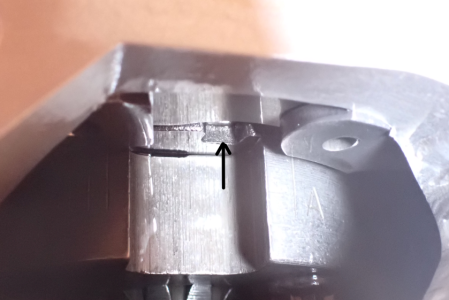
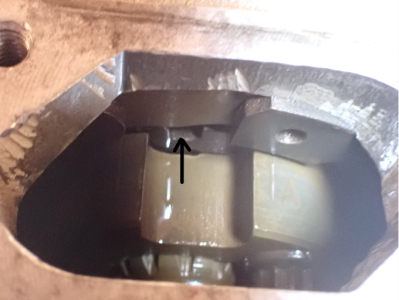
The Max Fuel setting is adjusted by a plate inside the pump. In some documents. The plate seems to be called the “Top Adjusting Plate. It controls how far the two pumping pistons can travel apart hence the max amount of fuel fuel that can be delivered with each stroke when they are pushed together.

Access to adjust the plate is thru the side plate on the Pump body. To adjust the plate. You need a good quality flat 5/16’ 12 point ring spanner (not a 8mm as suggested by some You Tube butchers) The two bolts are extremely tight and I dont think it would be wise to try to loosen them by back driving the pump against its gears. The adjustment is quite coarse so it needs to be done in stages by tapping the plate in the direction of the Pumps rotation (=increase fuel) refitting the Pump and running the Engine and checking until you get the desired result.

To pre-empt the experts. Yes I am aware that this procedure should be done on a test stand blah blah blah! However no test stand within 1000kms and you do what is required.
In the attached photo new pump it shows the Rebuilt position of the Top Adjusting Plate. When movved to the position shown old the old pump photo it fixed the problem

Maybe this will help save somebody a lot of time.
 

Attachments

  • new pump.png
    new pump.png
    519.6 KB · Views: 8
  • old pump.png
    old pump.png
    451.8 KB · Views: 8
Re the 8mm 5/16 spanner I thought the engine was a bit old to be metric so had ordered up a set of imperial spanners then seen the above video and had me doubting. Imperial spanner’s and socket sets were horrendously expensive in Belgium, at least I knew I had an imperial set of sockets at home in Scotland, those and the spanner’s will be on the boat soon.
 
Re the 8mm 5/16 spanner I thought the engine was a bit old to be metric so had ordered up a set of imperial spanners then seen the above video and had me doubting. Imperial spanner’s and socket sets were horrendously expensive in Belgium, at least I knew I had an imperial set of sockets at home in Scotland, those and the spanner’s will be on the boat soon.
The HT’s are all imperial with UNF and a few UNC bolts/nuts. Your imperial spanner’s and sockets will be put to good use.

If you’re not already aware of them, there are a couple of Facebook groups which may be of interest to you - Perkins 6.354 Marine Engines and Perkins 6.354 Ht

Both of these groups have useful “ Files” sections that have some good information including copies of workshop manuals
 
The opening post explains the problem that I was trying to fix and the Pump Vendors suggestions that sent me off down the Governor Spring rabbit hole. This was nothing what so ever to do with the Governor! That seems to be a default excuse.

In this case. The issue was that the pump, when rebuilt was set at minimum “max fuel”. That setting provided enough fuel for the Engine idle stably but not enough to rev to more that 1200rpm under load.

The Max Fuel setting is adjusted by a plate inside the pump. In some documents. The plate seems to be called the “Top Adjusting Plate. It controls how far the two pumping pistons can travel apart hence the max amount of fuel fuel that can be delivered with each stroke when they are pushed together.

Access to adjust the plate is thru the side plate on the Pump body. To adjust the plate. You need a good quality flat 5/16’ 12 point ring spanner (not a 8mm as suggested by some You Tube butchers) The two bolts are extremely tight and I dont think it would be wise to try to loosen them by back driving the pump against its gears. The adjustment is quite coarse so it needs to be done in stages by tapping the plate in the direction of the Pumps rotation (=increase fuel) refitting the Pump and running the Engine and checking until you get the desired result.

To pre-empt the experts. Yes I am aware that this procedure should be done on a test stand blah blah blah! However no test stand within 1000kms and you do what is required.
In the attached photo new pump it shows the Rebuilt position of the Top Adjusting Plate. When movved to the position shown old the old pump photo it fixed the problem

Maybe this will help save somebody a lot of time.
This picture reminds me of my Massey. Ferguson days when we fitted Opico turbos to the 4/236 engine model , we had to alter the fuel setting this way through the plate .
 
I rebuilt mine. It is the Bosch pump. Once I got it apart I wished I hadn't. Springs pinging off around the room, ball bearings rolling away. All manner of parts I could inspect, but wasn’t certain if they were acceptably worn or not and wasn’t sure what to replace for preventative maintenance reasons, so probably left parts in there that are soon to fail. Not 100% certain if I was doing it all correctly, so a little stressful and very slow, because every move had to be checked and researched first. It was in the end a success and money was saved, but next time I’ll send it to the rebuild shop.
 
The HT’s are all imperial with UNF and a few UNC bolts/nuts. Your imperial spanner’s and sockets will be put to good use.

If you’re not already aware of them, there are a couple of Facebook groups which may be of interest to you - Perkins 6.354 Marine Engines and Perkins 6.354 Ht

Both of these groups have useful “ Files” sections that have some good information including copies of workshop manuals
Thanks, I am already on both groups, and I do have original manuals for the boat, engine and gearboxes. The stack of manuals is about 8” high in imperial reading and will be having more added to it as I modify/add more bits
 
Top