Bestevaer 49

It took some time to pick details like the door handles and hinges. Unfortunately, it is difficult to tell from catalogue photos and some pieces that look nice can be flimsy pressed metal when you see them in real life.

Here are our door handles. The waterproof door will obviously be different:

Lw7iWT5.jpg
 
Last edited:
As you point out, for those that are anchoring less frequently the shorter life is less of an issue, but we intend to use the new boat in the same way as we sailed for the last 10 years, which is anchoring around 300 days a year. The chain was "end for ended" halfway through its life. Replacing 100m of chain every 3 years is expensive and G7 is difficult to obtain complicating the logistics.

I am not sure it is poor galvanising to blame. If you downsize the chain by one size and look underwater it moves around on the seabed and abrades significantly more. This extra movement also creates more wear in the area where the chain to chain contact occurs. In addition, the circumference of the thinner chain is less, meaning the same force is concentrated on a smaller contact area. This is the area the chain fails first.

Anyway that is my theory regarding the short life of G7, but I think it is an area that needs more research.

However, the anchoring gear will be one of the last details to be finalised and there are a myriad of descisions that go into making up the yacht that I think may be of interest. So back to the interior.


I don't quite understand lighter chain will lift more frequently and earlier so why was yours on the seabed.

You have also suggested short scope with a big anchor is quite safe and if you shorten scope as you have suggested it would be a way to reduce gal wear as the chain would be lifted (and not wear) and as you have a big anchor - perfectly safe..

You have mentioned you have a Maxwell windlass, windlass usually come with a gypsy so surely you have already decided what chain you will use. Chain size and weight is usually the detail that defines windlass size. You have already decided on the anchor - you are going to use your old Mantus - so you appear to have already decided on your anchoring gear. Frankly to decide on door handle and to leave chain (and the rest of ground tackle) till later seems a bit odd - considering your interests.

But to return to your G70 - why not regal the chain - its common practice to regal chain and done here in the UK quite frequently and documented on this forum.

The door handles look very nice but are hardly critical - unlike the ground tackle which I would have thought would be very high on your priorities - especially given your interests. Excuse me if I think you are obfuscating - surely you do not have second thoughts.

Jonathan
 
Last edited:
Hi Noelex

Thanks for sharing the build process - looks a great boat.

I'd be interested to know your thought processes that ruled out other aluminium variants e.g. Boreal 47/52 or Garcia 45/52

Cheers


Yes, the yachts you mentioned are great alternatives. We looked at all the options and we spent a few days at the Garcia factory in 2014.

Each boat has is strengths and weaknesses, but at the end of the day we went with a Bestevaer.
 
The boat has a seperate day diesel tank. This is it upside down. The sump can be seen at the top.

GPDQaaE.jpg
 
These are he interior lights made by Prebit. Most of the lighting is via these downlights that are infinitely dimmable and can be switched between white and red. They conveniently remember the last setting (even if power is removed). Ours are the matt version of these:
3CLtRq8.png


Narrow angle adjustable spots will illuminate artwork:

vS5RytD.jpg


Wall lights have glass shades. They will be fitted where breakage will be unlikely. These create a lovely warm glow when on. Ours will be the non stripey version of these:

qknuIxT.jpg


0hnXKK0.jpg


In the shower and toilet area the downlights are slightly different, as they need to be waterproof. Switches have been fitted externally, as it is hard to make them 100% waterproof and showers on boats are wet and humid environments, which is not ideal for switch life, especially low voltage DC switches:
cxC6RFC.png
 
Thanks for the updates. I should probably stop reading this thread because I *was* quite happy with the boat I already have...
 
Thanks for all the good wishes.

This is the bones of the main switchboard panel. We are using DIN mounted circuit breakers. These are easily replaced if they become defective, as a number of companies make identical products. They have higher performance specifications (such as interrupt capacity) than the typical pleasure boat circuit breaker panels.

The same idea was used on the original Bestevaer 2 and these has also been used in the latest Dashew FPB range.

This is more "industrial" looking than the typical marine circuit breaker panel, but can still be finished attractively when all the trim is installed. In our case they will be installed in a wooden cupboard recessed into the wall, which will back directly into the technical space.

This is an alternative to the more common Blueseas panel that is worth considering, especially if you are rewiring an existing boat and replacing the switch panel.


aqahyHh.jpg
 
As with several Bestevaers, our boat has some reinforcement, especially in the bow area. The plating is thicker and the framing has been beefed up.

The owner of KM has just returned from a passage on a 55 foot version of our boat. These spectacular images have just been posted on KM's Facebook page and show the conditions the Bestevaers are capable of cruising in.

eX5SwJw.jpg


leDzi66.jpg
 
Most boats have very poor security. I often think a thief with a screwdriver could open up many boats quicker than the owner can with those fiddly little locks :).

The other problem is if want good ventilation you need to forgo any pretence of security and leave the boat open. This can be an issue in some (fortunately rare) parts of the world where the bad guys can occasionally target owners, not just their possessions. Even in more secure parts of world leaving the boat reasonably closed up when going out for dinner means a hot boat on return. Some boats have small portholes that are too small for thief to enter. This is a big help, but often they don't let in much air, especially for sleeping comfortably on a hot night.

We have addressed these issues in various ways. I will detail the overhead hatch construction and lockable watertight door in future posts, but for now you can see some preliminary details of the companion way.

The companion way hatch has three elements that slide down into a aluminium box and disappear when not in use. No more finding a place to store the washboards.

The three elements are a conventional clear plexiglass board, similar to many boats, a stainless steel security bar and a fly screen. They will have substantial locks. The elements can be used together. For example at night while sleeping if there is a need for ventilation and security the stainless bars and fly screen can be raised together.

I think the system should work well. Of course a very determined thief can penetrate anything, but the companion way should be very difficult to break into and if we are on board the second layer of defence is a master bedroom which is enclosed between two watertight bulkheads with a very substantial and lockable watertight door. If the boat is left for long time both the conventional plexiglass board and security bars can be raised together and locked into place.

Fortunately these steps are are rarely needed, but having them installed and easily useable gives peace of mind and the confidence to cruise some the marginal areas where it not necessarily "unsafe" to cruise, but nevertheless there are legitimate security concerns.

Lets hope we don't lose the keys :).


12yUeeu.jpg
 
I suppose you are pushing the effort level up a bit. That's an impressive grill. Still it's not too hard to smash a window or deck hatch and climb in. Or do you have bars for all of them? It is really hard to be secure.
 
I suppose you are pushing the effort level up a bit. That's an impressive grill. Still it's not too hard to smash a window or deck hatch and climb in. Or do you have bars for all of them? It is really hard to be secure.


Yes, the first goal is to make our boat more difficult to break into compared to others in the anchorage. This does not take much effort, and hopefully should encourage the bad guys to go elsewhere.

I agree the pilothouse windows are probably the most vulnerable point, but we also have some solid aluminium storm covers for every window. These were made primarily in case a window was broken (or leaked) when offshore sailing, but we plan to use these if leaving the boat for extended periods.

If we were on board and people were trying to enter it would take them some time to break and enter via the windows and we could escape behind the waterproof door. This area is secure and would take a long time to to penetrate.

The deck hatches are custom made and are also very secure with four stainless steel locking handles. There are removable security bars below each hatch. These are so the hatch can be left open for ventilation.

I hope these measures don't come across as paranoid. We are not overly worried about security, but it seems a shame that a typical house with its many doors and larger windows is so much more secure than the average boat. When incorporated into the initial design stage of a new boat these measures are not difficult, or expensive. No production boats seem to include any security options (although I think Amel offer security bars for the hatches).

Adding security after the boat has been built is much harder.
 
Securing you yacht like Fort Knox might imply there is something worth stealing. We have 'U' bolts either side of double aluminium patio doors and a stainless bar between the 'U' bolts and big Yale padlocks. They arrived with big bolt croppers and chopped off the 10mm 'U' bolts (that had been 'padded' out to make access for bolt croppers difficult). They then jemmied the door, big box section aluminium frame and armoured glass.

They then removed at the domestic appliances, which were worth very little. They were not interested in marine equipment (most of it dates too quickly). The damage to the doors etc cost much more than the loss of an electric kettle, toaster etc.

The perpetrators were professionals, used marigold gloves, the police had an excellent print. They worked 2 yachts in each anchorage and moved on. They were never caught.

A smoke canister at 3am through the open bars on a hot night will have you out and opening the boat up in a flash. If any one want entry they will achieve it. In many countries you might be the only yacht in an anchorage, you can assume they will arrive armed and not be afraid you use the equipment - I'm not sure your safe haven will withstand gun shots.

Small crappy yachts do not get broken into - big swanky boats are the common target - guess why.

People without look at people with - and have envy and opportunity in their eyes, anywhere in Central or S America, most of coastal Africa.
 
Securing you yacht like Fort Knox might imply there is something worth stealing. We have 'U' bolts either side of double aluminium patio doors and a stainless bar between the 'U' bolts and big Yale padlocks. They arrived with big bolt croppers and chopped off the 10mm 'U' bolts (that had been 'padded' out to make access for bolt croppers difficult). They then jemmied the door, big box section aluminium frame and armoured glass

On the contrary, I think visible security is better and more likely to make to make thieves move on to an easier target.

Locks, for example, can be very discrete but still reasonably secure despite appearing to be an easy target. Better in my view is a big, obviously solid lock or locks that deters would be thieves before they start, but I guess one of the nice things about boats is they can be tailored to our individual preferences.

Sorry to hear about your break in.
 
Last edited:
On the contrary, I think visible security is better and more likely to make to make thieves move on to an easier target.

Locks, for example, can be very discrete but still reasonably secure despite appearing to be an easy target. Better in my view is a big, obviously solid lock or locks that deters would be thieves before they start, but I guess one of the nice things about boats is they can be tailored to our individual preferences.

Sorry to hear about your break in.

Agreed. Our main hatch has a substantial s/s burglar bar across it with two padlocks. In yer face security. In addition, our deck hatches have burglar bars inside that slide into the ceiling void when not needed. The main front hatch burglar bars are a great place to hang towels to dry them when the hatch it open....
 
Good idea. Is that a standard Bestevaer feature or a detail you have thought of ?

Thanks.

There are really no standard features on the Bestevaer. The factory will build anything that is technically feasible according to the owners' wishes.

They have built, and are building, some truely amazing boats with features that would astonish the yachting world, but many of these boats belong to owners who value their privacy so sadly these boats (together with the ideas and technical achievements) don't receive any publicity.

I don't think any of the security ideas on our boat are unique. They have certainly used removable security bars under the hatches, and watertight doors are common, but after 10 years of full time cruising we have our own ideas about the features that make an ideal cruising yacht so the boat reflects our own interpretation of this goal.
 
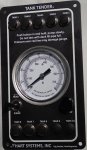
Tank monitoring

This will be via a Tank Tender gauge. We used this system successfully on our previous yacht.

It is very accurate, enabling tank contents to measured very precisely, but perhaps more importantly it is very reliable. As it needs no electricity there is no chance of any stray current problems.

Our tank tender gauge has arrived:
 

Attachments

  • IMG_1899.jpg
    IMG_1899.jpg
    204.9 KB · Views: 0
We use sight tubes, needs no power, sufficiently accurate for most leisure marine operators, easy to read, costs peanuts, perfectly acceptable for almost 20 years now :)
 
Top