

You are using an out of date browser. It may not display this or other websites correctly.
You should upgrade or use an alternative browser.
You should upgrade or use an alternative browser.
Bestevaer 49
- Thread starter noelex
- Start date
James448
New Member
Hi noelex this is not related to current conversation but other members mentioned that you would be a great person to talk to about alluminum boats and the corrosion issues that may occur. I can’t see how to private message you sorry but would really appreciate some advice on issues with galvanic corrosion and other problems that be present on older alluminum yachts.as I’m looking to buy a boat to go crusing with but my budget only allows for a 10/15 year old alluminum yacht .
Thanks James
Thanks James
noelex
Well-Known Member
Hi James
I have replied in the thread you started.
I have replied in the thread you started.
noelex
Well-Known Member
On our old boat we had an anchor drag alarm on a Furuno unit that could be seen when sleeping. It was surprisingly useful.
Our new boat has a Vesper Vision. This unit has a great anchor drag alarm, and even better will communicate via wifi and relay all its information.
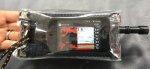
So I used an old mobile phone (again) and mounted it in the hatch that is directly above our heads while sleeping. The Vesper will also relay NMEA information such as windspeed, but you need to push a button to switch displays (or have two phones) to see both.
I mounted the phone on a simple hardwood bracket angled down so that it faces us when sleeping. The bracket plugs into one of the sockets for the removable security bars. I added a safety line to ensure if it was ever knocked it could not land on our heads. The bracket has USB battery pack just behind the phone, which ensures it lasts all night. I asked KM to install some power sockets near each of the hatches, primarily for fans in hot weather. They could also be used to power the phone, but for a low draw appliance such as this, the battery pack works well and the display can be easily moved.
The phone and bracket can also be used in one of the pilothouse hatches for an overhead display of windspeed, heading, depth etc. Cool .
.
The photos below show both screens. Details of one of the beautiful custom hatches made by KM can also be seen. This has a glass (not plastic) insert that means no scratches or UV deterioration. The four stainless handles and thick aluminium construction ensure the hatch can be dogged down tight, so no leaks.


Our new boat has a Vesper Vision. This unit has a great anchor drag alarm, and even better will communicate via wifi and relay all its information.
So I used an old mobile phone (again) and mounted it in the hatch that is directly above our heads while sleeping. The Vesper will also relay NMEA information such as windspeed, but you need to push a button to switch displays (or have two phones) to see both.
I mounted the phone on a simple hardwood bracket angled down so that it faces us when sleeping. The bracket plugs into one of the sockets for the removable security bars. I added a safety line to ensure if it was ever knocked it could not land on our heads. The bracket has USB battery pack just behind the phone, which ensures it lasts all night. I asked KM to install some power sockets near each of the hatches, primarily for fans in hot weather. They could also be used to power the phone, but for a low draw appliance such as this, the battery pack works well and the display can be easily moved.
The phone and bracket can also be used in one of the pilothouse hatches for an overhead display of windspeed, heading, depth etc. Cool
. The photos below show both screens. Details of one of the beautiful custom hatches made by KM can also be seen. This has a glass (not plastic) insert that means no scratches or UV deterioration. The four stainless handles and thick aluminium construction ensure the hatch can be dogged down tight, so no leaks.
noelex
Well-Known Member
Neeves
Well-Known Member
Last time I looked you did not accept PMs?
Very generous - I'm in two minds about attending the KM open day. But opportunity to see the display of yachts in the flesh is a unique opportunity. Having the chance the meet up and gain face to face answers for those unanswered questions has definite appeal and might tip the balance in favour of attending.
Jonathan
Very generous - I'm in two minds about attending the KM open day. But opportunity to see the display of yachts in the flesh is a unique opportunity. Having the chance the meet up and gain face to face answers for those unanswered questions has definite appeal and might tip the balance in favour of attending.
Jonathan
noelex
Well-Known Member
These next two posts were written by my wife. As she is not a member here I have included them below:
A year down the track, I thought I would report on how the pilothouse is functioning. This is the heart of the boat. It works successfully both as the navigation area (despite not having a traditional dedicated nav table) and as our primary living space. It is where we eat all our meals. My rope work is also done on my lap here. The dining table tends to only be used when my sewing machine is out, or when we have guests for dinner. It is is real treat being able to watch bad weather rolling through when at anchor, and see the scenery and wildlife, rather than being confined down below.
I have attached a photo of the pilothouse taken a couple of days ago. It looks deceptively calm until you note that the coiled lines are swinging. The second photo does a better job of painting reality.
When I am on watch, I generally sit on the downwind side with my legs stretched out and an iPad on my lap displaying charts, and a phone on hand relaying AIS. A remote control for the autopilot is around my neck. Sitting, I have a clear view over the deck to the horizon. Far better than ever envisaged. Standing, there are 360° views.
The long instrument panel is on the starboard side, and in addition a couple of other iPads on RAM mounts relay B&G Zeus data or display Navionics maps for convenient viewing. Eventually we will have a screen displaying Open CPN also attached via a RAM mount to the bar at the foot of the settee. We are slowing putting systems in place as we live with the boat.
On the port side of the pilothouse, the cavity that runs the length of the 2m long settee allows very easy to reach storage for items such as binoculars, hand bearing compass, camera, log book, cruising guides, Kindle, stationary & pens, specs, sunglasses, sunscreen, hats, RAM mounts, charging cords, torches, knife, remote for the anchor windlass, etc, plus it gives a safe spot to put down drinks and snacks. Eight 5.5 litre Lock & Lock boxes provide compartments for all this gear with one lined with non-skid kept empty for any food and drink. Having fingertip access to these frequently used items has been excellent.
Staying mainly warm and dry on passages is a luxury I had not experienced on previous boats, and I love it. I must be getting soft .
Due to a defective Jefa autopilot drive that failed just five weeks after leaving KM, we needed to be out in the cockpit hand steering for four months last year, including during one North Atlantic ocean passage. The drive unit was frustratingly not covered under Jefa’s warranty and no discount was offered by Jefa for the replacement unit. Jefa’s warranty is not worth the paper it is written on, and putting it mildly, their customer support service is absolutely pathetic, but that’s another story.
In short, after being stuck in the cockpit in all conditions hanging onto the tiller for hours on end last autumn in Scotland, I am particularly appreciating the pilothouse at the moment .


A year down the track, I thought I would report on how the pilothouse is functioning. This is the heart of the boat. It works successfully both as the navigation area (despite not having a traditional dedicated nav table) and as our primary living space. It is where we eat all our meals. My rope work is also done on my lap here. The dining table tends to only be used when my sewing machine is out, or when we have guests for dinner. It is is real treat being able to watch bad weather rolling through when at anchor, and see the scenery and wildlife, rather than being confined down below.
I have attached a photo of the pilothouse taken a couple of days ago. It looks deceptively calm until you note that the coiled lines are swinging. The second photo does a better job of painting reality.
When I am on watch, I generally sit on the downwind side with my legs stretched out and an iPad on my lap displaying charts, and a phone on hand relaying AIS. A remote control for the autopilot is around my neck. Sitting, I have a clear view over the deck to the horizon. Far better than ever envisaged. Standing, there are 360° views.
The long instrument panel is on the starboard side, and in addition a couple of other iPads on RAM mounts relay B&G Zeus data or display Navionics maps for convenient viewing. Eventually we will have a screen displaying Open CPN also attached via a RAM mount to the bar at the foot of the settee. We are slowing putting systems in place as we live with the boat.
On the port side of the pilothouse, the cavity that runs the length of the 2m long settee allows very easy to reach storage for items such as binoculars, hand bearing compass, camera, log book, cruising guides, Kindle, stationary & pens, specs, sunglasses, sunscreen, hats, RAM mounts, charging cords, torches, knife, remote for the anchor windlass, etc, plus it gives a safe spot to put down drinks and snacks. Eight 5.5 litre Lock & Lock boxes provide compartments for all this gear with one lined with non-skid kept empty for any food and drink. Having fingertip access to these frequently used items has been excellent.
Staying mainly warm and dry on passages is a luxury I had not experienced on previous boats, and I love it. I must be getting soft .
Due to a defective Jefa autopilot drive that failed just five weeks after leaving KM, we needed to be out in the cockpit hand steering for four months last year, including during one North Atlantic ocean passage. The drive unit was frustratingly not covered under Jefa’s warranty and no discount was offered by Jefa for the replacement unit. Jefa’s warranty is not worth the paper it is written on, and putting it mildly, their customer support service is absolutely pathetic, but that’s another story.
In short, after being stuck in the cockpit in all conditions hanging onto the tiller for hours on end last autumn in Scotland, I am particularly appreciating the pilothouse at the moment .

Yngmar
Well-Known Member
Interesting. I've come to appreciate a warm & dry watchkeeping post last February doing a catamaran trip in cold & wet conditions (although the tinted windows were a hindrance at night and I didn't fancy the bridgedeck slamming one bit). Sitting there with a blanket and all-around view is very much nicer than shivering outside. Is there standing headroom in the pilot house between the benches?
Am surprised to find you have no redundant autopilot (or at least windvane steering, although that doesn't always work). Perhaps it's on the list of things yet to be installed? I'm sure you'll at least carry a spare drive unit from now on, although those can be tricky to replace whilst underway and other parts can fail too (our fluxgate did at the start of the season, and this time it wasn't just a mysterously magnetized item nearby).
Also interesting is the hand steering situation from outside only. We've been in conditions where hand-steering was necessary (because the autopilot with all its sensors still can't see and negotiate waves) and in colder climate or lasting for longer than it did, that would've been very unpleasant. Which is probably why many boats with pilothouses have an inside helm station. Although it would then also need some sort of windscreen wiper or a clear view screen.
Had good customer service from Jefa in the past, although not needed warranty, just a speedy turnaround when I asked for it.
Am surprised to find you have no redundant autopilot (or at least windvane steering, although that doesn't always work). Perhaps it's on the list of things yet to be installed? I'm sure you'll at least carry a spare drive unit from now on, although those can be tricky to replace whilst underway and other parts can fail too (our fluxgate did at the start of the season, and this time it wasn't just a mysterously magnetized item nearby).
Also interesting is the hand steering situation from outside only. We've been in conditions where hand-steering was necessary (because the autopilot with all its sensors still can't see and negotiate waves) and in colder climate or lasting for longer than it did, that would've been very unpleasant. Which is probably why many boats with pilothouses have an inside helm station. Although it would then also need some sort of windscreen wiper or a clear view screen.
Had good customer service from Jefa in the past, although not needed warranty, just a speedy turnaround when I asked for it.
noelex
Well-Known Member
Yes, good point. Two independent self steering systems are very desirable for a large yacht doing long distances with a small crew.Am surprised to find you have no redundant autopilot (or at least windvane steering, although that doesn't always work). Perhaps it's on the list of things yet to be installed?
Our previous yacht had two separate autopilots and the same was planned for the new boat. The space and mounting for two autopilot drives has been designed and incorporated by the boatbuilder.
However, before fitting the second unit I wanted to see how the Jefa performed offshore. Unfortunately it failed within a few weeks.
For the record the Jefa actually performed very well, until it stopped working
. The DD3 drive unit is oversized and is suitable for vessels up to 70’ so it has heaps of power on our 49 foot yacht. The failure was due to a manufacturing fault that was an isolated mistake.
noelex
Well-Known Member
Another post written by my wife:
More photos coming up . After a year of living on board, on the surface the interior has changed little from how it looked when professional photos were taken before delivery. It has taken a full year though for the boat to be reasonably set up otherwise. It is still work in progress.
One thing we have tried to ensure is that the boat is permanently organised so we can haul up anchor at any time and set sail with very little notice. The galley and workshop are generally the only areas that need some minor attention. All I usually need to do is move two bowls of fruit onto the guest bed area (or for overnight passages into the vegetable basket) and dump any flowers into the second sink, then lay a few strips of non skid down on the galley benches. For longer passages, the guest bed under the port side of the pilothouse also needs to be made up as a sea berth.
Importantly, avoiding loose objects anywhere also means nothing crashes around when anchorages get a little bouncy. Plus, as an added bonus, I get to enjoy an uncluttered living space .
I snapped a photo of our galley during our last overnight passage (spot the roses peeking out of the sink). It may look bare, but it functions super smoothly.
Baked treats and two insulated spill proof mugs are kept in the deep cavity that runs along the starboard bench. Apple oat muffins were made for this trip. Permanent supplies of nibbles (chocolate, nuts, dried fruit, cookies and crackers) are in the row of glass jars under the oven. Peanut butter, vegemite, jam and nutella are easy to reach in one of the drawers. I generally boil up a dozen eggs beforehand, and these together with slabs of cheese and fresh fruit mean we never go hungry between meals.
Two thermoses are retained in a wooden board with holes drilled in it that slots over the junction between the sinks. This also makes pouring boiling water into them safer, as they don’t need to be held. A smaller wide mouth thermos is used for keeping soup warm or making porridge. A glass permanently sits securely in a deep groove in the wooden board so that we can easily reach for water to stay hydrated without digging into any drawers. A kettle and electric kettle are kept ready for use on the gimballed stove. Coffee, tea, cup-a-soup and cocoa are in one of the top drawers.
The extent I cook depends on conditions. When seas are calm I often even bake bread, as nothing beats the fragrance and taste of a loaf fresh out of the oven. When conditions are rough, I wedge myself in and can manage reasonably well, but I am conscious the risk of injury goes up handling dangerously hot dishes in this situation, so depending on the length of the voyage, I tend to minimise use of the stove apart from reheating pre prepared food or popping some tortillas topped with baked beans and grated cheese into the oven. Even pouring boiling water carries risk at times, this passage included.
The second photo shows the galley back to “anchor mode”. The conversion back is also quick.
Regarding equipment, the GN Espace stove has been excellent. The oven heats fairly evenly (slightly hotter at the back). There is no sign of surface rust. At this time of year our solar panels easily run the electric kettle and an induction hotplate. In winter the top of the Refleks heater has been used for cooking. Although the oven has been used almost nightly, gas consumption has been very low with a 10 kg bottle lasting 8 months. Our three bottles should give us close to two year supply of gas.
By the way, a generator has not been missed in the slightest .


More photos coming up . After a year of living on board, on the surface the interior has changed little from how it looked when professional photos were taken before delivery. It has taken a full year though for the boat to be reasonably set up otherwise. It is still work in progress.
One thing we have tried to ensure is that the boat is permanently organised so we can haul up anchor at any time and set sail with very little notice. The galley and workshop are generally the only areas that need some minor attention. All I usually need to do is move two bowls of fruit onto the guest bed area (or for overnight passages into the vegetable basket) and dump any flowers into the second sink, then lay a few strips of non skid down on the galley benches. For longer passages, the guest bed under the port side of the pilothouse also needs to be made up as a sea berth.
Importantly, avoiding loose objects anywhere also means nothing crashes around when anchorages get a little bouncy. Plus, as an added bonus, I get to enjoy an uncluttered living space .
I snapped a photo of our galley during our last overnight passage (spot the roses peeking out of the sink). It may look bare, but it functions super smoothly.
Baked treats and two insulated spill proof mugs are kept in the deep cavity that runs along the starboard bench. Apple oat muffins were made for this trip. Permanent supplies of nibbles (chocolate, nuts, dried fruit, cookies and crackers) are in the row of glass jars under the oven. Peanut butter, vegemite, jam and nutella are easy to reach in one of the drawers. I generally boil up a dozen eggs beforehand, and these together with slabs of cheese and fresh fruit mean we never go hungry between meals.
Two thermoses are retained in a wooden board with holes drilled in it that slots over the junction between the sinks. This also makes pouring boiling water into them safer, as they don’t need to be held. A smaller wide mouth thermos is used for keeping soup warm or making porridge. A glass permanently sits securely in a deep groove in the wooden board so that we can easily reach for water to stay hydrated without digging into any drawers. A kettle and electric kettle are kept ready for use on the gimballed stove. Coffee, tea, cup-a-soup and cocoa are in one of the top drawers.
The extent I cook depends on conditions. When seas are calm I often even bake bread, as nothing beats the fragrance and taste of a loaf fresh out of the oven. When conditions are rough, I wedge myself in and can manage reasonably well, but I am conscious the risk of injury goes up handling dangerously hot dishes in this situation, so depending on the length of the voyage, I tend to minimise use of the stove apart from reheating pre prepared food or popping some tortillas topped with baked beans and grated cheese into the oven. Even pouring boiling water carries risk at times, this passage included.
The second photo shows the galley back to “anchor mode”. The conversion back is also quick.
Regarding equipment, the GN Espace stove has been excellent. The oven heats fairly evenly (slightly hotter at the back). There is no sign of surface rust. At this time of year our solar panels easily run the electric kettle and an induction hotplate. In winter the top of the Refleks heater has been used for cooking. Although the oven has been used almost nightly, gas consumption has been very low with a 10 kg bottle lasting 8 months. Our three bottles should give us close to two year supply of gas.
By the way, a generator has not been missed in the slightest .
noelex
Well-Known Member
Our yacht has been designed primarily for function: aluminium, with minimal paint, a large pilot house and substantial solar arch, but someone once said “a cruising yacht should elicit an admiring glance and smile from their owner as they approach their home from the tender”.
OK, perhaps I am biased, but I am definitely smiling.

OK, perhaps I am biased, but I am definitely smiling
.
Neeves
Well-Known Member
I have just read your post on CF:
http://www.cruisersforum.com/forums/f118/mantus-anchor-on-test-125014-6.html
Post 88
I have just checked Rocna's recommendation for your size of yacht, 33kg (vs your Mantus of 68kg). (Gosh - that's a lot of steel)
Interestingly Lewmar and Bruce would recommend something not much different for a CQR, Delta or Bruce.
I have said that Mantus has the hold of, roughly, the equivalent sized Delta (and a Rocna, Spade, Excel, Supreme have about twice the hold of the Delta.
However you look at it - that's a lot of steel and a lot of money.
I confess I had not realised you had taken my comments to heart - and congratulate you on your choice (though I would have gone with a Spade or Excel in aluminium, weighing around 15/17kg - but then we have a cat). My sincere and abject apologies for misunderstanding some of your previous posts. I am pleased you have taken my comments to heart and wish you well - I am sure the 68kg Mantus will serve you adequately.
You are in Scottish waters at the best of times - but a bit too many trees for many places in the NW. If you find the water cold - I'd move south quickly. Its as good as it gets, warmed by the Gulf Stream - it will be a bit cooler in the winter.
Best wishes
Jonathan
http://www.cruisersforum.com/forums/f118/mantus-anchor-on-test-125014-6.html
Post 88
I have just checked Rocna's recommendation for your size of yacht, 33kg (vs your Mantus of 68kg). (Gosh - that's a lot of steel)
Interestingly Lewmar and Bruce would recommend something not much different for a CQR, Delta or Bruce.
I have said that Mantus has the hold of, roughly, the equivalent sized Delta (and a Rocna, Spade, Excel, Supreme have about twice the hold of the Delta.
However you look at it - that's a lot of steel and a lot of money.
I confess I had not realised you had taken my comments to heart - and congratulate you on your choice (though I would have gone with a Spade or Excel in aluminium, weighing around 15/17kg - but then we have a cat). My sincere and abject apologies for misunderstanding some of your previous posts. I am pleased you have taken my comments to heart and wish you well - I am sure the 68kg Mantus will serve you adequately.
You are in Scottish waters at the best of times - but a bit too many trees for many places in the NW. If you find the water cold - I'd move south quickly. Its as good as it gets, warmed by the Gulf Stream - it will be a bit cooler in the winter.
Best wishes
Jonathan
Last edited:

Kelpie
Well-Known Member
Whereabouts are you?
noelex
Well-Known Member
Kelpie, the above photo was taken in Norway.
stephen_h
Well-Known Member
Kelpie, the above photo was taken in Norway.
No wonder you are smiling - she looks just 'right'

noelex
Well-Known Member
Thanks Stephen.
Neeves
Well-Known Member
A sister ship, 'Albatros', is quite far above you at some way north of Narvik if you are heading that way. In fact its positively busy, 'Bestevaer 2' is a bit south of 'Albatros', enough for a decent raft up and party!
You are not alone!
Jonathan
You are not alone!
Jonathan
Last edited:
Other threads that may be of interest
- Replies
- 3
- Views
- 186
