Best way to join Positive battery cables

Slowboater33

Well-Known Member
Joined
25 Feb 2023
Messages
75
Visit site
Got given an extra (new) battery and moved them around today for best fit, however im about six inches short for the engine start Any suggestions on best way to join the 35mm cable together, Cant be to bulky as it'll need to fit in battery box. Positive busbar an option?
 
Got given an extra (new) battery and moved them around today for best fit, however im about six inches short for the engine start Any suggestions on best way to join the 35mm cable together, Cant be to bulky as it'll need to fit in battery box. Positive busbar an option?
Don’t join replace ,a joint is another point of weakness . But they make inline crimps.
 
I would consider a longer new cable as well, the Hi flex stuff is lovely to use. However......

When I was stuck ( I am going to get pelters here ) I used a straight coupler, plumbing, compression fitting to do the job😲. Don't ask my why I had one to hand but it worked well and is still there encased in shrink wrap.

.
 
You could use a power post like this 12voltplanet.co.uk/power-posts-bulkhead-connectors.html but by the time you have made up the new short cable and found a place to mount the post you might as well make up a new longer cable.
bolt two swages together, in line crimp (as suggested above)

The longer cable surely is the neatest option, save the 'too short cable' for another day. The longer cable will be neater, take up less room and never be a worry.

Jonathan
 
Maybe you can locate a VSR or fuse box cunningly and use the bolt terminal on that to connect the cables?
Maybe the other end of the cable can be re-routed to win a few inches?
 
When you do things like joints ,it shows you are not spending on things on your boat that you should. Then eventually something will fail you when you need it.
 
If you already have the crimp tool needed to put tube terminals on a new battery cable properly, you can also get a crimp connector (sold under the name "butt splice connector" in many places). Crimped well and under a bit of glue lined heatshrink, I think it's unlikely to give you any grief. Large battery cable is expensive enough that throwing it away to avoid one joint, done properly, seems a bit much. (Having your whole wiring be a patchwork of them would not be good). (...edit: salar beat me to it 😀)
 
If you already have the crimp tool needed to put tube terminals on a new battery cable properly, you can also get a crimp connector (sold under the name "butt splice connector" in many places). Crimped well and under a bit of glue lined heatshrink, I think it's unlikely to give you any grief. Large battery cable is expensive enough that throwing it away to avoid one joint, done properly, seems a bit much. (Having your whole wiring be a patchwork of them would not be good). (...edit: salar beat me to it 😀)
The insulation on shrink, is shit and corrosion gets in crimps , trust me I have worked on marine for 20yrs.
 
Something doesn't add up here. Most battery cables have at least one crimped tube end fitting and often two already, with 20+ such in a modern-ish three-switch system with VSR, shunt, busbars etc. Why will two more hurt? If you saw through a properly done crimp on stranded wire it just looks like a clean metal bar... even an old one from a bilge. (if previous owner did not crimp properly - then it may be "bin the lot" territory).

Glue lined heatshrink just adds a bit of service life. Everything fails someday but years of no moisture ingress up front can't hurt. It doesn't have high insulation value (according to a megger anyway) but it doesn't need to at 12v.
 
As a temporary bodge, my port engine's starter cable consisted of tree short bits of cable, each with crimped ring connectors, bolted together and wrapped with insulating tape. It worked fine for the week it was in place, but was soon replaced with one piece.

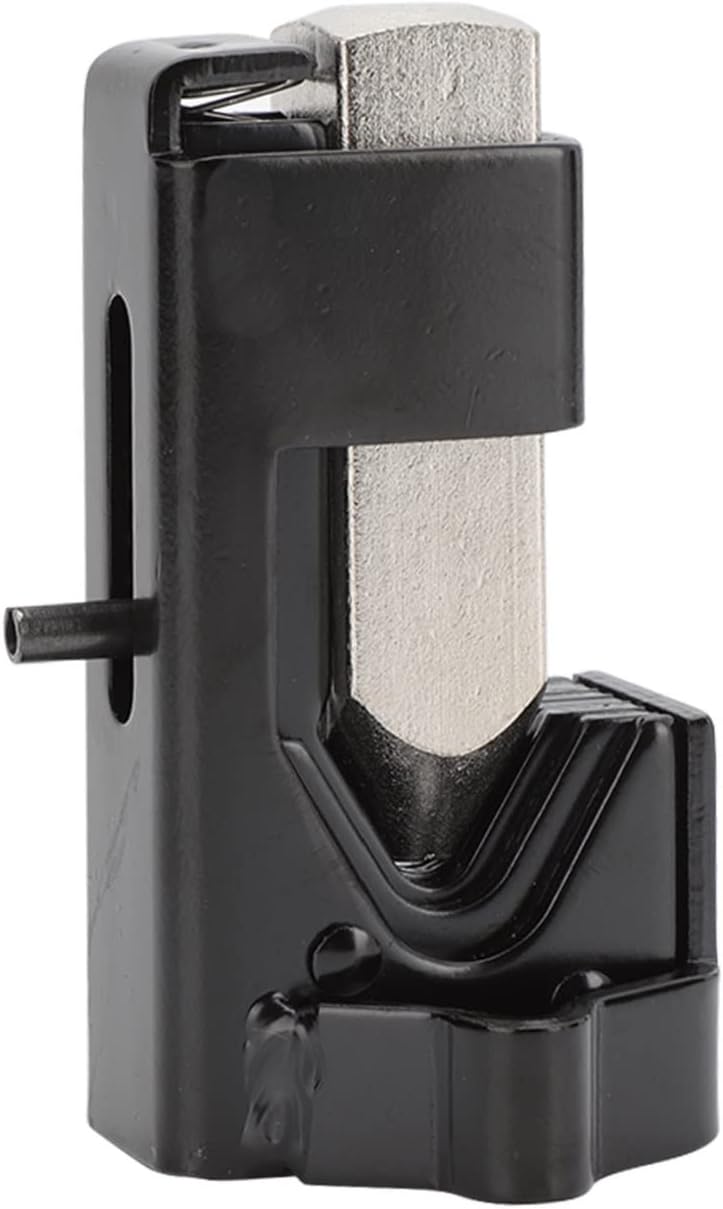
Use proper crimped connectors on the end. If you haven't got a crimper, you don't need to spend a fortune. I got one like this and for occasional use, it's fine

51pxBWdMH9L._AC_SL1500_.jpg

https://www.amazon.co.uk/Youyijia-C...ds=battery+crimper+tool&qid=1717661031&sr=8-2
 
I'd call it a problem. Bad practice, a weak point, a bodge.
If you were installing mission-critical electrics for the MoD, sub-sea comms or the railway network, or you don't trust your abiity to make a good connection, I would agree. But this is a leisure boat. There are many, many points of failure on a leisure boat that woudn't be tolerated on a MoD spec vessel. It all needs tobe kept in perspective.
 
Glad that one works, Stemar. I don't trust myself to really get that proper "closed up like a block of metal" effect without the hydraulic type or really big levers.
 
Top