Battle plan for flushing heat exchangers .

aerobat

Well-Known Member
Joined
6 Apr 2025
Messages
228
Location
Germany
Visit site
Hello gents !

I think i will go forward and flush my heat exchangers hoping to bring a bit down my temps ( kad44 ) .

Ideally i would like to do it while in winter storage and i think i have a plan how to setup the piping on the turbo and impeller pump hoses , dillute the decalcer and circulate it via a bilge pump .

The basic situation : boat is on dry , fully winterized with heat exchangers full of antifreeze .

Beyond obvious caution on ambient temps when replace my antifreeze with the decalcer i,m asking myself how i remove the decalcer after i circulated it . Unfortunetaly i struggle to put my boat on muffs and fire it up to flush with fresh water.

Any creative ideas ? I do not think its an idea to leave the decalcer for a period of time in the heat exchangers .

Just drain the raw water side ?

Is it generally a way better idea to do it on the water since i canninstantly fire up the engines and even warm them up before flushing ?

Btw : i plan this as decalcer :


Antikalk LIQUI MOLY 25047 Marine Antikalk anti calcare Kanister 5 Liter | eBay.de

Thanks for any hints !
 
It is on my list of tasks when the boat comes out the water, the starboard engine raw water turbo intercooler seems to have a restricted flow, as long as I keep the revs low it runs within the normal temp range, but push the revs up and the flow does not increase, then the silicone hoses collapse from the suction.
I did reverse flush the raw water circuit with red Lyme but still not enough flow, so the intercooler has to come off. I did try and put an inspection camera into the intercooler but there are too many bends
 
Thanks ! I watched the videos and they arw great how to setup the circulation .

But i,m asking myself how to flush the descaler mix out of the system when on land . I think only way is firing up on muffs
 
I flushed my engines a few years ago with Wessex Proflush. I used a large plastic storage box fitted with a small bilge pump. I connected the feed pipe to the pipe on the raw water strainer and I removed the pipe that injects water into the water cooled exhaust and that returned the water to the storage box. I circulated the water for a few hours. Then I discarded the water from the storage box and replaced it with fresh water. A couple of minutes running it flushed it. I did that twice
 
Just out of interest, the folks who have had most success with cleaning heat exchangers by flushing the raw water system are very patient folks.
In one case on a Princess 360 the flushing of each engine took 3 hours in one direction and then reversed for another 3 hours.
The results were impressive.
 
I flushed my engines a few years ago with Wessex Proflush. I used a large plastic storage box fitted with a small bilge pump. I connected the feed pipe to the pipe on the raw water strainer and I removed the pipe that injects water into the water cooled exhaust and that returned the water to the storage box. I circulated the water for a few hours. Then I discarded the water from the storage box and replaced it with fresh water. A couple of minutes running it flushed it. I did that twice

Great idea ! Flushing with fresh water to getvthe decacler out of the system when boat in on land sound reasonable !

Did you started the circulation it with the raw watwr circuit drained or full ? Currebtly i have antifreeze in the raw water curcuit
 
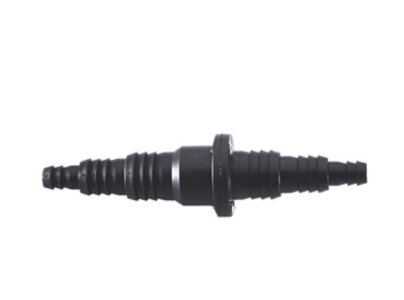
You’ll need to drain the raw water system. My boat was in the water when I flushed it. I turned off the raw water inlet valve, removed the pipe off the valve and connected it to the flushing pump using a one way valve that caters for various sizes of hose. See photo below. Once I removed the hose from the inlet valve, most of the water in the engine drained into the bilge. You will need some sort of container to catch the antifreeze. IMG_3194.jpeg
 
You’ll need to drain the raw water system.

Whats wrong with putting the decalcer undiluted into the container and start circulating via pump on a filled system ? It should mix after short time with the raw water in the heat exchanger or am i missing something ?

Of course its probably not an idea to mix it with antifreeze
 
Well if your boat is winterised, I’m guessing that you have either drained your raw water system or put antifreeze into it. If you remove the inlet pipe from the skin fitting, you will probably lose the antifreeze into the bilge. Or if it’s full of antifreeze, you will be mixing the Descaler with antifreeze and I’m not sure that is a good idea. The Descaler I used was €100 for 5 litres so I wanted to be sure that it worked
 
Well if your boat is winterised, I’m guessing that you have either drained your raw water system or put antifreeze into it. If you remove the inlet pipe from the skin fitting, you will probably lose the antifreeze into the bilge. Or if it’s full of antifreeze, you will be mixing the Descaler with antifreeze and I’m not sure that is a good idea. The Descaler I used was €100 for 5 litres so I wanted to be sure that it worked

Yes , but assuming you are on the water .

Why not just put undiluted descaler into the container and let it mix by circulation with the seawater ( assuming you are in fresh not salt ) ?

I currently have antifreeze in , i agree mixing it with antifreeze is not a good idea , just asking for best options
 
Do you mean by running the engine? If so you’ll just dump out your descaler through the exhaust. The idea is to circulate it through the raw water system many times over a few hours. I think you may be confusing your raw water and closed cooling system. The container on the engine is a header tank for the closed system.
 
Do you mean by running the engine? If so you’ll just dump out your descaler through the exhaust. The idea is to circulate it through the raw water system many times over a few hours. I think you may be confusing your raw water and closed cooling system. The container on the engine is a header tank for the closed system

No , i mean while being on the water and the raw water circuit filled with ( canal ) water , connecting the hose on the turbo to the bilge pump , the left hose on the strainer to the container , fill the container with 5 litres of pure descaler and just start the pump . Why drain the raw water system first and put a mixture in the container ? The descaler should mix with the canal water during the circulation or not ?

I,m talking the raw water side , not the fresh water ( coolant ) inner circuit .
 
Think we have crossed wires here. You originally said your boat was ashore and the engines were full of antifreeze.


Thats currently true . Now on land with antifreeze.

I,m just thinking if its best to do it while on land or to wait when in water .

question was if its indeed needed to drain the raw water system first when doing it on water . A further benefit on water is to flush out the decalcer by just firing up the engines after it has done its job .

On land i will struggle to find a hose supply to fire up on muffs to flush the decalcer out but i might do it with the bilge pump in the container by filling with clear water after the job .

Benefit on land : i have now more time and not that sinking feeling by disconnecting the strainer hose which is damn close to waterline .
I have no seacocks for main cooling
water supply coming from the drives . Its a pita volvo does not install it by default .

Sorry for confusing or not clearly explaining !
 
Top