Batteries in parallel

Bouba

Well-Known Member
Joined
6 Sep 2016
Messages
47,915
Location
SoF
Visit site
When you are using twin terminal batteries.....batteries with a conventional round post plus a screw post....is it considered best practice to connect everything to the round terminals, including the parallel cables....or use the screw terminals for the parallel cables and the round terminals for connecting to the boats electrics. Or no difference ?
 
When you are using twin terminal batteries.....batteries with a conventional round post plus a screw post....is it considered best practice to connect everything to the round terminals, including the parallel cables....or use the screw terminals for the parallel cables and the round terminals for connecting to the boats electrics. Or no difference ?
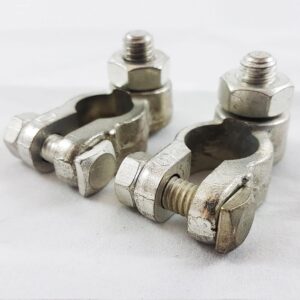
No real difference, but i prefer to use the threaded posts for everything, rather than clamps with studs on them (like below), one less joint.

bt10-pair-300x300.jpg
 
When you are using twin terminal batteries.....batteries with a conventional round post plus a screw post....is it considered best practice to connect everything to the round terminals, including the parallel cables....or use the screw terminals for the parallel cables and the round terminals for connecting to the boats electrics. Or no difference ?

The threaded studs are much better, I don’t really know why we even have the the round posts other than legacy reasons.
 
Can you mix them up....take a cable with a clamp on only one end....and connect the other end to the other battery’s threaded stud ?
 
Can you mix them up....take a cable with a clamp on only one end....and connect the other end to the other battery’s threaded stud ?
Dont see why not, though in general I dislike the trad battery clamps so i'd avoid using them unless I had a good reason not to.

I think to make the plates you could possibly hammer copper pipe flat and then drill holes in them. Thats what I might do anyway, because I have some, but I'm a bit of a bodger. You'd have to check the wall thickness gave enough cross sectional area for the current to be carried

If your battery box isnt protected enough (or even if it is) you could put tubing or shrink wrap tubing over the copper pipe/plate
 
Last edited:
If you have to.
I don’t have to....but it might be convenient when I put the batteries in...but is there any reason why this wouldn’t be ‘best practice’ ?
The problem is that my cable already have a clamp on one end....and going to a stud means they don’t have to stretch quite so far...otherwise they go to a stud on a clamp on a post...which you weren’t impressed with 😜
 
I don’t have to....but it might be convenient when I put the batteries in...but is there any reason why this wouldn’t be ‘best practice’ ?
The problem is that my cable already have a clamp on one end....and going to a stud means they don’t have to stretch quite so far...otherwise they go to a stud on a clamp on a post...which you weren’t impressed with 😜
If the ends have clamps on them that's OK. If they have lugs, use the studs.
 
Its not the connector that's important - its the contact area of the connection and how secure.
Well, Yeh.

The studs are inherently more secure, as well as being a universal fastner type.

If the unthreaded, tapered-to-slip-off, deformation-dependent, legacy round-post battery clamp connectors didn't exist I doubt we'd have much reason to invent them.
 
Top