vyv_cox
Well-Known Member
As you probably understand by now you are unlikely to convince many here about that.It's definitely looking like it's a real good idea to buy a new Lewmar CQR, (They make a stainless and a galvanised version).

As you probably understand by now you are unlikely to convince many here about that.It's definitely looking like it's a real good idea to buy a new Lewmar CQR, (They make a stainless and a galvanised version).


So what are your trio of anchors?
A whole new debate here about your choices!!

I'm planning on using some rebar and some poundland garden chain for overnight anchoring.
I have also emailed the RNLI so I can purchase an anchor as they are the only ones that seem to work straight from the decks of a lifeboat.


No trolling from me, just the facts.Alas you have no idea about how the inshore or offshore RNLI operations function, or about the nature of my own previous armed rescue operations and how they were arranged or carried out.
Most but not all offshore boats spend far more time fairly close, (Sometimes very close, as they carry their own RIB), to the shore backing up local inshore boats, or conducting searches at night or in bad weather in particular. When the weather is really bad, the inshore RIBS can't carry out a S&R task outside of the local harbour or bay area. Obviously it varies a lot from station to station. Some places most shouts are for incidents fairly near the station that can be dealt with by one of the RIB's and the offshore boat is not used too often during the day, unless it's for towing etc. Other stations might not have any tourist beaches, or private boaters active near their station, and most shouts are offshore. The offshore boats seem to be capable of carrying out almost any type of inshore rescue, and if the depth is an issue, don't hesistate to launch their own small RIB.
So an Offshore boat must be capable of double anchoring in any type of bottom, or any depth in heavy weather. In my own case, I never waste engine hours or fuel when just killing time waiting for sunrise, or an update on where to start a search. I'm also rather careful about close in searches for capsized boats at night, because even the best crew, some small boats and debris can be difficult to see and the boats I used to be on, did not have fully recesed enclosed props, so they were vunerable to larger fishing nets.
I'm definitely not building a plastic rag and stick boat, or a small gin palace, I'm building a long range rescue or offshore fishing boat for 3rd world countries where the fishing boats double up as rescue boats. Fuel economy is very important, as it the ability to beach the boat. They also need to be OK to live on, as most small villages don't have a marina. The bolt on fold down A frame mast, (In my fathers garden at present), and optional square or lateen rig, (Four 20ft thick walled alloy scaffolding poles). In the longer term, I hope a second production version can manufacture with a steel hull, but similar topsides and interior, and they would be available for any type of customer to purchase, even canal boaters, as my boat is just inside the limits. Some private customers do want a self righting, beachable and almost unsinkable, (Water tight bulkheads and stuffed locker floatation).
PS: The oil rig on station rescue, Pilot boat services, RNLI, USCG, TNLI and serious offshore fishing boats who all anchor up on occasions, (Some more than others), all use very similar anchors and associated gear, because they all know nothing about anchors or anchoring, and nothing they use in equipments terms could be of any use to a private boat in bad conditions. So it's very wrong of any private rag and stick or gin palace clown to use a genuine CQR, a Lewmar Danforth, or an Admiralty fishermans in particular. As a private boater you should never bother to have 2 anchors rigged and ready on all chain rodes with long 3 ply snubber lines to an expensive chain hook. The TNLI who love to do drag anchoring, (Out of limits in scope terms), just to save fuel, have no clue about anything!
Hope all the trollers who never seem to add anything like an interesting link or intelligent well informed comment happy !!!
These couldn't possibly work. Surely you need a "genuine Lewmar CQR" version to successfully open your beer bottleSome of the comment in this thread has me thinking again about my array of anchors 'for all conditions'.
I've acquired these for round-the-cans racing, where weight-saving is wanted....
What d'you think?

No trolling from me, just the facts.
Re your comments on ‘plastic boats’ and how the rescue services know what they’re talking about.
The latest RNLI boats are composite construction. Resins and Glass with bits of carbon in high stress areas. In other words just like many sailing and motor yachts.
The RNLI now use Spade anchors.
And my personal experience. We used to have a CQR anchor. It frequently didn’t set well and it dragged occasionally. We changed to a Spade anchor and 99.9% of the time it sets instantly. It’s never dragged yet (and I’m writing this while anchored on churned up sand where we’ve been for a few days. ) I’ll never go back to a CQR anchor. Why would I?
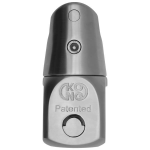
PS Horror of horrors we also use a swivel. (A Kong one if anyone is interested.)
There is a story of some bright spark who, when the surveyor threw his anchor and chain over board (and it floated) said,
"There was no mention in what I read that said the anchor and chain had to sink!"
Jonathan
And my personal experience. We used to have a CQR anchor. It frequently didn’t set well and it dragged occasionally. We changed to a Spade anchor and 99.9% of the time it sets instantly. It’s never dragged yet (and I’m writing this while anchored on churned up sand where we’ve been for a few days. ) I’ll never go back to a CQR anchor. Why would I?
PS Horror of horrors we also use a swivel. (A Kong one if anyone is interested.)
). I believe production more recently was transferred to China (I suspect its cheaper than in Scotland). Not having verified this I have not seen a Chinese made 'genuine' ie Lewmar, CQR and have no idea if the Chinese model is a faithful copy of the original.. Re-sale value is zero.I can recall one commercial tuna boat that tried to anchor in 400m near my boat, but after their deck spool of 1km of thin orange Poly. had run out, they were still drifting.
I fear your knowledge of metallurgy is sadly lacking. Annealing any 300 series stainless steel is throwing money down the drain as they cannot be heat treated.I don't know of any boats that use the type of high tech C/F composite construction methods that the RNLI uses in Poole, that are not seriously expensive, (Roughly ten times normal plastic hull cost), racing boats. Some daft companies say they do, but when you look at their hull structure, it's just a cheap copy from Taiwan in one case I've seen for a yacht. Obviously I've spent time in the Poole offshore production facility and yard, so having seen their autoclaves and laminating shop, I can assure you the C/F content is a lot more than, "The bits in high stress area". Also they do not use Polyeseter resins, and the final result is stronger than steel, BUT is a real PITA to repair as it does delaminate if subject to a serious collision. If it has to be repaired, the entire panel has the be replaced in most cases.
I was deck hand and occasional skipper of Billfish Fever One, a Boston Whaler 31 that had the very latest high tech composite hull for the first operational trials from Peurto Mogan in the fair Isle of Gran Cannery. After about 6 months of fairly bumpy use, the hull delaminated so badly that the boat was declared a constructive total loss, resulting in a full refund for the owner.
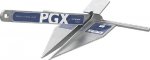
I have mentioned several times that the RNLI offshore boats carry a UK Spade, (Or Spade UK), which gets bent on a regular basis, (The shank is not much tougher than a Rocna), the yellow paint falls off and they rust far too quickly once the Zinc coating has been chipped. One of the reasons they might continue to use them after they are hot dipped again, is that they seem to work well on a shortish scope, which is important as there is a limit to the length of chain that can be carried before it degrades the max speed of the boat, (They are all semi-displacement hulls, so fairly weight sensitive in performance terms). The offshore boats also carry a steel Danforth, (Looks like a Lewmar PGX), and an Admiralty pattern fishermans, (Probably an Oscillati from Italy). The inshore boats carry a Lewmar Delta, but I've not looked in the anchor locker of one to see if they have a secondary anchor, as I'm fairly sure they do on the larger RIBS.
Can you post pictures of the CQR's shank, as most CQR's are copies that do not function as well as the genuine STEEL CQR, (Or a new Lewmar CQR). If you do use a CQR, it needs more chain than a Spade, probably twice as much, it takes more time to set and sometimes more power in astern. In sand I often use a steel Danforth if I'm not going to set another main anchor, as they need half the scope.
I do use steel swivels on rare occasions where the instructions for the anchor or 3 anchor, (One land anchor), moor say that you must use one, or for deep water grapnels that tend to spin when caked in hard mud.
The Kong swivel is made of 316 stainless, a very Iffy steel in both poor shear strength and very low fatigue life. Fleabay have some cheaper versions that are made in India and very good copies, that are probably 302 or304 stainless that has not been annealed, which results in a dangerously low fatigue life. Sort of OK if it's for a secondary anchor where a sudden failure of the swivel pin is not going to ruin your whole day.
View attachment 150128
No photos available as my CQR was sold on years ago. (In retrospect this was doubly a good thing as it still had some value as people hadn’t realised how poor they are compared to latest generation anchors. It was a genuine forged one with made in Scotland on the shank.I don't know of any boats that use the type of high tech C/F composite construction methods that the RNLI uses in Poole, that are not seriously expensive, (Roughly ten times normal plastic hull cost), racing boats. Some daft companies say they do, but when you look at their hull structure, it's just a cheap copy from Taiwan in one case I've seen for a yacht. Obviously I've spent time in the Poole offshore production facility and yard, so having seen their autoclaves and laminating shop, I can assure you the C/F content is a lot more than, "The bits in high stress area". Also they do not use Polyeseter resins, and the final result is stronger than steel, BUT is a real PITA to repair as it does delaminate if subject to a serious collision. If it has to be repaired, the entire panel has the be replaced in most cases.
I was deck hand and occasional skipper of Billfish Fever One, a Boston Whaler 31 that had the very latest high tech composite hull for the first operational trials from Peurto Mogan in the fair Isle of Gran Cannery. After about 6 months of fairly bumpy use, the hull delaminated so badly that the boat was declared a constructive total loss, resulting in a full refund for the owner.
I have mentioned several times that the RNLI offshore boats carry a UK Spade, (Or Spade UK), which gets bent on a regular basis, (The shank is not much tougher than a Rocna), the yellow paint falls off and they rust far too quickly once the Zinc coating has been chipped. One of the reasons they might continue to use them after they are hot dipped again, is that they seem to work well on a shortish scope, which is important as there is a limit to the length of chain that can be carried before it degrades the max speed of the boat, (They are all semi-displacement hulls, so fairly weight sensitive in performance terms). The offshore boats also carry a steel Danforth, (Looks like a Lewmar PGX), and an Admiralty pattern fishermans, (Probably an Oscillati from Italy). The inshore boats carry a Lewmar Delta, but I've not looked in the anchor locker of one to see if they have a secondary anchor, as I'm fairly sure they do on the larger RIBS.
Can you post pictures of the CQR's shank, as most CQR's are copies that do not function as well as the genuine STEEL CQR, (Or a new Lewmar CQR). If you do use a CQR, it needs more chain than a Spade, probably twice as much, it takes more time to set and sometimes more power in astern. In sand I often use a steel Danforth if I'm not going to set another main anchor, as they need half the scope.
I do use steel swivels on rare occasions where the instructions for the anchor or 3 anchor, (One land anchor), moor say that you must use one, or for deep water grapnels that tend to spin when caked in hard mud.
The Kong swivel is made of 316 stainless, a very Iffy steel in both poor shear strength and very low fatigue life. Fleabay have some cheaper versions that are made in India and very good copies, that are probably 302 or304 stainless that has not been annealed, which results in a dangerously low fatigue life. Sort of OK if it's for a secondary anchor where a sudden failure of the swivel pin is not going to ruin your whole day.
View attachment 150128
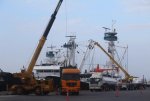
I don't believe commercial tuna fishermen are that daft. These are commercial tuna boats.
View attachment 150135
Jonathan
No photos available as my CQR was sold on years ago. (In retrospect this was doubly a good thing as it still had some value as people hadn’t realised how poor they are compared to latest generation anchors. It was a genuine forged one with made in Scotland on the shank.
The recently retired chief exec of the RNLI was my boss once upon a time. We’re still in touch. I’ve not heard of this ‘frequently bending of Spade shanks’ in RNLI service. Strange or is he HiFi g something from me?
The King swivel is the only swivel I know to pass independent tests for strength.
Perhaps you can explain your strange claim over the shear strength of stainless. Metal Mechanical Properties Chart: Shear Strength, Tensile Strength, Yield Strength | MachineMfg
I’ll allow the chart to speak for itself.
I have seen you make this ridiculous statement previously. If I had £1 for every metallurgical specimen I have polished I would be considerably richer than I am. Several hundred of these were stainless steel, many of them top quality specimens from gas turbines, LNG compressors and the like. Every single one of them polished to a bright, shiny finish. The only reason yours were grey was that nobody polished them.I have purchased ultra high quality stainless direct from the manufacturers main dealer, (Sheffield steel with dealer in Coventry), that has a fairly good shear and fatigue life figures. That type of stainless is light grey and does not shine ....
Very few anchor shackle tests last for more than the 6 months that is might take before a reasonable quality stainless clevis pin or bolt fails, but alas some folks are anchored or moored for far longer than 6 months.
The usual advice to such statements is that when you’re in a hole, stop digging. Im not a metallurgist but Vyv has pointed out, Stainless can’t be annealed and I trust his professional opinion totally.All of the figures for stainless are for high quality annealed or treated stainless, and that is never going to be the type you are buying when you get a copy. It might well be applicable to the Lewmar anchors etc.
None of the steel figures are of interest if the copy is made of impure cast Iron, that could indeed be worse in some cases. It would be better to look at normal mild steel figures, then if you really do your homework, you will find out that cheap mostly Chinese or Indian stainless is a horror story of minimal shear and fatigue life.
Very few anchor shackle tests last for more than the 6 months that is might take before a reasonable quality stainless clevis pin or bolt fails, but alas some folks are anchored or moored for far longer than 6 months.
I have purchased ultra high quality stainless direct from the manufacturers main dealer, (Sheffield steel with dealer in Coventry), that has a fairly good shear and fatigue life figures. That type of stainless is light grey and does not shine and the bolts should have a metric fine thread, or if its an old one, Whitworth thread.
Lots of copies of the CQR say made in Scotland, and an old rusty cast Iron one is nearly worthless, as it's too expensive to galvanise again. The Force 4 copy is cheap enough to make anyone think twice about restoring a cast Iron or other rusty CQR copy.
Look back for more details of how you can ID a genuine steel CQR, the small raised plate with CQR on it that is on the side opposite the made in scotland and small K, seems to be difficult to copy. The real bad cast Iron copies don't seem to have the large shackle that is welded in place with a genuine CQR, or some good copies.
The one thing you should accept about the CQR and Danforth, is that the reason there are so many different copies, and in the case of the Danforth, a large number of companies making new versions, is that they are real class acts when used correctly, and will remain at the very top of the list for the safety orientated boater. Alas the rest of the boaters will continue to be brainwashed by the advertising and test con tricks into buying something that fails 180 degree veers test, bends its shank too easily or simple falls apart because the far Eastern stainles bolt has sheared or suffered a fatigue crack.
A little light reading about SS cracks etc:
05224G_Chapter14.pdf (asminternational.org)
Anchor swivel extract from the Practical Sailor article that Peeves listed:
In our view, it is unlikely that the swivel will reduce anything but a large number of twists, and these twists could be removed more safely and easily by slowing down the retrieval once the anchor clears the bottom. A slower retrieval also prevents the hydrodynamic force on an unbalanced anchor that might cause it to spin. In fact, anchor spin upon retrieval with a high-speed windlass is probably the most likely cause of twist, and is often mistakenly attributed to the windlass itself. Ironically, if your anchor rotates in a beneficial direction as it comes up, the swivel might actually prevent the anchors rotations from untwisting the chain.
Even when an anchor like a CQR or Delta is recovered at speed, I've never seen or heard of them twisting the chain. Lighter alloy anchors can sometimes cause a minor twist when hard mum is on only one fluke, but if you slow down or stop, it will unwind the twist.
The usual advice to such statements is that when you’re in a hole, stop digging. Im not a metallurgist but Vyv has pointed out, Stainless can’t be annealed and I trust his professional opinion totally.
The reason I have a swivel is to turn the anchor round the right way so it goes on my bow roller. It’s not because I want to get twists out of the chain. I might change to a boomerang device. Kong swivels are amazingly strong. Check the tests.
CQR anchors were good in their day (I used one for years) but changing to a Spade was a revelation. It’s SO MUCH better.