Anchor rode

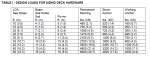
In the US most people go by ABYC H-40 Table 1, an industry standards group, rather than chandlery recommendations. Remembering that the WLL for rope is about 12% BS, the result is not that different.

View attachment 70945

You really don't need that. Both the 8mm chain and 14mm rope are way OTT for a 30'boat anyway. Nothing wrong in following the recommendation of a specialist supplier of anchoring equipment which tends to err on the generous side - as well as taking into consideration the practicality of splicing the rope into the chain.

BTW your table does not reflect typical L/B ratios of modern boats, nor does it include displacement.
 
Last edited:
You really don't need that. Both the 8mm chain and 14mm rope are way OTT for a 30'boat anyway. Nothing wrong in following the recommendation of a specialist supplier of anchoring equipment which tends to err on the generous side - as well as taking into consideration the practicality of splicing the rope into the chain.

BTW your table does not reflect typical L/B ratios of modern boats, nor does it include displacement.

a. Yes, 8mm is generous, but some people like that. I was just sharing information, not trying to correct. However, the table shows reasonable numbers for the OP's boat. I would go with 6mm G43 with 12 mm rope. Still overkill, but reasonable.

b. I will explain the origins of the table.

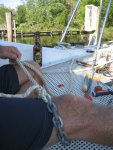
c. Splicing rope to chain is pretty trivial and should be ~ 100% strength. The OP should be able to Google "rope chain splice" and follow the instructions.

Chain+to+rope+splice.jpg

ABYC Table 1 has remained relatively unchanged for over 50 years. It assumes you will be anchored with all chain (no snubber) exposed to non-breaking waves and relatively shallow water, such that the chain is snapping tight occasionally. This is a VERY bad situation, but it is possible. The rule for rope is actually on a different table, since with rope the load will be about 1/3 of these values (but also with a lower % BS WLL). Displacement generally matters far less than windage so long as an adequate snubber is used, but that is a factor. Modern L/B is generally covered by the trend that these boats are lighter. The table does not speak to multihulls, but adding 10 feet is usually about right. I've done a lot of load cell testing.

The mooring column has been well proven in hurricane situations to be about right. Some fail, most do not. Curiously, the wind speeds are no longer listed. Previous versions gave "storm" as 42 knots and "mooring" as 60 knots.

Without question, the needs of any boat, and indeed the needs of a boat in different harbors, will vary by several times. There is also a considerable safety factor in these numbers, sufficient for worst-case anchoring situations and some deterioration over time. I was just sharing a consensus information source.
 
Last edited:
Top