Alternator, Batteries, diodes , solar, question.

pandos

Well-Known Member
Joined
15 Oct 2004
Messages
3,202
Location
Ireland, (Crosshaven)
Visit site
I have very old AGM batteries that have been used and abused and owe me nothing... 130 amp starter battery and 2x 85 amp house batteries.

In the last few weeks I had some issues with batteries not charging (house flat and just enough in the starter to start it up) bulb circuit on panel had break in wire and the solar panel stopped producing juice, I fixed the bulb wire and this charged both sets of batteries, I repaired an internal fault on my victron solar panel (no solder on joint just pushed into place)

Once fixed the panel has fully charged the house batteries. Thanks to my 1 /2 both switch I can use the house bank to start the engine, but the charging on the alternator does not seem to be all that it should be.

There is a split charge diode between the alternator and the house and starter batteries.

The solar panel controller is a PWM victron and only charges the house batteries. The starter battery is now practically dead .

(thanks to my rebuild the engine takes a fair wallop to turn it over but starts almost instantly)

I am going to the boat tomorrow for a few hours.

Questions, 1. Will, or is it likely that, the alternator would sense the house batteries are full and cut down it's output thus not charging the starter battery.

Question 2. Should I connect the solar panel to the same place as the alternator so it can charge both house and starter from each source. Or disconnect the house batteries from the alternator.

I always felt that the starter battery was the best of the three.

The alternator is a normal automotive model I bought in Spain in 2005 the batteries are from 2006... I usually have good instincts about the amount of battery power that should be there and I suspect charging is the issue rather than the starter battery....
 
Q1: Doubtful, the alternator is likely "machine sensed", ie no external sense wire.

Q2: I wouldn't connect the solar controller to the diode for two reasons, 1) it won't be able to sense the batteries "behind" the diode and 2) even if it somehow works you'll suffer from the voltage drop the diode will impose.

I'd suggest removing the diode, connecting the alternator output to the starter battery (the voltage drop through the diode will impact the alternator charging anyway). Leave the solar controller connected to the domestic battery and fit a Victron Cyrix between the two banks of batteries. This will mean both the alternator and the solar panels will charge both banks, irrespective of the 1-2-B switch position.
 
Q1: Doubtful, the alternator is likely "machine sensed", ie no external sense wire.

Q2: I wouldn't connect the solar controller to the diode for two reasons, 1) it won't be able to sense the batteries "behind" the diode and 2) even if it somehow works you'll suffer from the voltage drop the diode will impose.

I'd suggest removing the diode, connecting the alternator output to the starter battery (the voltage drop through the diode will impact the alternator charging anyway). Leave the solar controller connected to the domestic battery and fit a Victron Cyrix between the two banks of batteries. This will mean both the alternator and the solar panels will charge both banks, irrespective of the 1-2-B switch position.
Many thanks for that reply. I never heard of a Cyrix before.

There is very little loss across the Diode the system has been fine for years until I added the solar, but I'll pick up a Cyrix and give it a shot...
 
Many thanks for that reply. I never heard of a Cyrix before.

There is very little loss across the Diode the system has been fine for years until I added the solar, but I'll pick up a Cyrix and give it a shot...

Split charge diodes usually lose about 0.7V. I can't see that the solar will have caused an issue, but the Cyrix will charge the engine battery from solar as well as the alternator.

How much solar do you have?

I just noticed how old your batteries are, 15years ? I'd be surprised if they are still very good, certainly should be tested.
 
Split charge diodes usually lose about 0.7V. I can't see that the solar will have caused an issue, but the Cyrix will charge the engine battery from solar as well as the alternator.

How much solar do you have?

I just noticed how old your batteries are, 15years ? I'd be surprised if they are still very good, certainly should be tested.
The solar panel had loose connections and resulted in completely flattening the house batteries over a few months lockdown, (combination of gas detector and solar controller with no input from panels) the start battery held up for most of a year.

The panel is an 80w rigid mounted on an arch.

Batteries are old and I accept that they cannot be as good as new but they were all taking and holding charge when plugged in to mains, (last time was about 6 weeks ago...)and the house bank seems fine now that the solar is sorted and the bilge pump is not cycling.

(My current mission is to get things right for next year, but I am beginning to feel like Sisyphus)

I will probably splash out on new batteries next year, existing are Squadron Energy AGMs which are not made anymore so I'll be looking for recommendations.
 
Do you think new batteries would have healed the the faulty panel issue, or the alternator circuit going bad, or the bilge pump cycling?..
No, but they would help prevent future issues, especially as the weather gets colder. Most starter batteries seem to die in autumn/early winter, because they could cope with the low load needed to start an engine in warm weather, but haven't got the puff to provide the extra for a cold weather start.

As a fully qualified tightwad, as long as a dead battery would only cause minor inconvenience, I could be tempted to wait but, if it matters, I'd change the starter battery as soon as the other issues have been sorted. Incidentally, if it's a normal yacht engine, I'd be tempted to get a smaller starter battery - maybe 80 AH as long as it's got the right CCA , and bigger domestics.

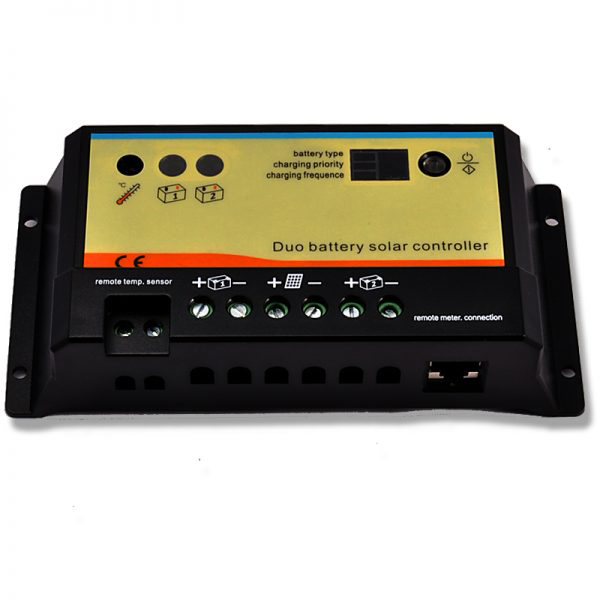
FWIW, I had one of these on Jissel
EPSolarDuo-600x600.jpg

EP Solar Duo-Battery Solar Charge Controller 12/24v 10A. £33.30

Cheap and cheerful, but it just worked. I set it to charge the starter battery until it was full then switch to the domestics, on the basis that I could live with dim lights, but I really wanted the engine to start.
 
No, but they would help prevent future issues, especially as the weather gets colder. Most starter batteries seem to die in autumn/early winter, because they could cope with the low load needed to start an engine in warm weather, but haven't got the puff to provide the extra for a cold weather start.

As a fully qualified tightwad, as long as a dead battery would only cause minor inconvenience, I could be tempted to wait but, if it matters, I'd change the starter battery as soon as the other issues have been sorted. Incidentally, if it's a normal yacht engine, I'd be tempted to get a smaller starter battery - maybe 80 AH as long as it's got the right CCA , and bigger domestics.

FWIW, I had one of these on Jissel
EPSolarDuo-600x600.jpg

EP Solar Duo-Battery Solar Charge Controller 12/24v 10A. £33.30

Cheap and cheerful, but it just worked. I set it to charge the starter battery until it was full then switch to the domestics, on the basis that I could live with dim lights, but I really wanted the engine to start.
That's an interesting thing but I think I'll go with the Cyrix.

Agree that batteries will fail as more umph needed thicker oil colder weather etc...but if the system is otherwise not robust weaker batteries have an advantage...and as I will be local until next season best to fix the infrastructural issues and then upgrade batteries next year if required and if feasible... (Certainly do not want to buy old batteries now (sitting in warehouse since pre covid and leave them sitting until next summer or possibly face covid 22 next year....)
 
No, but they would help prevent future issues, especially as the weather gets colder. Most starter batteries seem to die in autumn/early winter, because they could cope with the low load needed to start an engine in warm weather, but haven't got the puff to provide the extra for a cold weather start.

As a fully qualified tightwad, as long as a dead battery would only cause minor inconvenience, I could be tempted to wait but, if it matters, I'd change the starter battery as soon as the other issues have been sorted. Incidentally, if it's a normal yacht engine, I'd be tempted to get a smaller starter battery - maybe 80 AH as long as it's got the right CCA , and bigger domestics.

FWIW, I had one of these on Jissel
EPSolarDuo-600x600.jpg

EP Solar Duo-Battery Solar Charge Controller 12/24v 10A. £33.30

Cheap and cheerful, but it just worked. I set it to charge the starter battery until it was full then switch to the domestics, on the basis that I could live with dim lights, but I really wanted the engine to start.
I've got one of those, too - it works very well, although i've set mine to favour the domestics!
 
Top