AIS via Satellite

[2574]

...
Joined
29 Nov 2002
Messages
6,022
Visit site
I’ve noticed a lot of this on MarineTraffic of late:

ais%20sat.png


is this a normal AIS transmitter (therefore VHF) being picked up via a low orbit satellite or is it a special AIS transmitter sending signals to satellites?
 
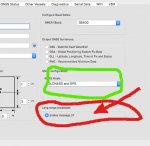
Class A transmissions can be picked up by satellite but it is a slightly shorter part of the message with truncated details (such as position).

Some companies have offered a special channel for reception of Class B by satellite but this needs a special transceiver.
 
It also depends on the transmitter power. Class A has a higher transmitter power than class B.
There is also a new class B+, which has a higher transmitter power, but the only one I could see on the market now is a Digital Yachts box, which fits between the VHF and the antenna.
But I guess it's only a matter of time before it becomes an option on VHF hand sets.
 
is this a normal AIS transmitter (therefore VHF) being picked up via a low orbit satellite or is it a special AIS transmitter sending signals to satellites?

Many AIS transmitters are set up through "ProAis" software, ClassB+ have the option of enabling "Message 27" which should make the boat more "visibile" to satellites. The antenna should radiate up in the sky too... Simple B are sometimes received too, but very unconsistently.

Info gleaned elsewhere, I have not done it myself (and TBH would not do it)
 

Attachments

  • ais sat.jpg
    ais sat.jpg
    58.1 KB · Views: 35
I’ve noticed a lot of this on MarineTraffic of late:

ais%20sat.png


is this a normal AIS transmitter (therefore VHF) being picked up via a low orbit satellite or is it a special AIS transmitter sending signals to satellites?

Little bit of thought .... VHF / AIS is basically line of sight range ... OK - we can usually get a bit more than that especially when masthead mounted antenna.... and atmospheric conditions.

So how do AIS results get shown for vessels offshore ? Whether A or B .... it comes down to satellites.

With regard to B AIS signal ... until recently - B power output was seriously lower than A (A is usually 12.5W) ... but B was then given a boost in power in later equipment. It used to be 2W ... but then increased to 5W. Even with the increased output - you can see that for sateliite to pick up a B signal - its much weaker and harder than A. This explains the relative lack of yottie results on such sites as Marine Traffic etc.

My work involving ships cargoes - means I am following vessels across oceans ... and without Sats picking up the AIS data - life would be a pain !!
 
Last edited:
My understanding you need to sign up with one of the support companies (pay the fee) and the transceiver need to be SOTDMA. That's info with the ONWA equipment.
 
For anyone interested ... Onwa already on market for significant time with Class B+ AIS transceiver in plotters. In fact the older Class B lower power is still available as option.

Just commenting ...
 
So - is the main limitation on an AIS signal being received by a satellite just the power of the transmission?

can a "normal" class B be received by satellite occasionally.., or must it be B+.., and also sending message 27?
 
Class A is not 'always' received. Background noise makes a huge difference (open ocean much better). Message 27 has a much better chance of getting through (not really sure why but probably shorter and less attenuated - need a techy to answer).

Power is essentially it. SRT did have a system using a side channel/different frequency when partnered with one of the satelliete companies but that was only on thier AIS tracker product (and has lapsed).
 
Any AIS that uses ProAIS or ProAIS2 (including Raymarine) is made by SRT Marine Systems, whose own brand is Emtrak.

Yes, i'm aware of that (i am an official Emtrak dealer).

My points were, B+ is an option on all B900 series AIS (B95x)

All AIS are in very short supply, as are VHF radios, due to a chip shortage.
 
Last edited:
How am I suposed to know if an AIS Transceiver is a class B or class B+ ?
I looked a the Raymarine AIS 700 Transceiver, it says it's a class B.
It also says it's the Latest SO-TDMA networking.
Does that mean it's a class B+ ?
To someone not up to speed with all the recent buzz words, it doesn't mean that much.
I've had a class B transceiver since 2007, and I'm considering an upgrade. It makes sense to me to get the most recent spec'. Preferably a VHF set incorpprating a class B+ AIS
So I'm exploring whats available.
 
Class A is not 'always' received. Background noise makes a huge difference (open ocean much better). Message 27 has a much better chance of getting through (not really sure why but probably shorter and less attenuated - need a techy to answer).
Ok, I looked it up, and as far as I can ascertain the difficulty in receiving AIS by satellite has never been the transmission power, but the clutter - lots of signals in high density areas, and also the large number of ships within the satellite footprint interfering with each other.

Consequently two new radio channels have been allocated to message 27, which is transmitted less frequently - only every 3 minutes, provided the ship is not within range of a base-station. It is assumed that base stations will be operating in areas of high traffic density (near me markers delimitating a traffic separation scheme are shown on AIS, for example) and that it's not necessary for satellites to also capture these AIS transmissions, Therefore the countdown timer for transmitting message 27 will be reset back to 3 minutes whenever a base station is heard (message 4 is reserved for base stations), and thus ships do not transmit message 27 when they're in range of base stations.

AIS is transmitted at 9600 baud, which means that a single bit is sent in just over 0.1 milliseconds; a normal AIS message is nominally 256 bits, or about 25 milliseconds, in length. Hence there are 2250 AIS transmission slots in a minute - these slots must presumably be coordinated by GPS time (accurate to 3 nanoseconds), to ensure that all ships transmit in their own AIS slot.

However, AIS messages from a ship on the nearest edge of its footprint arrive at the satellite slightly sooner than those from a ship at the far edge of its footprint. For a satellite orbiting 1000km above the earth (the highest orbit in use for this) the difference is about 9 milliseconds - the time it takes for 87 bits to be transmitted. Hence message 27 is shorter by 96 bits (to allow a bit of extra wiggle room) to ensure that the delayed message from a distant ship does not stomp on a message received from a nearer ship using the next time slot.

Ships which are nearby and can hear each other's AIS will never choose the same time slot, and thus never stomp on each other's transmissions, but when they're far apart they can choose the same time slot and cause this problem. But the shorter message 27 ensures that interference can't also happen when they're transmitting in adjacent slots.

In order to make message 27 shorter the timestamp is omitted - "The receiving system is expected to provide the time stamp when this message is received."

It's taken me about 3 hours to figure this out from the slightly abstruse documentation and summarise it. I think I got it all right, but I'm not sure. I welcome any corrections.

Sources:
 
Top