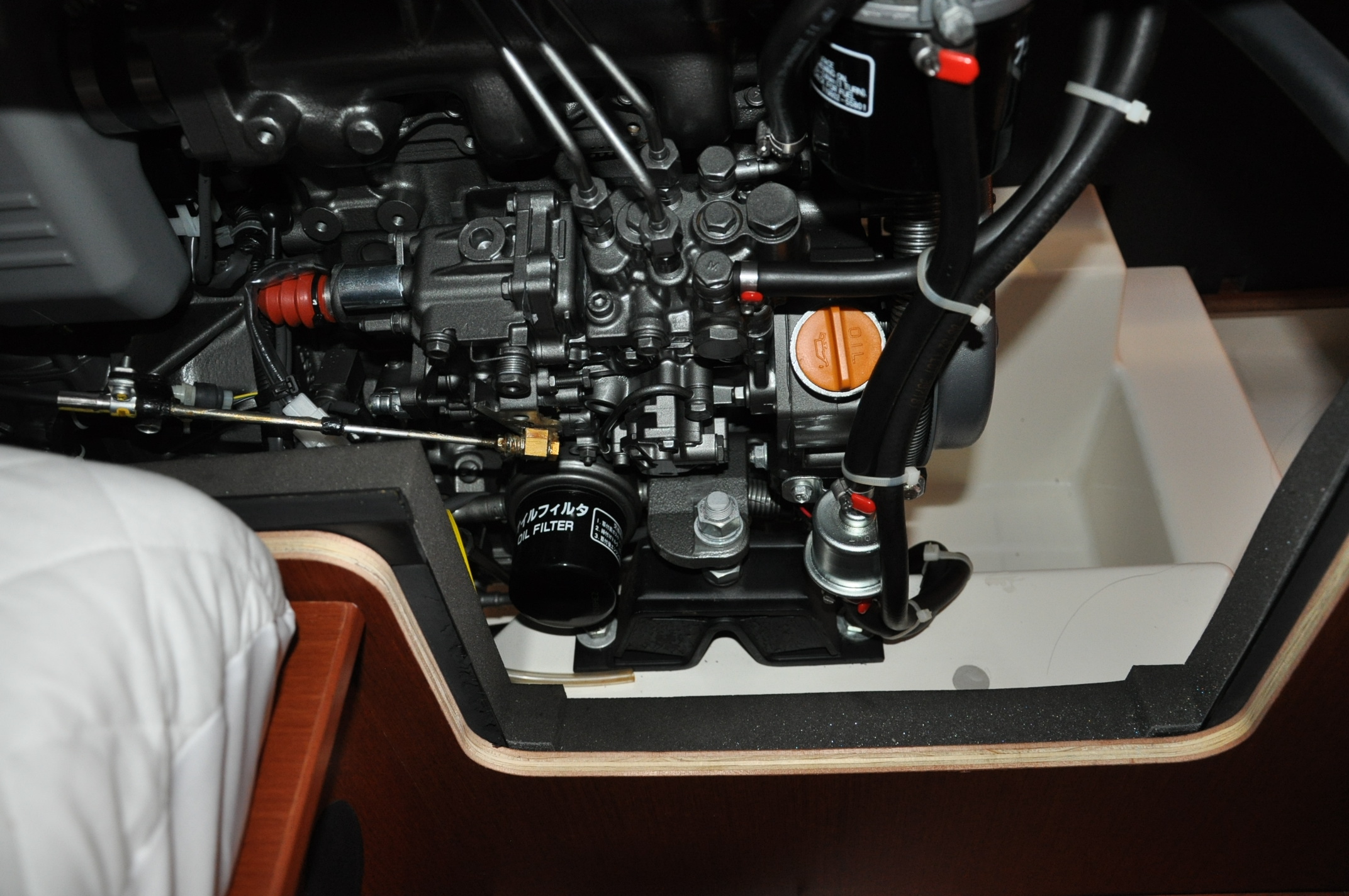
A clean engine vs a corrosion free engine?

Anyone tried a high-temp spray on wax, like this sort of thing...?
DINITROL Corroheat 4010 | Engine Compartment Protection Wax | Rust Prevention

In theory it should dry to a clear and non-sticky coating - creating a washable layer between any salt/moisture/dirt.

OTOH, paint does the same thing and is less likely to result in a sticky mess at some point in the future!
I would be very interested to know how you get along with this.

I have some CRC SP 400 I bought to spray on my tools to keep them from rusting. I am not aware that it is heat resistant but it is described in similar terms, a "waxy finish".

Spray SP 400 sparingly, otherwise it runs - it is as liquid as oil out of the can, but dries quickly; it has a very distinctive smell and a honey brown colour. It is sticky for a day or two, and then dries so that you can handle the tools without dirtying your fingers, continuing to protect them; the tools may need respraying occasionally after use, as the film seems to scratch off. Unfortunately, as SP 400 dries the honey brown turns to a grubby colour and the tools, although in fact well protected in tip-top condition, look quite the opposite - dirty and uncared for.

I'm not recommending SP 400 for protecting engines because, as I already said, I don't know that it is heat resistant. I add this because I'd guess the DINITROL might leave a similar grubby finish. You should buy a can and test it for us. I don't mind an engine that is grubby with protective oil, because that's better than corrosion. My engine is 25 years old, and I am unlikely to repaint it unless I lift it out of the boat for some major maintenance.
 
I painted my engine white as well as the bilge as it helps me to find any leaks easier.

This is an approach favoured by serious longer distance sailors - quick fault finding en route is much enhanced.

Modern boats should aim (IMHO) for dry bilges at all times to make routine inspection quick and simple. It also promotes a sweeter smell down below - helpful to guard against sea sickness amongst crew.

PWG
 
My engine bay was grubby as hell where previous owners where incompetent and lazy and decided to undo the drain screw on carb and empty out carb contents into bottom cowl tray without using a rag. Over time dust and such clings to it and you just cant see sh1t.

I removed all the grease and grime with (decorators and grease remover wipes)

And now all i do is a smear of ramonol on throttle cam and such moving places and all electrical components get a generous amount of Vaseline to prevent a short and water ingress.

For a 94 motor it looks brand spankin new!

With the pretence of look after you engine and your engine will look after you!
 
My engine is 69 years old and spotless. I call BS by the way, on the notion of blue-water sailors painting engines white..really?
The elephant in the engine-room is lighting, if you organise bright LED's shining on the machinery, whatever colour it's painted, you will have a happy life.
 
My engine is 69 years old and spotless. I call BS by the way, on the notion of blue-water sailors painting engines white..really?
The elephant in the engine-room is lighting, if you organise bright LED's shining on the machinery, whatever colour it's painted, you will have a happy life.
Well done good boat owner for definite! 69 years is incredible
 
Meticulously
DSC_0012.JPG
Mother of God that looks like a brand new engine. Im in awe.
I suspect it might not have looked as good as that when it was brand new . I see it has its own bed alongside on which to lie while cleaning the engine . A handy feature I have noticed on Yachts.
 
I use ACF50 on motorcycles with pretty good results, so may give it a try on the boat's engines.
ACF 50 - far superior product for preventing corrosion. Expensive though.

I don't use it on the engine but it gets used on electronics, connectors and anytihing vulnerable to corrosion.

Similar product is Corrosion Block which comes as a liquid and a grease and made by the same manufacturer of ACF 50.
 
I suspect it might not have looked as good as that when it was brand new . I see it has its own bed alongside on which to lie while cleaning the engine . A handy feature I have noticed on Yachts.
OK, I’ll admit to (mild) OCD but I do get pleasure from keeping it spotlessly clean. I have form in these matters. I remove my car road wheels once per year to clean and inspect the insides. Also, the under bonnet plastic gets a regular waxing ?

In my formative years, the 1970s, I was taught that cleaning something regularly was the best way to spot issues early. I’ve followed the advice all of my life. I have a toy (restored) car and the chassis has been powder coated. Before I put it away for winter hibernation I get underneath and clean the chassis. Oh dear, did I really confess to that .......?
 
I use ACF50 on motorcycles with pretty good results, so may give it a try on the boat's engines.

Ditto and I also use it for boat engines, it's also about the best penetrant I've come across. XCP is another one that's good and I use that for the bits on the bike that are more exposed to weather. It's more gloopy though so wouldn't use on boat engines...
 
There is Waxoyl of course (the so called clear , not the black version.
But it's a bit messy . I have used it on my bow thruster motor when I first bought the boat in 2014 and it has stopped light corrosion . The slightest smear on the sump perhaps.
Hammerite Waxoyl Clear 1LTR | Zoro UK
 
The previous owner had clearly sprayed lots of light oil on the engine (WD40 or the like) to keep the engine corrosion free. This has built up over the years and the engine is pretty grimy now in some places.

I am cleaning it up as I maintain various parts of the engine, touching up the paint also. I'm more in favour of keeping the engine light oil free and the boat dry - with a spotless engine it is immediately apparent when something starts leaking or looks amiss.

How do you look after your engine?
Another WD40 user. I've sprayed it on my boat engines for the last 35 years, keeps the corrosion at bay and never had a problem with it.

Www.solocoastalsailing.co.uk
 
My name is Fox and I'm a WD40-holic.
I have been using it for decades to sort out problems in my life, and I always have a tin within reach.
One in the boat, one in the car, and even a miniature in my pocket in case I get caught out.
I always know the nearest place to buy a tin of WD-40, even after hours, and I never travel to countries where it is banned.
It's such a weight off my mind to be able to discuss my addiction openly, but I'm looking for a reason to stop using WD-40 and I just can't see a way out...
 
ACF50 is my Snake Oil of choice, but I am prepared to be convinced otherwise by the next travelling showman.
 
Health warning: don’t do this! I worked in hospitals for all my career. After an accident during a hockey match I required a menisectomy. Whilst sitting in the waiting room pre-op I was listening to 2 patients discussing their problems. The old lady told the old gent that she had had a hip replacement which had been giving her gip. Her solution was to spray her leg with WD40 which cured the problem. I struggled to keep my composure!
 
Top