Yacht delivery Co's and Engines?

One of our skippers sailed his own yacht (with no engine and no electrics) from the UK to the Caribbean. He did this single handed. Rather him than me to be honest...

It's not a question of our ability to do it, it's a question of whether it is responsible or safe to do it. We do all we can to minimise risk to vessel and crew. Our yacht delivery contract states:

"On the agreed commencement date the yacht must be:

• In commission, clean and ready for sea;
• All machinery and gear fully serviced, maintained and in full working order;
• Standing and running rigging fully serviced, maintained and in good working order;
• Sails in good working order, of sufficient quantity and appropriate for the passage to be undertaken;"

To this end we would not set off on delivery with a known fault such as a seized engine.

I recommend that you discuss it with your insurance company. Even if you do find someone to help you, you may find that knowingly setting off with such an issue invalidates your cover.

Pete

I think Pete puts it very well. One thing that he doesn't mention, perhaps out of modesty, is that the professional delivery company have one other thing to consider - their own reputation. There may be no greater risk of things going wrong, but the newspaper headline starting, "Although the engine was seized solid..." if something does go wrong would do a delivery company's reputation no good at all.

In my first four decades of sailing I owned two boats with no engine, one with a Stuart Turner (which I threw out) and one with a very tired MD2 which overheated at the drop of a hat, so I am very used to sailing without an engine, but I am not depending on a reputation for prudence with other people's property...
 
Have you got a dinghy and outboard you can sling alongside to park it with? I used to use an 8ft hard stem dinghy and a 2hp outboard alongside my Folkboat and once it got going it was no problem at all.
 
Another problem could be that many marinas ban entering under sail. OK, you can do it without endangering other people's pride and joy, but a lot of people can't (I'm not too sure of my own ability!), so it isn't an unreasonable ban. In any case, most of the ones I'm familiar with have narrow entrances and several sharp bends once inside; feasible for a small sailing vessel or dinghy but not the sort of thing the OP describes.

In the days when few yachts had engines, it was accepted that knocks and bangs would happen, and the boats were made of wood, so most such knocks could be made good with a bit of putty, some sandpaper and a lick of paint. But gel-coats are somewhat harder to patch up.
 
In the days when few yachts had engines, it was accepted that knocks and bangs would happen, and the boats were made of wood

Also marinas weren't common in the first place :)

I have a 1930s pilot book which describes only one place we would recognise as a modern marina - described as a "marine garage" because the modern term hadn't been invented yet. It's clearly a complete novelty to the author. He praises the convenience of the arrangement once moored, but treats getting in or out as a major challenge and advises waiting for slack water to attempt it.

Pete
 
Also marinas weren't common in the first place :)

I have a 1930s pilot book which describes only one place we would recognise as a modern marina - described as a "marine garage" because the modern term hadn't been invented yet. It's clearly a complete novelty to the author. He praises the convenience of the arrangement once moored, but treats getting in or out as a major challenge and advises waiting for slack water to attempt it.

Pete
As you say! I started sailing in the late 50s and early 60s, and there were certainly no marinas on the east coast of Scotland in those days; you tied up alongside a harbour wall, mostly. I think marinas existed, but only in places like the Solent. Climbing a slippery iron ladder with a miniature dachshund under one arm was great fun!
 
I think Pete puts it very well. One thing that he doesn't mention, perhaps out of modesty, is that the professional delivery company have one other thing to consider - their own reputation. There may be no greater risk of things going wrong, but the newspaper headline starting, "Although the engine was seized solid..." if something does go wrong would do a delivery company's reputation no good at all.

In my first four decades of sailing I owned two boats with no engine, one with a Stuart Turner (which I threw out) and one with a very tired MD2 which overheated at the drop of a hat, so I am very used to sailing without an engine, but I am not depending on a reputation for prudence with other people's property...
Good point about the reputation etc. A very tired MD2 you say? Funnily enough...;)
 
Another problem could be that many marinas ban entering under sail. OK, you can do it without endangering other people's pride and joy, but a lot of people can't (I'm not too sure of my own ability!), so it isn't an unreasonable ban. In any case, most of the ones I'm familiar with have narrow entrances and several sharp bends once inside; feasible for a small sailing vessel or dinghy but not the sort of thing the OP describes.

In the days when few yachts had engines, it was accepted that knocks and bangs would happen, and the boats were made of wood, so most such knocks could be made good with a bit of putty, some sandpaper and a lick of paint. But gel-coats are somewhat harder to patch up.

That's what bowsprits are for! (They've got an arrival pontoon and a workboat anyway.)
 
One of our skippers sailed his own yacht (with no engine and no electrics) from the UK to the Caribbean. He did this single handed. Rather him than me to be honest...

It's not a question of our ability to do it, it's a question of whether it is responsible or safe to do it. We do all we can to minimise risk to vessel and crew. Our yacht delivery contract states:

"On the agreed commencement date the yacht must be:

• In commission, clean and ready for sea;
• All machinery and gear fully serviced, maintained and in full working order;
• Standing and running rigging fully serviced, maintained and in good working order;
• Sails in good working order, of sufficient quantity and appropriate for the passage to be undertaken;"

To this end we would not set off on delivery with a known fault such as a seized engine.

I recommend that you discuss it with your insurance company. Even if you do find someone to help you, you may find that knowingly setting off with such an issue invalidates your cover.

Pete
Very interesting thanks for info.
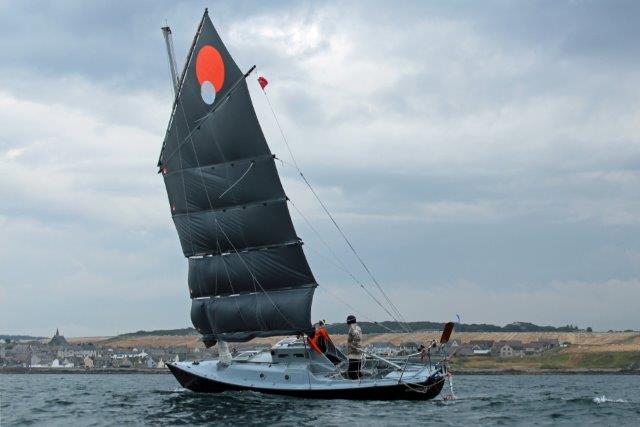
There are still sailing boats in use, which have never had an engine fitted because engines weren't invented back then, I casually wonder if they would be acceptable :p
 
311.jpg
 
She's certainly an interesting boat.

But the length of the North Sea? In winter? With that ould pirate...?

Could make a man turn to religion... or sumfink.
 
Very interesting thanks for info.
There are still sailing boats in use, which have never had an engine fitted because engines weren't invented back then, I casually wonder if they would be acceptable :p

Insurance wise no problem. Never had one doesn’t need one. Have one which doesn’t work is a deficiency.

I remember reading about some traditional schooners in Main. which take passengers on sailing trips.
To comply with regs as traditionally built schooners they can’t have engines.
Put an engine in it’s no longer a traditional vessel and must comply with the rest of the modern regulations.
 
Nobody has asked the question- so i will
Why not get the engine sorted, then do the crossing.
Even if you have to take it out, truck it home , repair it & take it back.
1) It's a 45 yr old engine and spares are very expensive or unobtainable, and it's seized solid and the gearbox is also knackered.
2) The logistics would be an insanely expensive, time-consuming nightmare even if it was worth fixing.
3) It's a sailing boat, it doesn't need an engine.
 
You have 500 lbs of ballast there. Don’t ask me how I know that.

A point to keep in mind about engineless passages in winter is that because there are no sea breezes you get a calm or a gale with very little in between. Don’t ask me how I know that, either. Oh, and lots of darkness.
 
My two penny's worth .
I think the only real option the op has if he really want to move a engineless boat across the North Sea in winter months is find friends to help , with plenty of free time on there hands as it may be a while before they find a good window .
we heard from a One delivery company and I wouldn't expect any other to say any thing differently .
Although your insurance company says it ok , do bare in mind and I sure you have, there quite a lot of risks involved in the route and time of year and insurance company are known to find ways out of paying a claim .
Some years back I moved a boat from the kiel canal to Ipswich in Feb with an idea weather window forecaster ,
it didn't turn out to be and we was glad we had a engine to help battle each wave that stop us in our tracks .
What ever you decided I hope it works out for you ,
 
Last edited:
You have 500 lbs of ballast there. Don’t ask me how I know that.

A point to keep in mind about engineless passages in winter is that because there are no sea breezes you get a calm or a gale with very little in between. Don’t ask me how I know that, either. Oh, and lots of darkness.
Yes I'm going to miss the MD3, a Beta won't be the same.
I'm not going til late spring/ summer, so it will be a pleasure cruise.
Just out of interest I have a different attitude to some yachties about Gas/Oil fields:
1) When you are actually there, rather than looking at the chart, they are not as thick as trees in a forest but quite widely spaced, and more importantly:
2) If you do get into any trouble, there is always a rig Marconi man, or a well-equipped guardship full of bored guys, who would love the chance to help out. And all within range of a HH VHF with weak batteries. So it's a great place to have a mishap anyway.

(Last Christmas :disgust: we delivered a very posh yacht from Trondheim to England, and the rudder fell off by a gas field.
We heard the alarm go off on the rig, lights flashing and could just see them, running out on deck in the snow, struggling into their survival suits.. although our plastic fantastic wouldn't even have scratched the paintwork anyway..)
 
My two penny's worth .
I think the only real option the op has if he really want to move a engineless boat across the North Sea in winter months is find friends to help , with plenty of free time on there hands as it may be a while before they find a good window .
we heard from a One delivery company and I wouldn't expect any other to say any thing differently .
Although your insurance company says it ok , do bare in mind and I sure you have, there quite a lot of risks involved in the route and time of year and insurance company are known to find ways out of paying a claim .
Some years back I moved a boat from the kiel canal to Ipswich in Feb with an idea weather window forecaster ,
it didn't turn out to be and we was glad we had a engine to help battle each wave that stop us in our tracks .
What ever you decided I hope it works out for you ,

May or June not winter, just thinking ahead.. thanks for the good wishes. I don't see it as a big deal, was just asking about Delivery people in case I couldn't find anyone.. but that's looking unlikely :encouragement:
 
Yes I'm going to miss the MD3, a Beta won't be the same.
I'm not going til late spring/ summer, so it will be a pleasure cruise.
Just out of interest I have a different attitude to some yachties about Gas/Oil fields:
1) When you are actually there, rather than looking at the chart, they are not as thick as trees in a forest but quite widely spaced, and more importantly:
2) If you do get into any trouble, there is always a rig Marconi man, or a well-equipped guardship full of bored guys, who would love the chance to help out. And all within range of a HH VHF with weak batteries. So it's a great place to have a mishap anyway.

(Last Christmas :disgust: we delivered a very posh yacht from Trondheim to England, and the rudder fell off by a gas field.
We heard the alarm go off on the rig, lights flashing and could just see them, running out on deck in the snow, struggling into their survival suits.. although our plastic fantastic wouldn't even have scratched the paintwork anyway..)

+1 about oil rigs - they are actually miles apart, and are very useful navigational markers in what would otherwise be miles and miles of North Sea. When coming down from Whitby to Lowestoft and still well off the platform, Amethyst platform very politely called me on the VHF to warn me that the tide was setting me too close to their exclusion zone - and I don't have AIS, so they had to a) track me on radar, and b) identify my lights to make a call starting "yacht heading south near Amethyst platorm". I altered course a few degrees, and all was well. I suspect that the watchkeepers on those platforms are glad of any break in their routine!
 
May or June not winter, just thinking ahead.. thanks for the good wishes. I don't see it as a big deal, was just asking about Delivery people in case I couldn't find anyone.. but that's looking unlikely :encouragement:


Well good luck with the trip, I am sure it will be a blast.
I have told my engineless story before on here so please bear with me:

----------------

" I'd met Geoff before but only to nod to. Remote boatyards are the preferred roost of older gents with wooden boats so nothing unusual about that, but I did recognise his boat as a Harrison Butler as I have a copy of Cruising Yachts. I had overwintered next door to him in the yard and we chatted. In fact, had we looked up, we could see Cremyll where his boat, Watermaiden, was built in 1939.

He was very impressed with the ragged collection of old Triumph motorcycles that I often arrived on and I passed him some information about early gearboxes that interested him. He told me he had 2 stoke Velocettes, of the 1930's vintage, at his home in the North East
He was having some engine trouble and I commiserated with him and said, with carefully restrained pride, that I had once sailed singlehanded from France without engine after some mishap. He was very interested and said he had to do similar himself and return home without an engine.
His view was:
“They are not much use at sea anyway and I was really lucky, the Plymouth Harbourmaster gave me a tow in, and at the start some fishermen towed me out. So it all went very well.”
We chatted on for a time then, as we parted, I asked:
“By the way Geoff, where did you get stuck without the engine?”

“Miami” he replied!


The last time I saw him he gave me tea on board. The boat was under cover and he was laying up for the longest time, there seemed an air of finality about it.

“You never know” I said, and he smiled kindly. "
 
Top