Wiring for Lifepo4

That's not good.
You could explain why.

Mega fuses have standard interrupt capacity of only 2kA. T-class fuses are typically 20kA. A 200-400AH LiFePo4 battery can produce 10kA and more when shorted.

The reason why this is different from lead is because the current produced in a dead short is inversely proportional to the total resistance in the circuit, and LiFePo4 batteries inherently have internal resistance more than an order of magnitude less than lead batteries. 0.2-0.5 milliohms per cell vs. 5-20 milliohms per cell with flooded lead batteries. So you can have an order of magnitude more current in a short circuit, than with a lead battery bank. This REQUIRES an appropriate fuse. You are playing with fire (literally) if you try to use Mega fuses with lithium. It's totally inappropriate.
 
You might be able to get away with mixing sizes of LiFePo4 batteries and/or with different cable lengths, but I would never do that. It might "work fine" but you will overworking one battery and underworking another, not fully charging one or more which screws with the cell balance, etc. etc. Just ick. It would be better to discharge disparate batteries sequentially, rather than paralleling them, provided the draw does not exceed 0.5C or whatever your batteries are happy with (EVE want you to do no more than 0.5 continuously).
Starting from scratch, with many different options open to you for sourcing the exact components you want? Yes, it would be very silly to mix and match.

I couldn't get the exact same cells when I wanted to expand my bank. It was two years and ten thousand miles later. So I looked up what happens when you mix and match. Turns out it's not really a big deal. Probably doesn't give optimal lifespan etc but I just want it to be safe, and to work. Which it does, very well.
 
You could explain why.
I could, but:

I was replying directly to Buck Turgisdon, who knows the difference, because he already bought a Class T fuse.


Mega fuses have standard interrupt capacity of only 2kA. T-class fuses are typically 20kA. A 200-400AH LiFePo4 battery can produce 10kA and more when shorted.

The reason why this is different from lead is because the current produced in a dead short is inversely proportional to the total resistance in the circuit, and LiFePo4 batteries inherently have internal resistance more than an order of magnitude less than lead batteries. 0.2-0.5 milliohms per cell vs. 5-20 milliohms per cell with flooded lead batteries. So you can have an order of magnitude more current in a short circuit, than with a lead battery bank. This REQUIRES an appropriate fuse. You are playing with fire (literally) if you try to use Mega fuses with lithium. It's totally inappropriate.
 
Last edited:
Starting from scratch, with many different options open to you for sourcing the exact components you want? Yes, it would be very silly to mix and match.

I couldn't get the exact same cells when I wanted to expand my bank. It was two years and ten thousand miles later. So I looked up what happens when you mix and match. Turns out it's not really a big deal. Probably doesn't give optimal lifespan etc but I just want it to be safe, and to work. Which it does, very well
If you got them cheap, why not?

I've read a lot of stories about different Frankenbank experiments, and most of them seem to work somewhat. And the worst LFP power system is going to be 50x better than the best lead, so . . .

But best practice gets the most out of all of the cells, so is certainly worth doing where possible.
 
If you got them cheap, why not?

I've read a lot of stories about different Frankenbank experiments, and most of them seem to work somewhat. And the worst LFP power system is going to be 50x better than the best lead, so . . .

But best practice gets the most out of all of the cells, so is certainly worth doing where possible.
For me it wasn't about cost so much as availability whilst on the move.

I did chicken out of putting a 60Ah in parallel with a 271Ah. It was very tempting, I have the battery day doing nothing, and there didn't seem to be anything fundamentally wrong with the idea. I decided not to because as the two batteries charged up at different rates, it was entirely possible that the big one would reach high voltage disconnect first, whilst the MPPTs, seeing the overall system voltage, would still be pumping out 60Ah+ on a sunny day. That would trigger the smaller battery to shut off charging as well, due to it being over current, and I wanted the MPPTs to generally be in control of the charging, rather than the BMS doing the shut off in anything other than an emergency. With the type of MPPT I was using, there was a very real risk of damage this way.

Maybe it would have been ok, but it was a bodge too far even for me.
 
For me it wasn't about cost so much as availability whilst on the move.

I did chicken out of putting a 60Ah in parallel with a 271Ah. It was very tempting, I have the battery day doing nothing, and there didn't seem to be anything fundamentally wrong with the idea. I decided not to because as the two batteries charged up at different rates, it was entirely possible that the big one would reach high voltage disconnect first, whilst the MPPTs, seeing the overall system voltage, would still be pumping out 60Ah+ on a sunny day. That would trigger the smaller battery to shut off charging as well, due to it being over current, and I wanted the MPPTs to generally be in control of the charging, rather than the BMS doing the shut off in anything other than an emergency. With the type of MPPT I was using, there was a very real risk of damage this way.

Maybe it would have been ok, but it was a bodge too far even for me.
Well, and the cells are so cheap now (and dare I hope that they will be EVEN cheaper a few years from now?), that it doesn't matter so much if you shorten their lives and have to buy new ones a few years hence.

Our whole mentality probably needs to change. How many decades I spent in terror that I would ruin my £2000 lead battery bank and have to shell out AGAIN for new ones, and then hump the 230kg or whatever of batteries out of and into the boat . . . .
And those were batts which IN THE BEST CASE would last 300 or 400 cycles, but usually 100 to 200.

Lead dioxide paste/spongy lead paste . . . for God's sake, that's 19th century Dr. Frankenstein's lab technology.

The reflexive comment "ack, you'll ruin your batteries!" is a lead battery thing. I need to try to rid myself of it.
 
An imperfect science, that's why companies are spending millions on looking for a replacement. What else in the 21st century becomes a bomb if over charged, overheated, frozen or damaged and which the fire service admit cannot be dealt with, other than letting the battery burn its self out. As stated an imperfect science, not trusted and that why the mobility scooter batteries had to be carried as hand luggage. That allows the pilots to get the plane back on the ground
ASAP when one of these time bombs goes off.
 
Same as carrying small Lithium batteries on as hand luggage, both are allowed.

Try taking a box full of Co2 cartridges onboard, same thing will happen.

You miss the point entirely. YOU cannot take 100Ah batteries onboard, any more then YOU can take lots of other things onboard, but, there are plane loads of LifePO4 batteries flying all around the World every day. How do you imagine that all of those Chinese cells/batteries (the majority originate from China) get all around the World, you think the fairies deliver them, or maybe that's what Santa does when he's not busy at Christmas.
Ships ????? Lorries ???? Cargo Trains ???? Vans and perhaps DHL type cargo planes (no passengers) if under proper supervision.
 
Yes......I use lithium, who doesn't, but I will not have any thing on board, especially bolted down batteries, that I cannot throw over the side. As I have said before try booking a couple of 100amp lithium batteries (any type of lithium) as air cargo on ANY airline. I never get an answer to this fact and it is always ignored. Perhaps the airlines are all wrong. The largest lithium battery I have on board is 5 amps.(laptop) and if this started " off gassing" then went into " thermal run-away", that would be a major problem. What would 200 amps be like.
Airlines classify lithium batteries as dangerous goods. I wonder why.
As someone who had to go through the very details Hazardous Goods certification to ship LiFePo4 batteries via Fed Ex (as I often make EVE cells in to battery packs for people) I can say that the regulations for air, sea or even land shipping are onerous and sensible but I can ship by air, sea or land if I meet them so sorry you are wrong. I think you can download most of the info from Fed Ex if you wish to check for yourself. LiFePo4 is a different class of goods to other Lithium ION chemistries and for a good reason.
 
As I have said before try booking a couple of 100amp lithium batteries (any type of lithium) as air cargo on ANY airline. I never get an answer to this fact and it is always ignored. Perhaps the airlines are all wrong. ...snip.... What would 200 amps be like.
Airlines classify lithium batteries as dangerous goods. I wonder why.

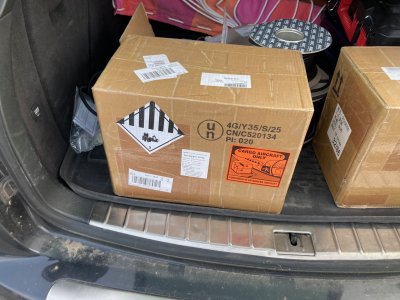
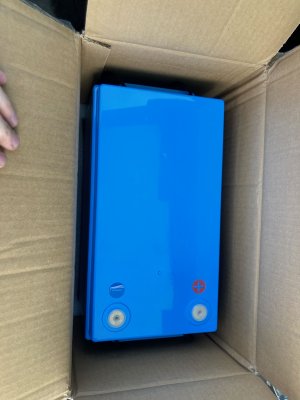
We regularly fly LiFePO4 batteries in, I just happened to have a photo of a 300Ah one on my laptop. I can take you a photo of the whole pallet if you like.
They have to go cargo aircraft only, but that's the same for a pallet of phones with lithium batteries.
 

Attachments

  • IMG_6729.jpeg
    IMG_6729.jpeg
    992.5 KB · Views: 6
  • IMG_6730.jpeg
    IMG_6730.jpeg
    739.1 KB · Views: 6
Just as a by the by; I recently found that class T fuses can be had for about £19 each if you look at commercial suppliers rather than paying for a BlueSeas from a chandler . I ordered 4 (well 5 to have a spare) and they arrived in 24 hours. I didn't want to pay for over priced Class T holders so I used a suitably rated power post at each end (you could also use just one power post and a bus bar post) so there is really no reason not to do the job properly.
 
You never fail to amaze me with your utter crap. You can carry a life jacket with two CO2 cartridges on any airline as hand luggage Try loading a 100 amp lithium battery as hand luggage and you will be physically removed from the plane if you do not leave voluntarily. How can a half intelligent person make a comparison like you have. Is a life jacket "dangerous goods" Try Youtube and search Lithium batteries gassing off, or there again perhaps you better not, so you can continue living in your fantasy unreal world.
Th only person quoting "utter crap is you". Are you familiar with the term 'unconsciously incompetent'?
 
Just as a by the by; I recently found that class T fuses can be had for about £19 each if you look at commercial suppliers rather than paying for a BlueSeas from a chandler . I ordered 4 (well 5 to have a spare) and they arrived in 24 hours. I didn't want to pay for over priced Class T holders so I used a suitably rated power post at each end (you could also use just one power post and a bus bar post) so there is really no reason not to do the job properly.
Link?
 
An imperfect science, that's why companies are spending millions on looking for a replacement.

No, its because lithium is expensive, and not as abundant as we'd like.
There's clearly money to be made if we can make batteries from a less expensive materials that can perform as well.

We heat houses, and cook with gas, which is far more dangerous than a lithium battery. We also use gas on boats. Presumably you only cook with meths, since you definetely won't be using an induction hob onboard.

Yes, a lithium battery can be dangerous, as can a gas installation, a diesel heating system, and even a bog standard lead acid system, that's why it needs to be installed appropriately.
Your airline example is a red herring, try getting on an aircraft with an 10kg propane cylinder or a lead acid battery and you won't be able to either.

I'll bet a lot more people have come to harm from gas systems and badly installed diesel heaters, then a lithium battery. And it won't even be close.

On the subject of room for fuses, the batter terminal fuses sold by Frogstar have an interrupt capacity of 10,000 amps at 14v.
Which I think is sufficient, someone correct me if not.
They're pretty compact.

https://cdn.shopify.com/s/files/1/1347/0997/files/300A_FUSE_CFM.pdf?v=1739196563
 
Last edited:
No, its because lithium is expensive, and not as abundant as we'd like.
There's clearly money to be made if we can make batteries from a less expensive materials that can perform as well.

We heat houses, and cook with gas, which is far more dangerous than a lithium battery. We also use gas on boats. Presumably you only cook with meths, since you definetely won't be using an induction hob onboard.

Yes, a lithium battery can be dangerous, as can a gas installation, a diesel heating system, and even a bog standard lead acid system, that's why it needs to be installed appropriately.
Your airline example is a red herring, try getting on an aircraft with an 10kg propane cylinder or a lead acid battery and you won't be able to either.

I'll bet a lot more people have come to harm from gas systems and badly installed diesel heaters, then a lithium battery. And it won't even be close.

On the subject of room for fuses, the batter terminal fuses sold by Frogstar have an interrupt capacity of 10,000 amps at 14v.
Which I think is sufficient, someone correct me if not.
They're pretty compact.

https://cdn.shopify.com/s/files/1/1347/0997/files/300A_FUSE_CFM.pdf?v=1739196563
Renogy do the same AIC terminal fuses and think them suitable as well .. BUT, its marginal - LiFePo can hit 20000 and T Class and NH exceed this . 99% of the time the terminal fuses will be enough ... in fact probably 99% of the time an ANL fuse will be fine but that 1% is where things can go wrong and NH and T class are easily available and cheap enough so why not do the full job ?
 
Renogy do the same AIC terminal fuses and think them suitable as well .. BUT, its marginal - LiFePo can hit 20000 and T Class and NH exceed this . 99% of the time the terminal fuses will be enough ... in fact probably 99% of the time an ANL fuse will be fine but that 1% is where things can go wrong and NH and T class are easily available and cheap enough so why not do the full job ?

The only verified case of the incorrect fuse causing actual damage was where a home storage system using a very large LFP bank was fused using a 500A Mega Fuse. Totally inappropriate. The guy lost his house.

I do wonder what the real world dead short current is on a relatively small LFP installation. Not across the terminals of the cells, because that wouldn't be fused anyway, but through a realistic pathway that is downstream of the BMS, fuse, and initial run of wiring. All of these will add to the resistance once you try to put a few thousand amps down it.

I'm not suggesting that anybody takes short cuts (I use class T myself) but just wondering what the actual dead short current is likely to be.
 
Renogy do the same AIC terminal fuses and think them suitable as well .. BUT, its marginal - LiFePo can hit 20000 and T Class and NH exceed this . 99% of the time the terminal fuses will be enough ... in fact probably 99% of the time an ANL fuse will be fine but that 1% is where things can go wrong and NH and T class are easily available and cheap enough so why not do the full job ?

Where is the 20,000 figure coming from? Not disputing it, but it seems quite generalised.
Presumably it has to depend a lot on cell capacity, if there are multiple cells wired in parallel, etc?


For example a mini 50amp hour LifeP04 battery is going to put out a lot less current during a direct short then a 800ah battery.
 
Where is the 20,000 figure coming from? Not disputing it, but it seems quite generalised.
Presumably it has to depend a lot on cell capacity, if there are multiple cells wired in parallel, etc?


For example a mini 50amp hour LifeP04 battery is going to put out a lot less current during a direct short then a 800ah battery.
From the manufacturers of the cells - its basically as a result of very low resistance in the cells and as SeaChange notes above in reality the paths are full of other things that may reduce the figure in the real world but it makes sense to follow the recommendations of the people who make the cells.
 
An imperfect science, that's why companies are spending millions on looking for a replacement. What else in the 21st century becomes a bomb if over charged, overheated, frozen or damaged and which the fire service admit cannot be dealt with, other than letting the battery burn its self out. As stated an imperfect science, not trusted and that why the mobility scooter batteries had to be carried as hand luggage. That allows the pilots to get the plane back on the ground
ASAP when one of these time bombs goes off.
How many bombs do you have onboard ?

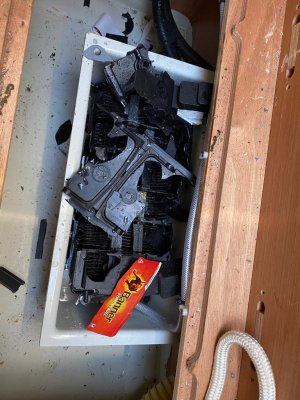
Can you post a picture of a LifePO4 on a yacht that looks anything like this :

IMG-20210626-WA0000.jpg
 
Top